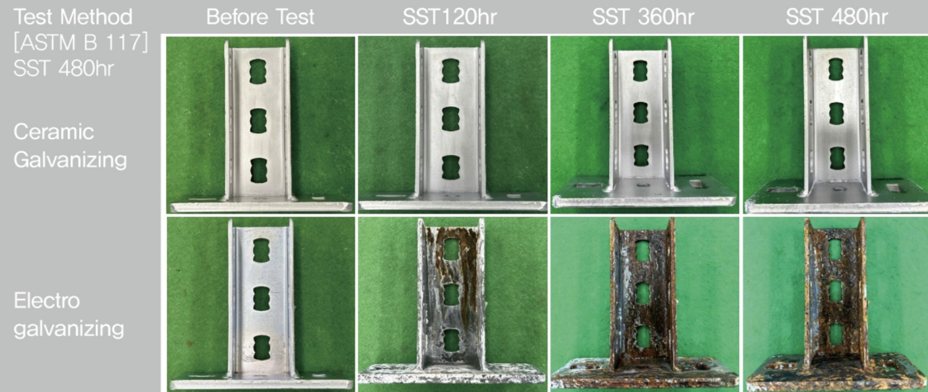
480 hr comparison before and after damage
KEMP R&D report KPRD-20191209-02 compares mechanically damaged coatings under 5% NaCl salt spray at 35 °C.
 Industries / Bolts & Fasteners
Fastener performance depends on both corrosion resistance and the integrity of surfaces subjected to tightening. Innozinc Ceramic Galvanizing combines over 500 hr corrosion resistance after mechanical damage in the cited comparison (zinc electroplating: 90 hr) with a thin approximately 8 μm deposit. Target thickness, pre-plating thread tolerances and gauge inspection work together to deliver reliable assembly quality.
Alongside intact-specimen SST performance, fasteners benefit from corrosion assessment after mechanical damage. Tightening applies friction and contact pressure to thread flanks and bearing surfaces, making coating adhesion and damaged-area protection important quality characteristics.
Source: KEMP R&D comparative data and KTR test documentation. Post-damage corrosion resistance is assessed by salt spray exposure after impact or mechanical damage. KEMP supports sample assessment against your fabrication conditions and inspection specifications.
In KEMP's 2019 comparative study, intact specimens and specimens mechanically damaged by tool tightening were exposed to the same salt spray conditions for 480 hr. The study observed corrosion of the plated layer and fastening contact areas.
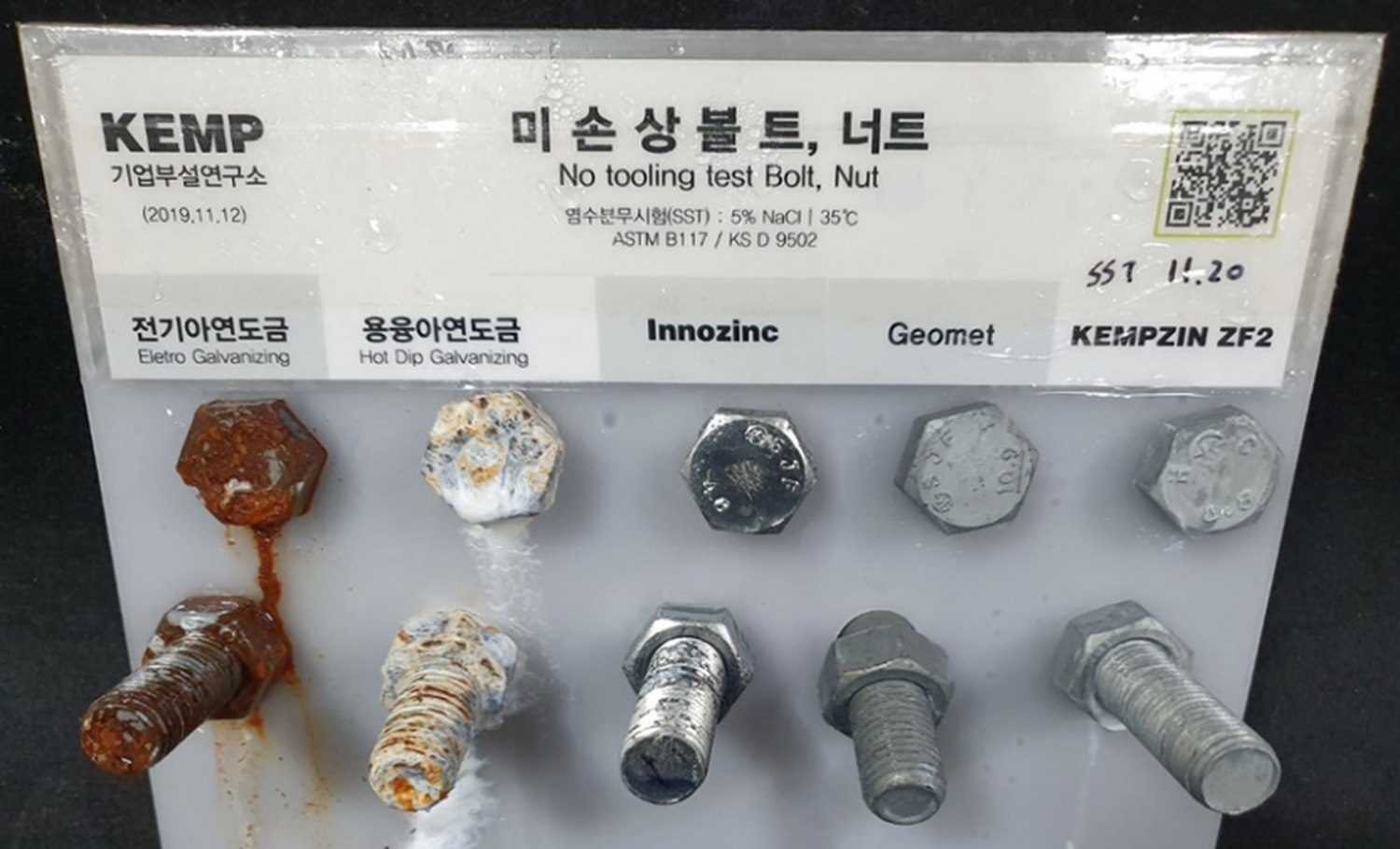
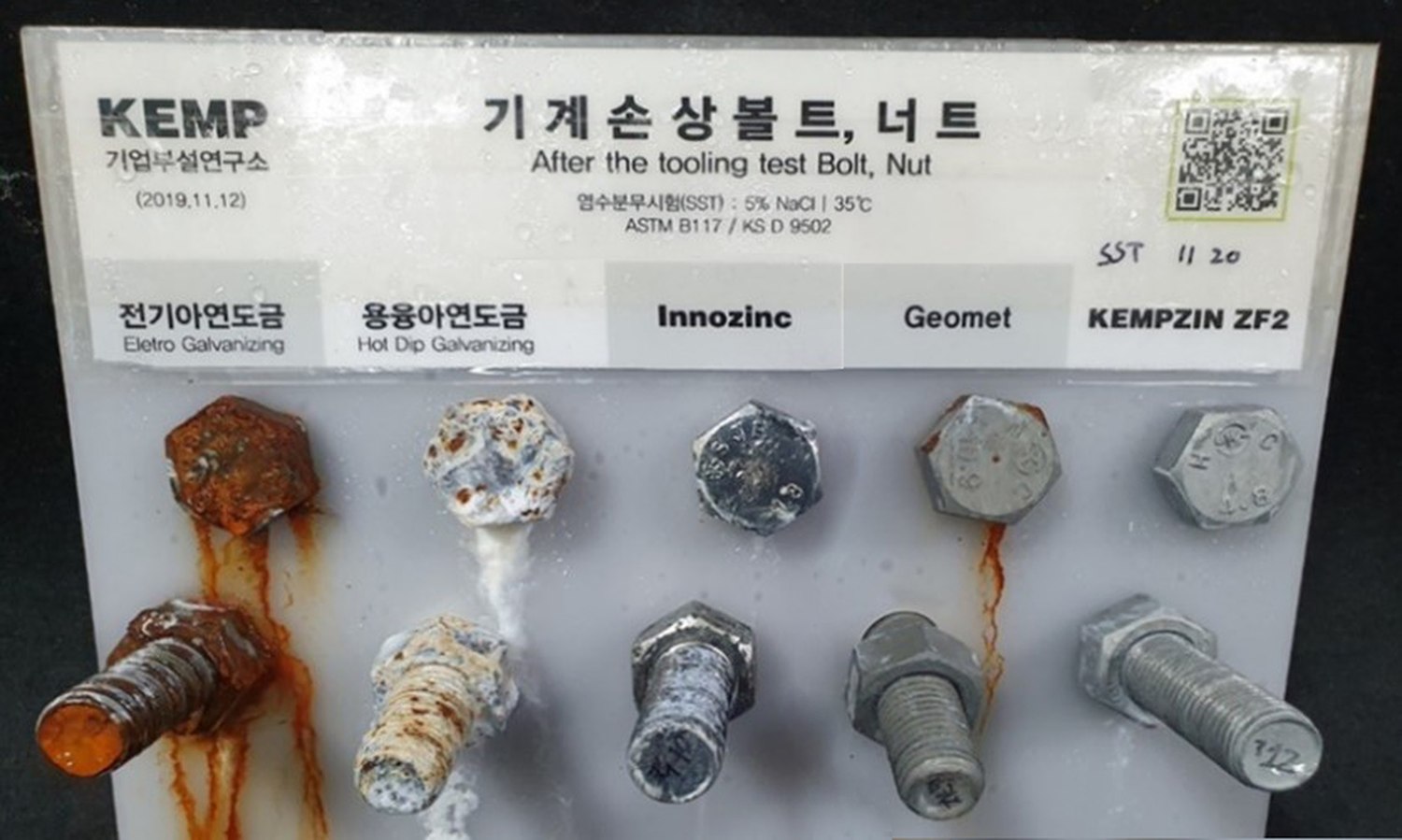
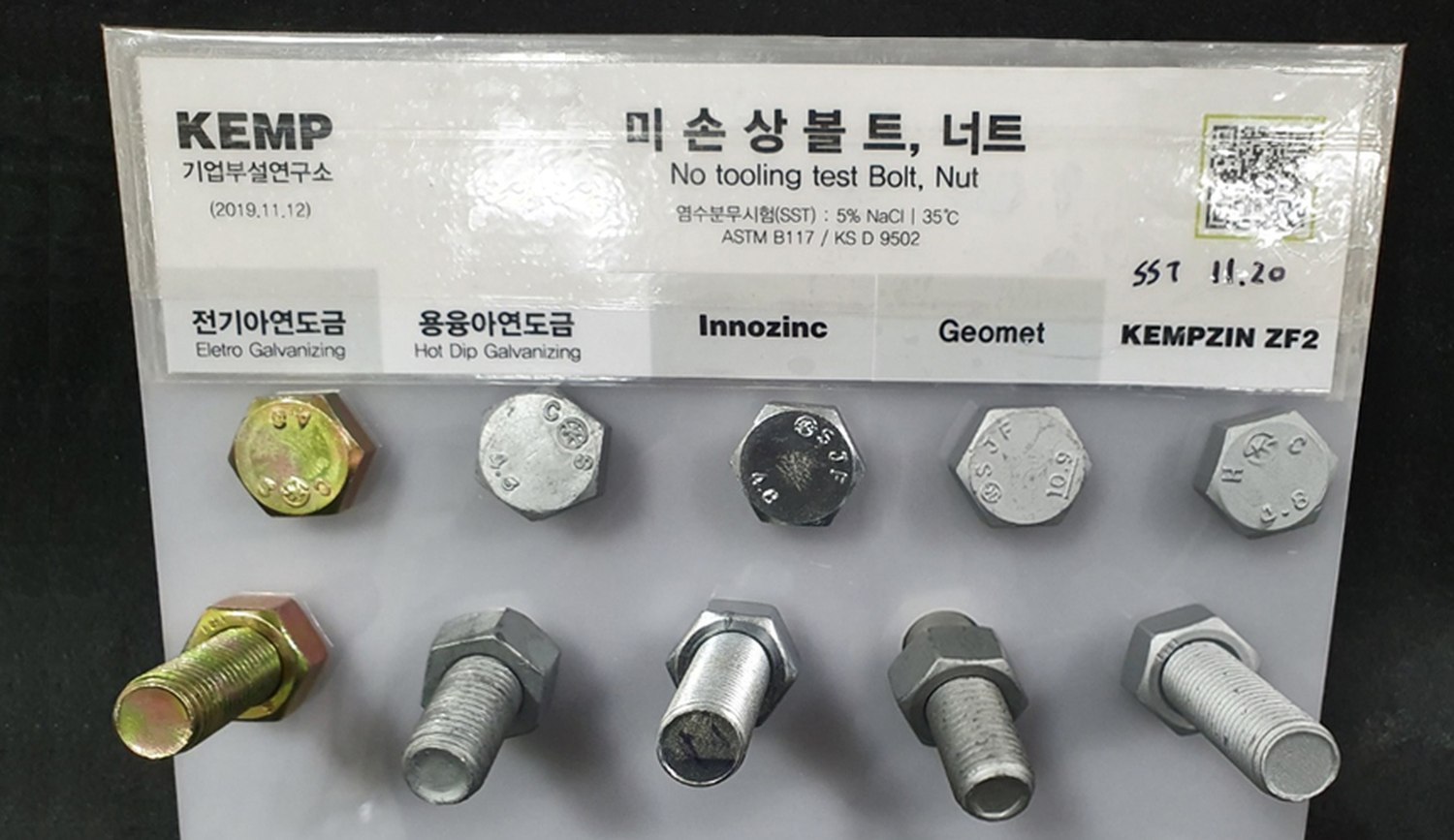
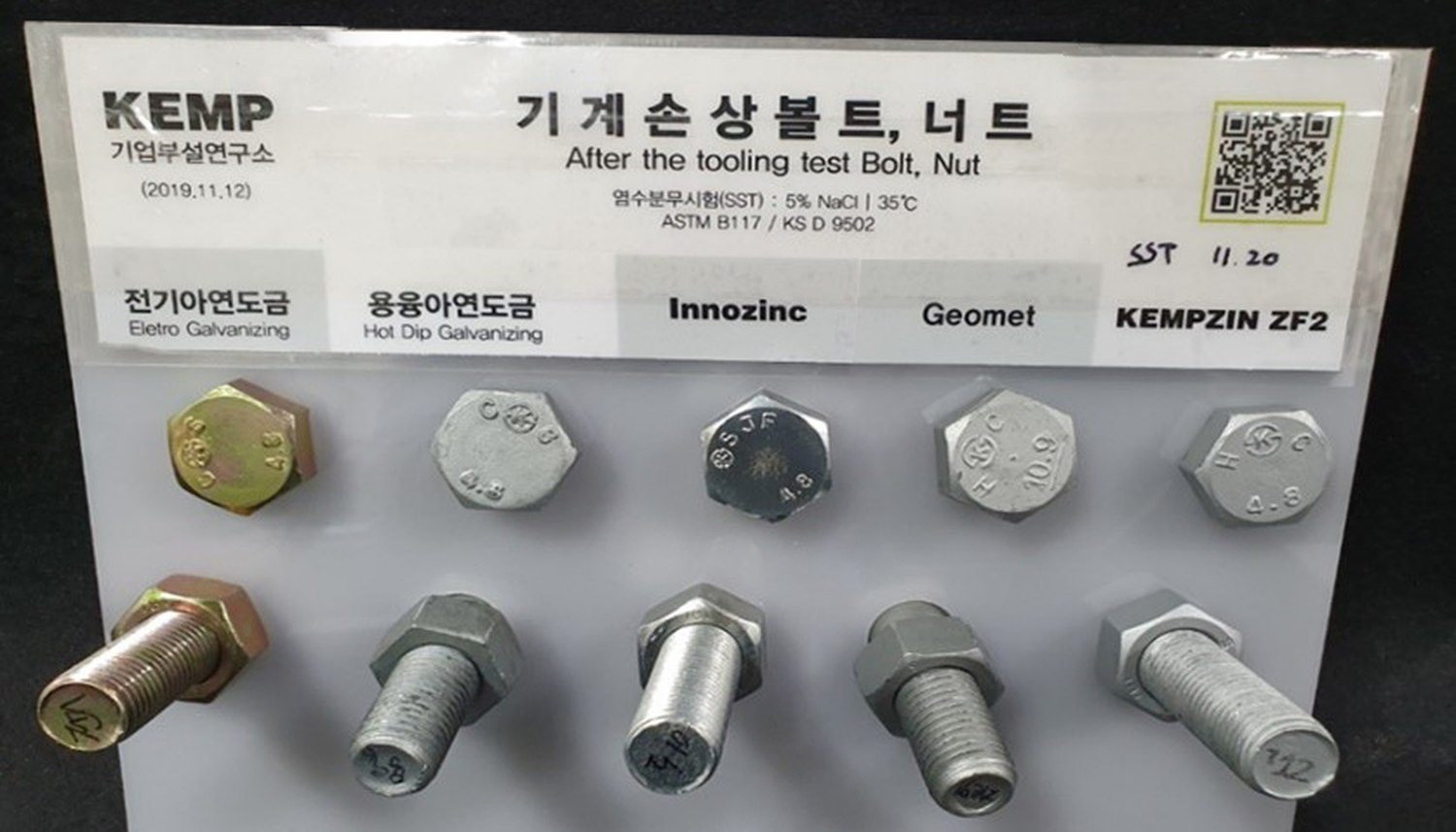
Test conditions: neutral salt spray (NSS), ASTM B117 / KS D 9502, 5% NaCl, 35 °C, 480 hr (20 Nov – 9 Dec 2019). KEMP R&D report KPRD-20191209-02. Specimens are shown in this order: zinc electroplating, hot-dip galvanizing, Innozinc, Geomet and KEMPZIN ZF2. This in-house study compares coating corrosion at mechanically damaged areas. Substrate materials and strength grades differ between specimens. Five of the original report's six specifications are shown. Geomet is a registered trademark of NOF METAL COATINGS.
| Surface Treatment | Intact · 480 hr | Mechanically Damaged · 480 hr | Observed Performance |
|---|---|---|---|
| Zinc electroplating · 8 μm | Extensive red rust | Widespread red rust and staining | Red rust on the intact specimen |
| Hot-dip galvanizing · 50–77 μm | Extensive white rust + 30% red rust | Extensive white rust and progressing red rust | Surface corrosion despite the thicker coating |
| GeometZinc flake coating (ZFC) | No defects observed | Red rust observed | Performance changes after mechanical damage |
| Innozinc 8 μm | No defects observed | No defects observed | Protection retained after damage |
A key Innozinc benefit is corrosion protection after mechanical damage. Assessment covers both intact specimens and tool-damaged coating areas to establish the surface-treatment quality of assembled fasteners.
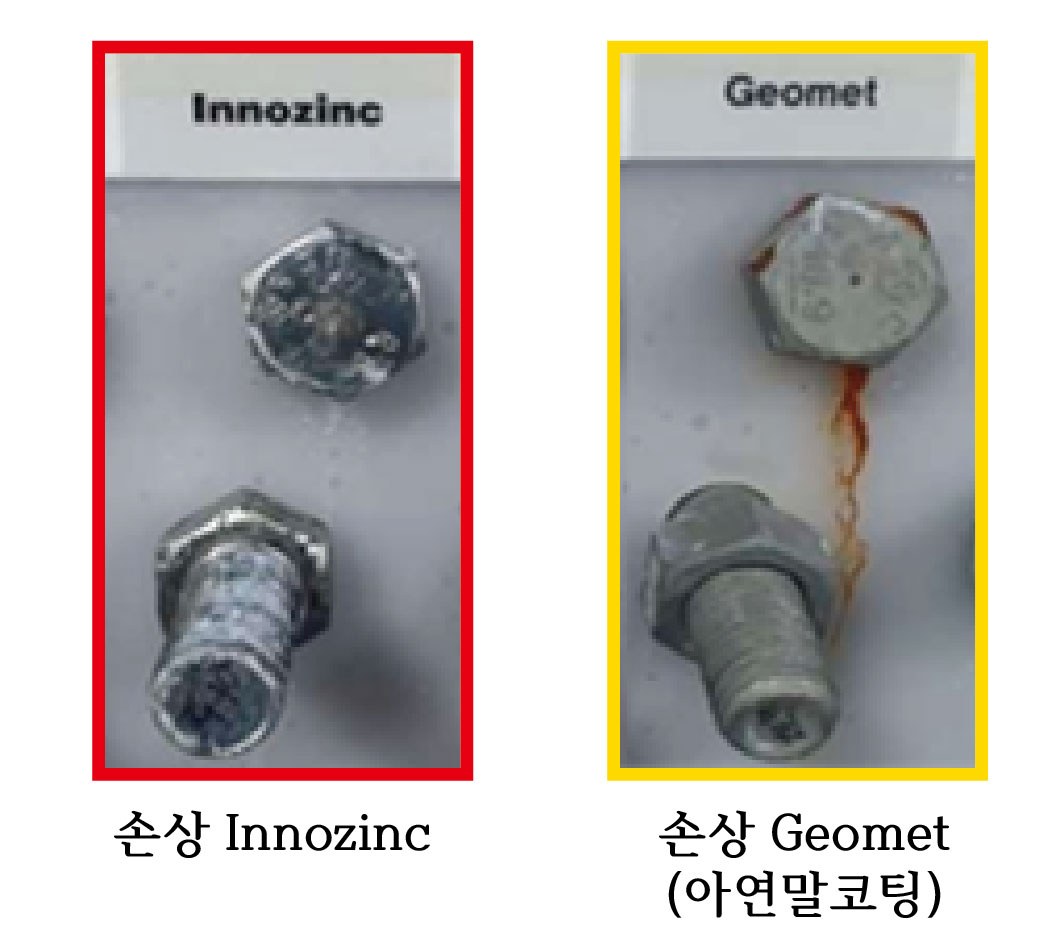
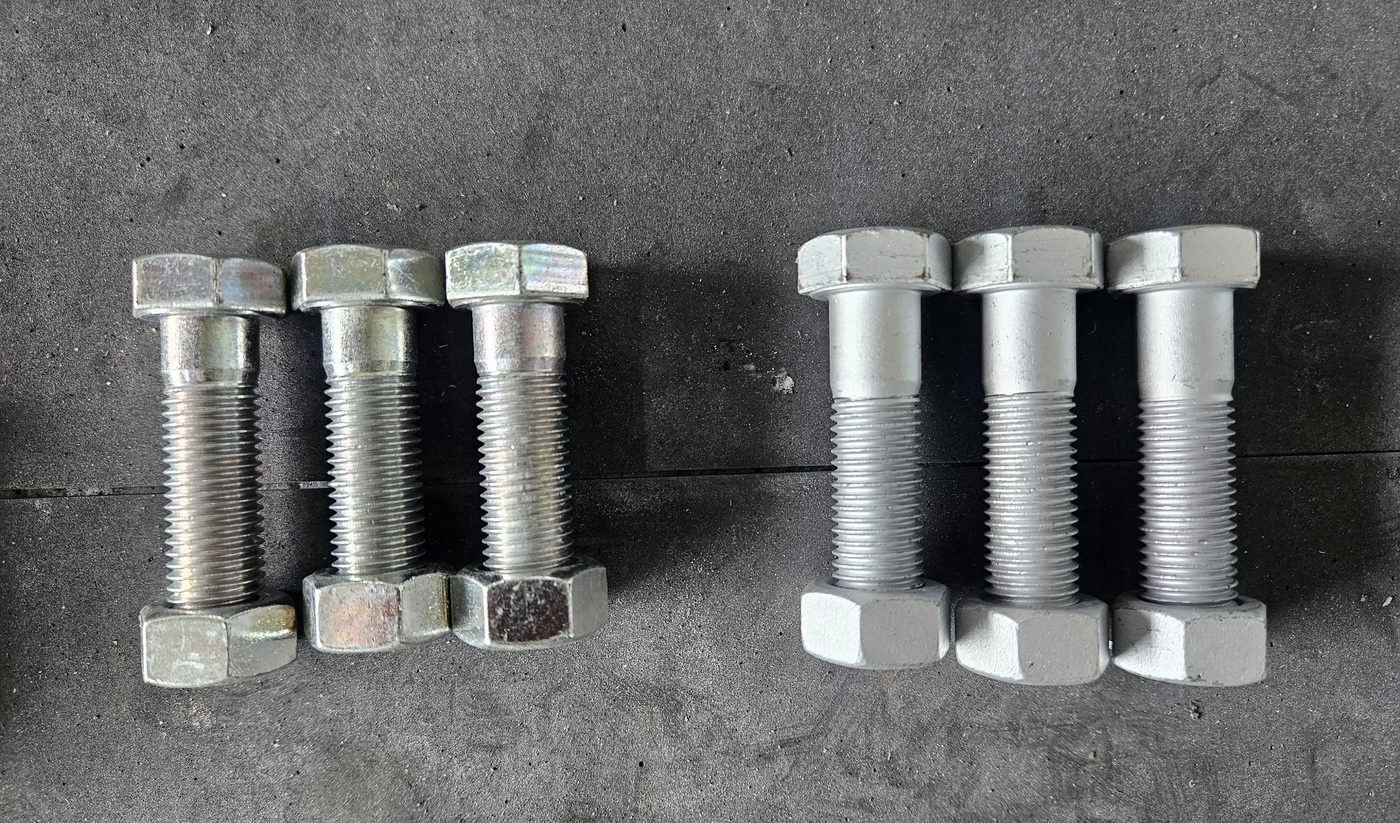
The two specimens received the same tool-damage conditions. The Innozinc specimen on the left shows surface discoloration; the Geomet specimen on the right shows red rust on the head and corrosion-product staining. Innozinc combines sacrificial protection from electrodeposited zinc with an inorganic composite barrier to improve corrosion resistance at damaged fastening surfaces.
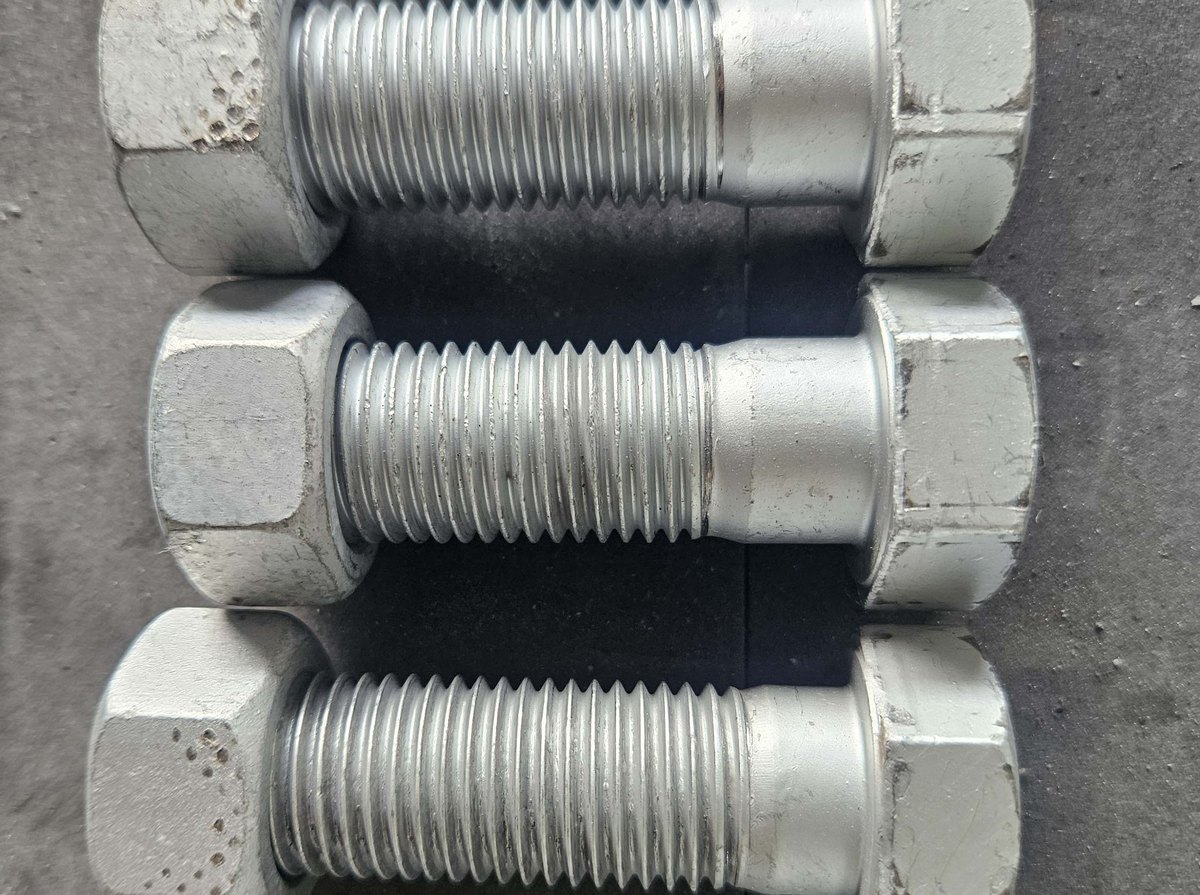
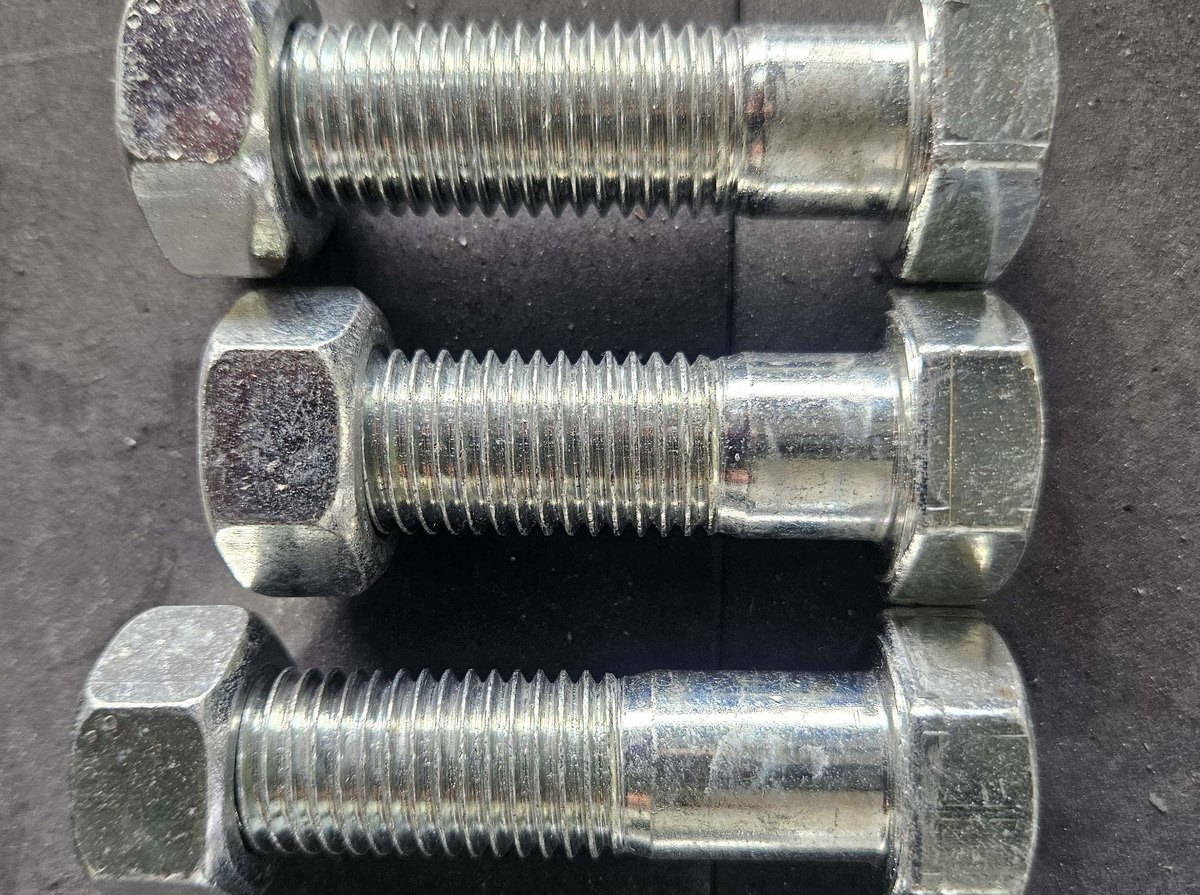
Coating integrity after tightening: tightening tests on M16 (120 N·m, 4 cycles) and M24 (700 N·m, 2 cycles) observed damage at contact surfaces. Fastener specifications link tightening torque, thread tolerances and damaged-area corrosion resistance.
Tightening test: Aug 2023. Separate from the 2019 study with 480 hr salt spray exposure.
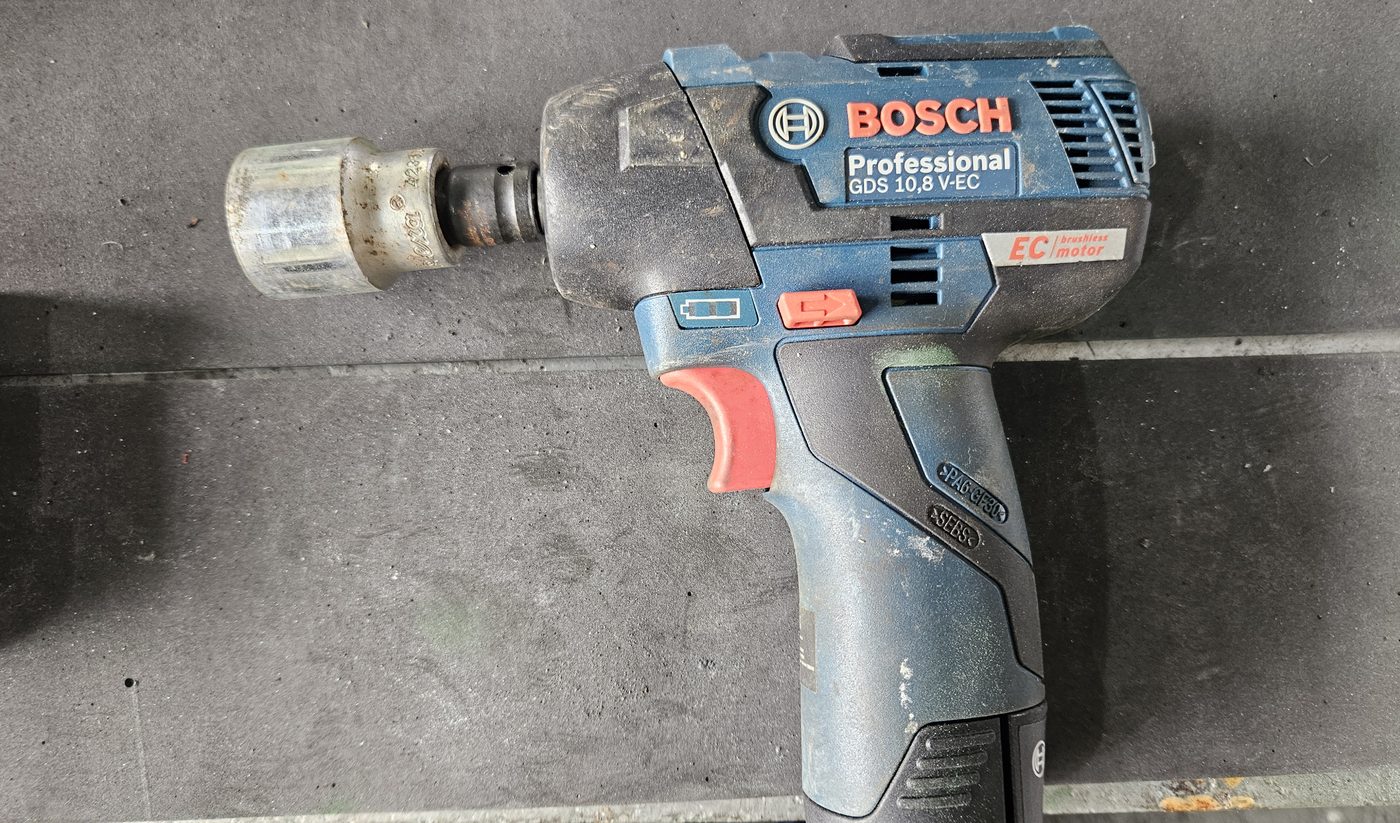
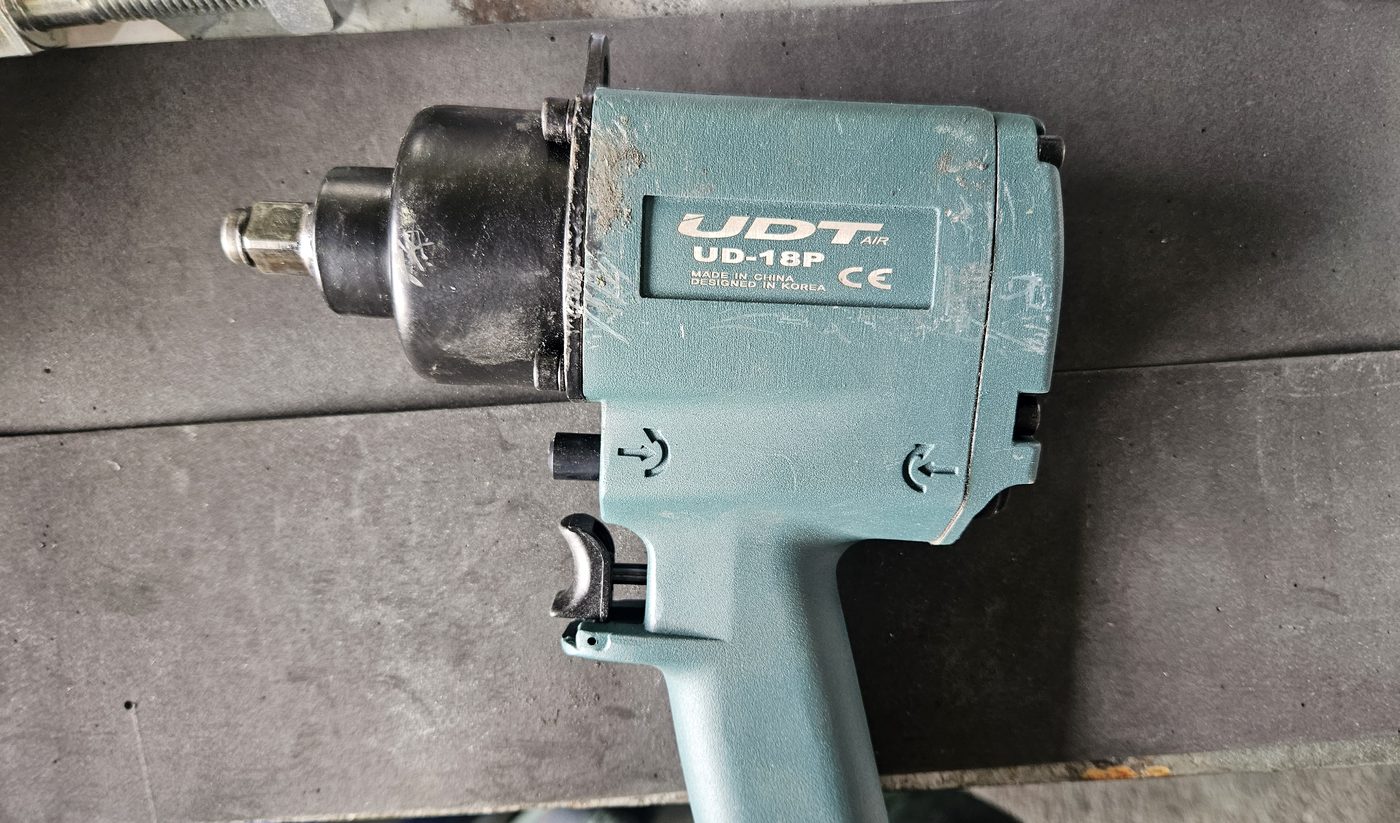
Tightening test conditions: impact and pneumatic tools applied the specified torque and number of tightening cycles. Test documentation records plating deformation and damage at tool-contact areas.
Manufacturing and assembly quality affect total cost alongside corrosion performance.
Thread flanks and bearing surfaces experience contact pressure and friction during tightening. Managing plating adhesion, deformation capability and damaged-area corrosion resistance improves fastener protection after assembly.
Post-damage corrosion resistance: 500 hr+ (zinc electroplating: 90 hr)Plating thickness affects thread pitch diameter and assembly clearances. Innozinc's approximately 8 μm thin deposit limits dimensional change, with processing conditions set against thread gauges and post-plating tolerance requirements.
Approximately 8 μm plating · Gauge-controlled fitInnozinc achieves corrosion resistance through a zinc layer and inorganic ceramic film. Chromium-free process specifications help optimize post-treatment operations and substance-control requirements.
26 analyzed substances not detected · Streamlined post-treatmentPotential difference, contact-area ratio and electrolyte exposure affect galvanic corrosion between galvanized steel and stainless steel. Innozinc-h offers a high-corrosion-resistance composite coating for dissimilar-metal connections, specified around mating materials and fastening conditions.
Galvanic current density: 65% lower with a carbon-steel counterface vs. the tested HDG reference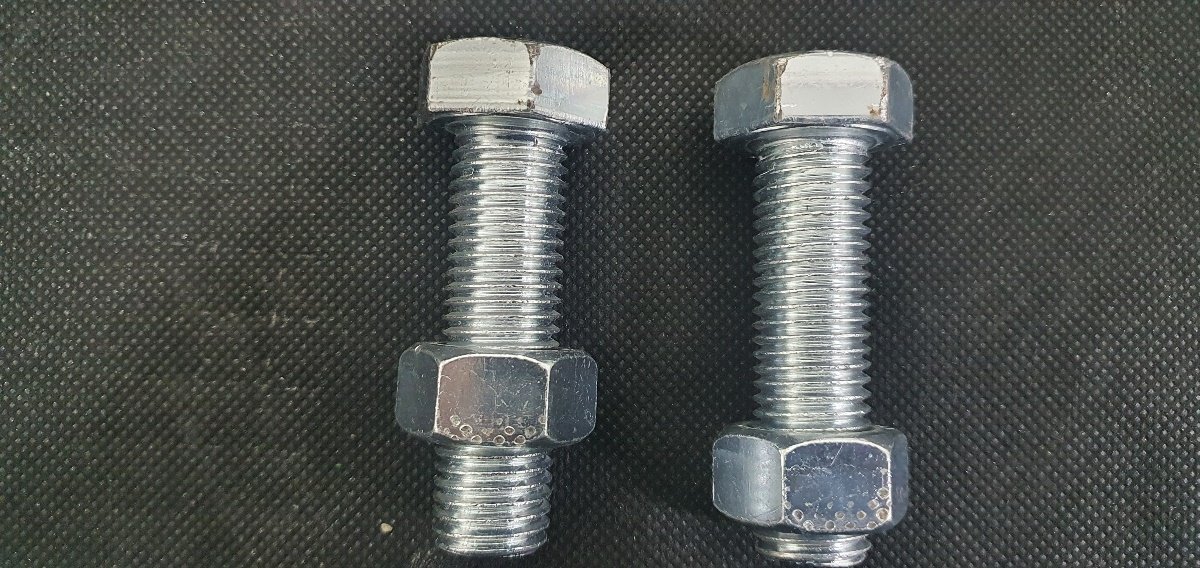
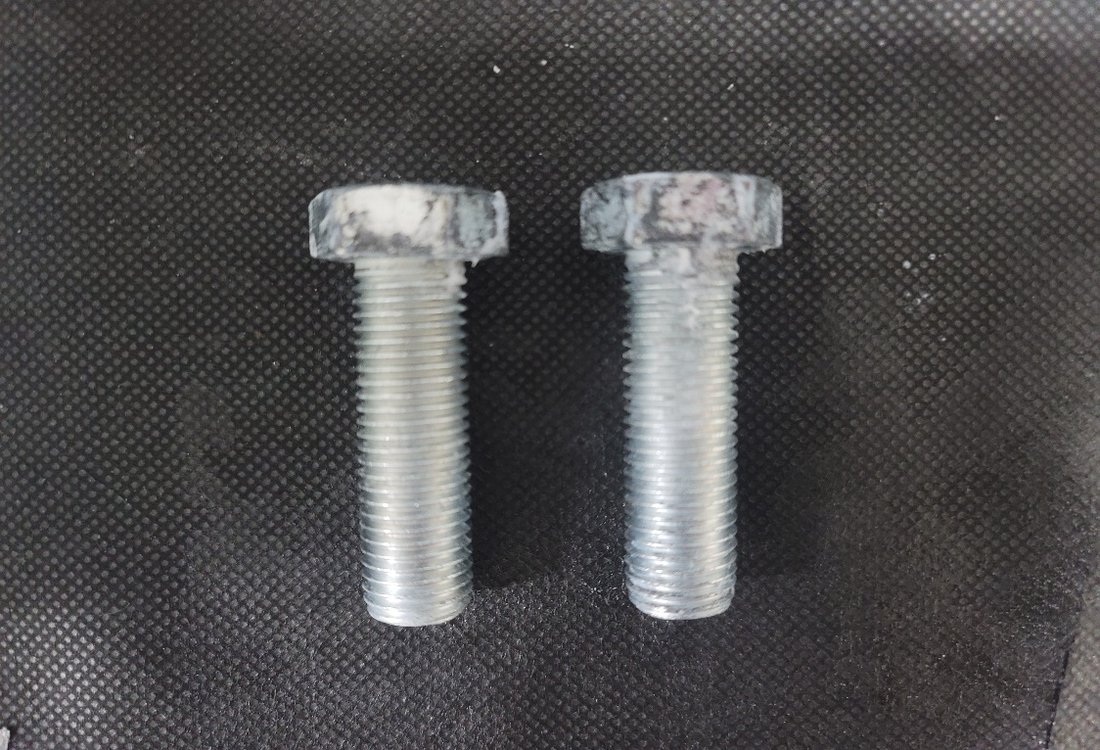
KEMP R&D's in-house ASTM B117 salt spray records show corrosion at tool-contact areas. The right-hand specimen uses a ceramic zinc electroplating specification other than Innozinc and illustrates the relationship between mechanical damage and corrosion location.
For 60° threads, plating on the flanks increases the effective pitch diameter. A uniform thickness t gives an approximate geometric increase of 4t. Pre-plating tolerances and target thickness are coordinated to meet post-plating gauge requirements.
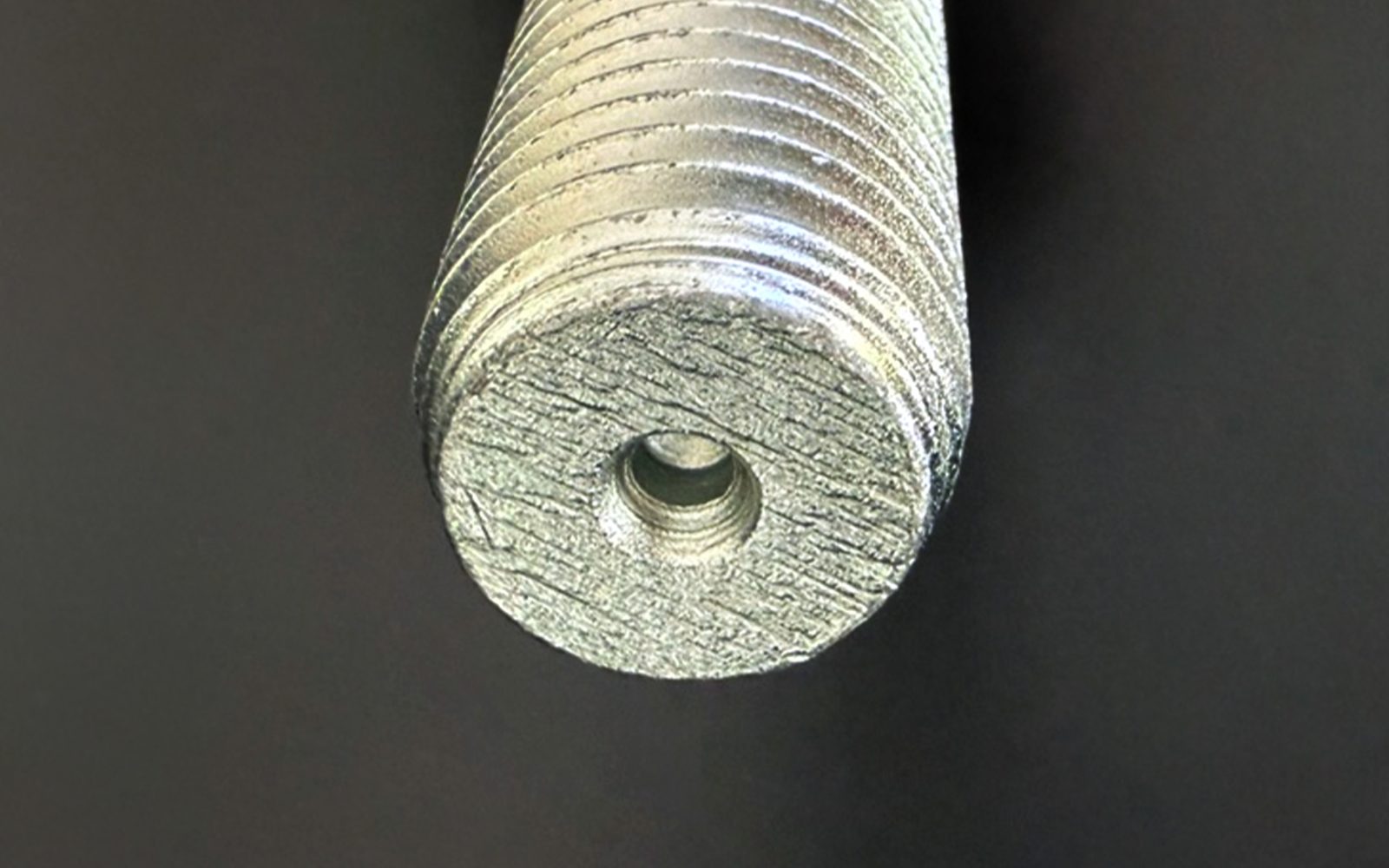
A 50–77 μm coating produces an approximate geometric pitch-diameter increase of 200–300 μm. Pre-plating thread tolerances and mating-nut specifications must accommodate the coating, with post-plating gauges confirming assembly fit.
An 8 μm deposit produces an approximate geometric pitch-diameter increase of 32 μm. Thin Innozinc plating reduces thread-profile change and additional machining, with fastening quality controlled through pre-plating tolerances, mating nuts and gauge criteria.
The table presents recorded red-rust comparison results. Current representative SST specifications are 720–1,000 hr for Innozinc and 1,500–2,000 hr for Innozinc-h. Application specifications pair coating thickness with test conditions and acceptance criteria.
| Characteristic | Zinc electroplating | Zinc electroplating + sealer | Hot-dip galvanizing | Innozinc | Innozinc-h |
|---|---|---|---|---|---|
| Corrosion resistance (SST, red-rust criterion) | 190 hr | 240 hr | 480 hr | 1,000 hr | 1,500 hr+ |
| Corrosion resistance after mechanical damage | 90 hr | — | 240 hr | ≥500 hr | ≥500 hr |
| Cyclic corrosion test (CCT) | 5 Cycle | — | 40 Cycle | 80 Cycle | 80 Cycle↑ |
| Coating thickness | 8 μm | 8 μm + sealer | 50~77 μm | 8 μm | 8~15 μm |
| Oversize tapping of mating nuts | Not required | Not required | Specified to accommodate coating | Gauge-controlled fit | Gauge-controlled fit |
| Dissimilar-metal / galvanic corrosion | Poor | Poor | Poor | Good | Very Good |
| Reference post-treatment | Trivalent / hexavalent chromium | Chromium-based post-treatment | Hexavalent-chromium post-treatment | Chromium-free options | Chromium-free options |
| Process temperature | Ambient temperature | Ambient temperature | Immersion at approximately 450 °C | Ambient plating at 25 °C | Ambient plating at 25 °C |
Source: KEMP R&D comparative data and KTR test results. SST values use a red-rust criterion; white-rust specifications use different acceptance criteria. Quotations reflect geometry, specific surface area and monthly volume. Send drawings and production quantities for product-specific pricing.
| Characteristic | Zinc electroplating | Zinc flake coating (ZFC) | Hot-dip galvanizing (HDG) | Innozinc |
|---|---|---|---|---|
| Process temperature | Ambient temperature | Thermal cure at 180–300 °C | Immersion at approximately 450 °C | Ambient plating at 25 °C |
| Thermal coating cure | Not required | Required | Not applicable | Not required for deposition |
| Thermal distortion / tempering exposure | No high-temperature deposition step | Exposure to the curing temperature | High-temperature exposure | Ambient-temperature deposition |
| Oversize tapping of mating nuts | Not required | Not required | Specified coating allowance | Gauge-controlled fit |
| Sacrificial protection at cut edges | Available | System-dependent | Available | Available from zinc layer |
| Grounding / electrical continuity | Assembly assessment | Assembly assessment | Assembly assessment | Assembly assessment |
| Bend performance | Cracking | Limited | Delamination | 140° |
| Hydrogen-embrittlement process considerations | Hydrogen charging during electroplatingElectrolytic process | No electrolytic chargingNon-electrolytic deposition | Lower retained hydrogenHigh-temperature immersion; pretreatment remains relevant | Process controls requiredElectrolytic process — see application specifications below |
| Reference post-treatment | Trivalent / hexavalent chromate | Specification-dependent | Hexavalent-chromium post-treatment | Chromium-free options |
High-strength fastener process control: for property class 10.9 and above, pretreatment, plating and post-treatment are qualified against the customer's hydrogen-embrittlement control requirements. Fastener application specifications
Cyclic corrosion: in the 2025 production assessment (KS D ISO 14993, 40 cycles), both ceramic-zinc-plated and hot-dip galvanized U-bolt specimens showed no red rust. The table's 80-cycle and 40-cycle figures are product-reference values; that direct U-bolt comparison used 40 cycles.
Both grades use thin Ceramic Galvanizing. Selection is based on the required corrosion resistance and exposure environment.
A single customer can specify Innozinc for indoor components and Innozinc-h for outdoor or aggressive-service components.
Compare plating cost together with thread rework, reinspection and localized touch-up labor. Innozinc's thin deposit and fabrication capability create opportunities to simplify the manufacturing sequence.
| Cost Element | Zinc electroplating + sealer | Hot-dip galvanizing (HDG) | Innozinc |
|---|---|---|---|
| Secondary sealer operation | Required | — | Streamlined specification available |
| Oversize tapping of mating nuts | Not required | Required | Reduced through thickness/tolerance control |
| Reinspection / retapping after oversize tapping | — | Additional operation | Reduced rework requirement |
| Correction of thermal distortion after plating | — | May be required | No high-temperature deposition step |
| Heating and drying energy | Sealer drying | LNG-heated zinc bath | Ambient-temperature deposition |
| On-site cut-edge touch-up | Application-dependent | Touch-up material required | Sacrificial protection from adjacent zinc |
| Assembly-clearance management | Low | Control oversize-tap allowance | Precision through thin plating |
| Hexavalent-chromium requirements | Select compliant post-treatment | Select compliant post-treatment | Chromium-free options |
Product-specific manufacturing cost: compare before/after costs including plating, thread rework, reinspection, touch-up labor and round-trip transport. Drawings, surface area, monthly throughput and minimum batch size determine the plating specification and quotation.
Barrel plating (7 t/day) handles small parts in volume; rack and acid-zinc lines accommodate long and large components.
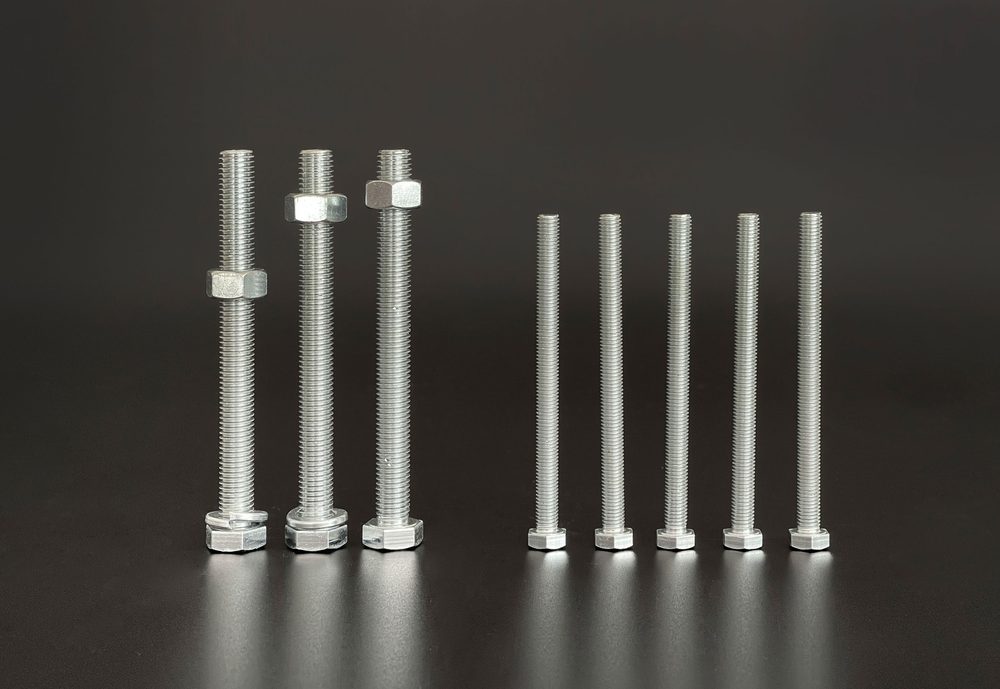
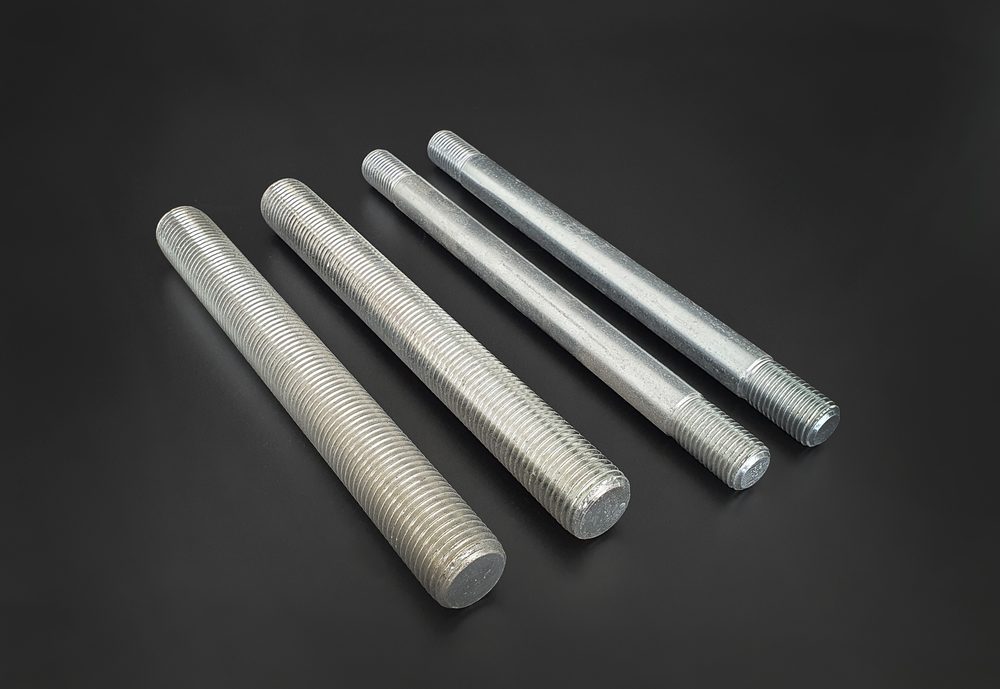
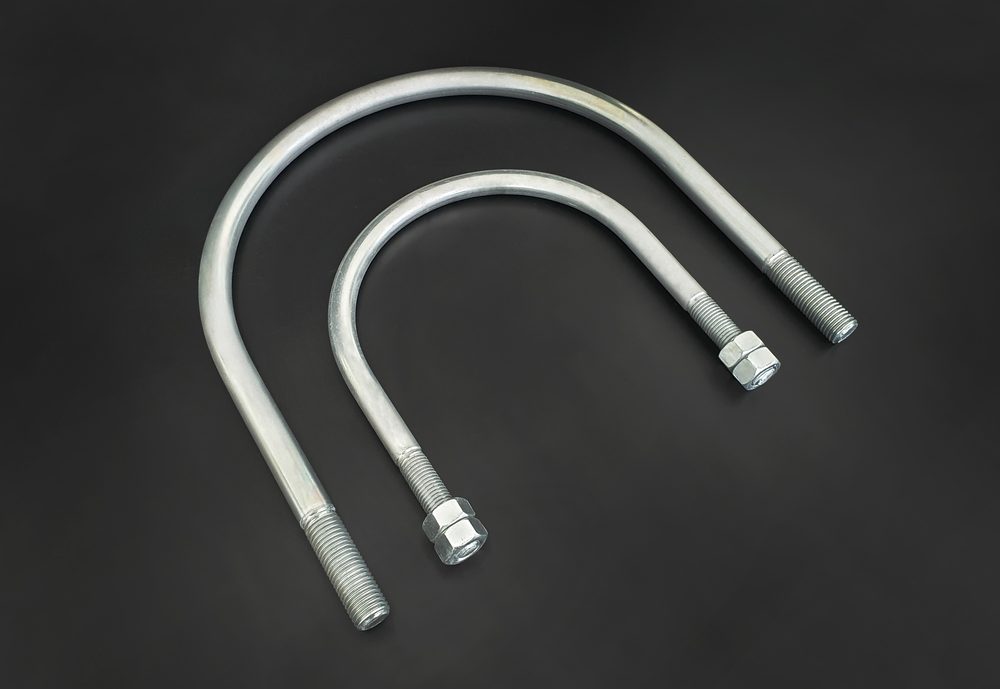
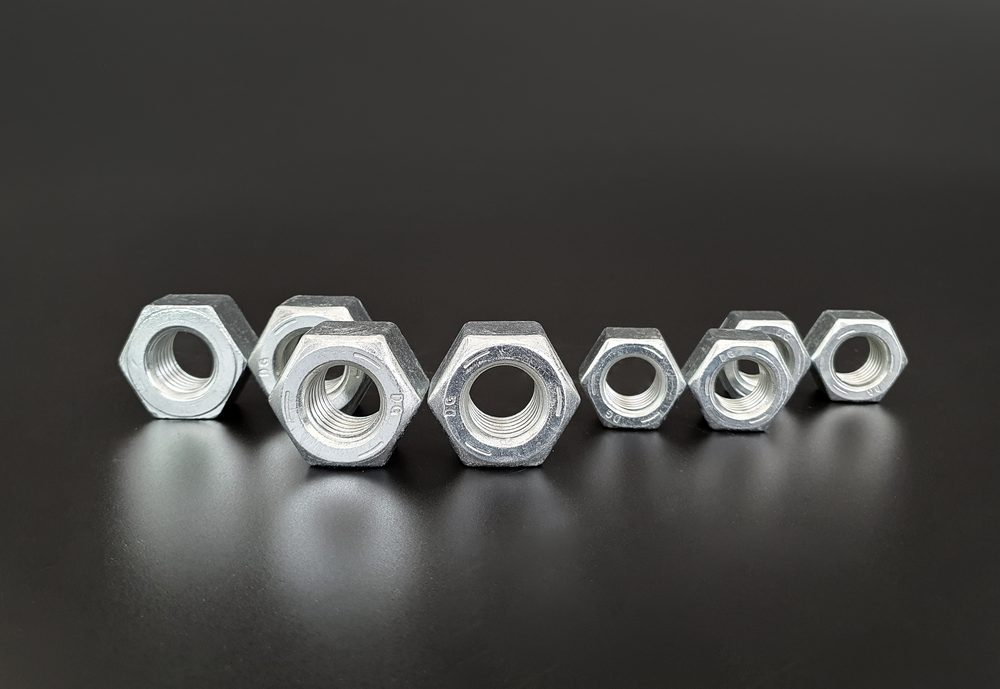
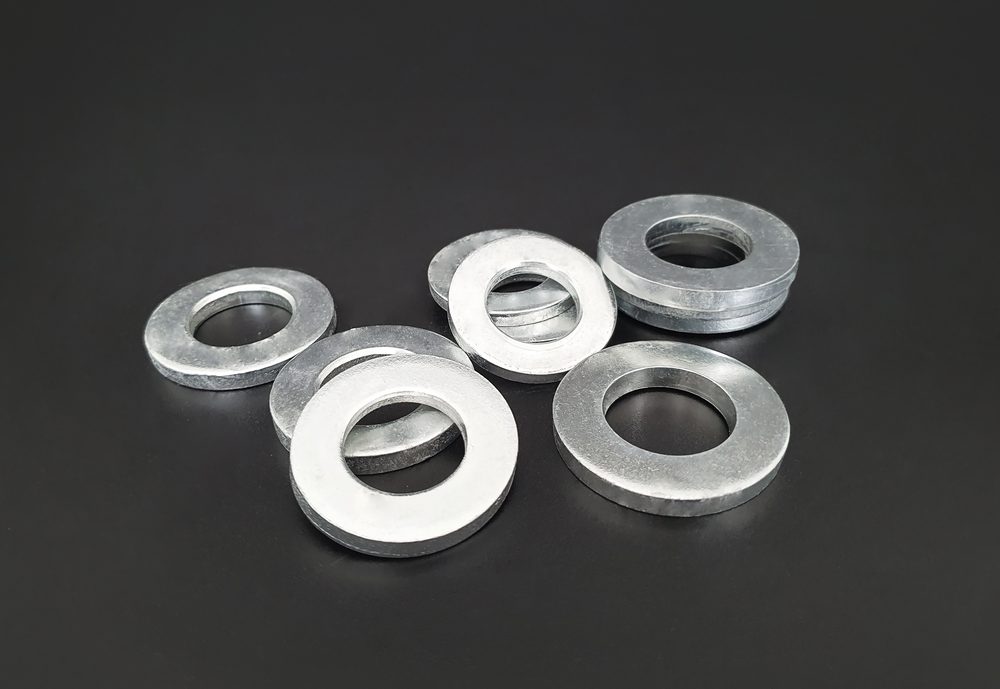
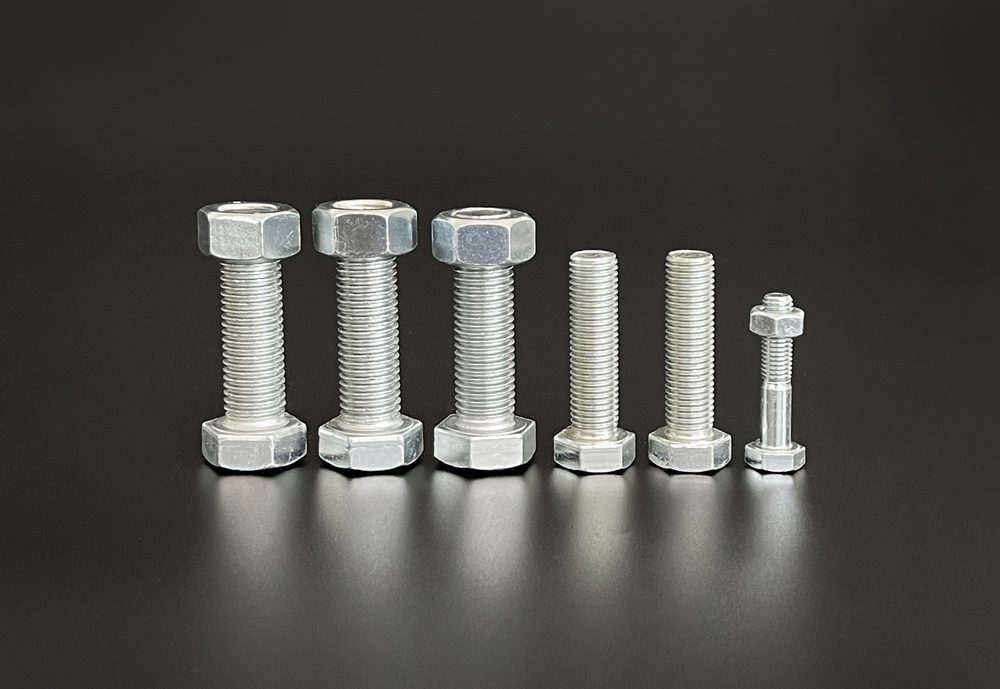
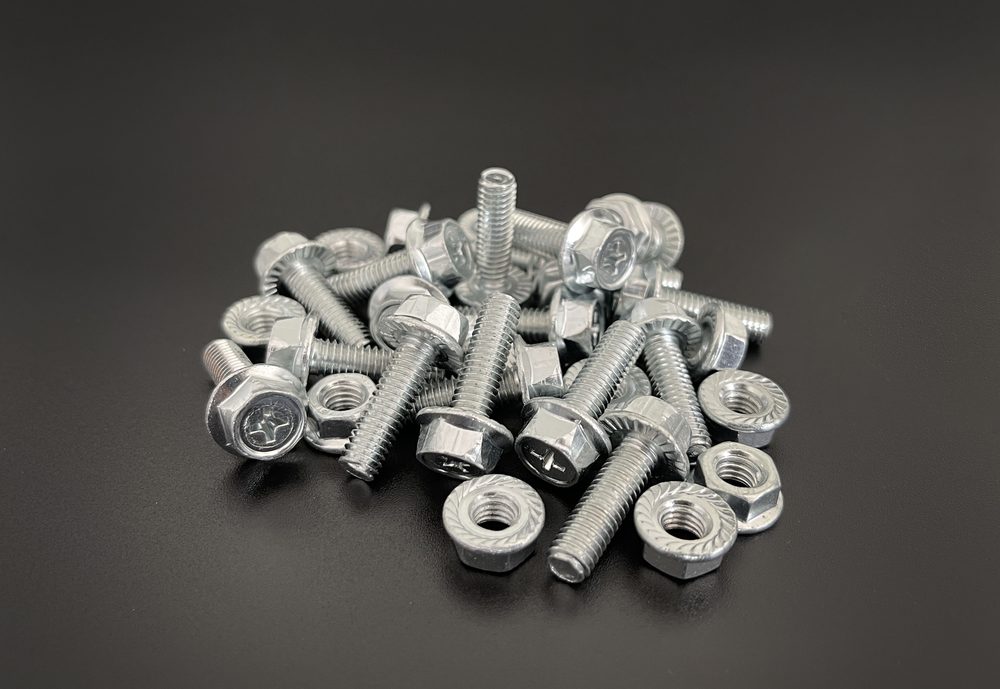
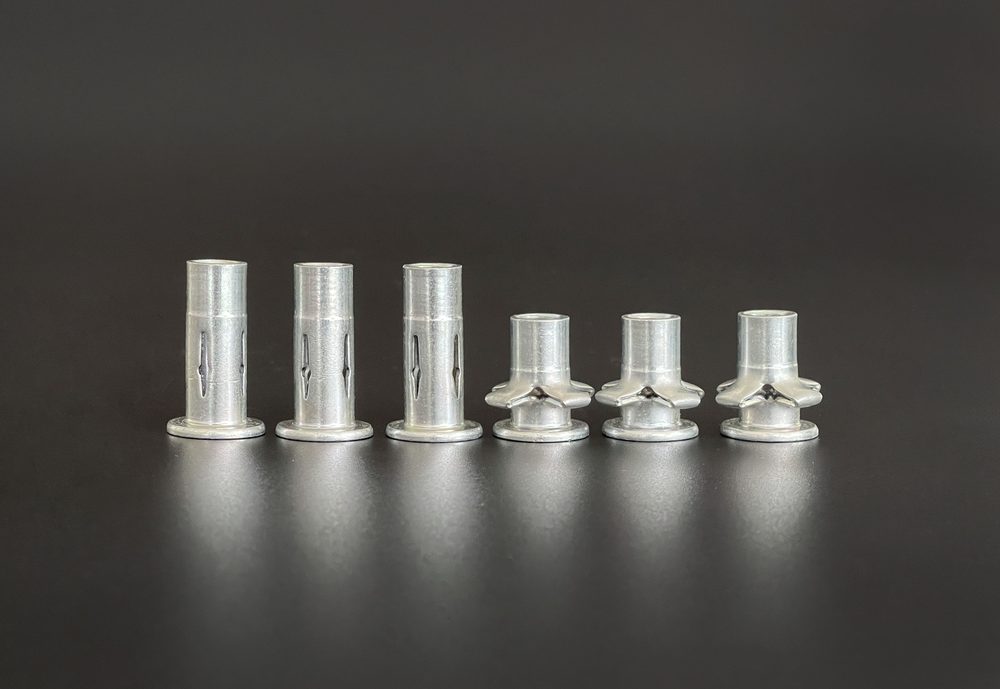
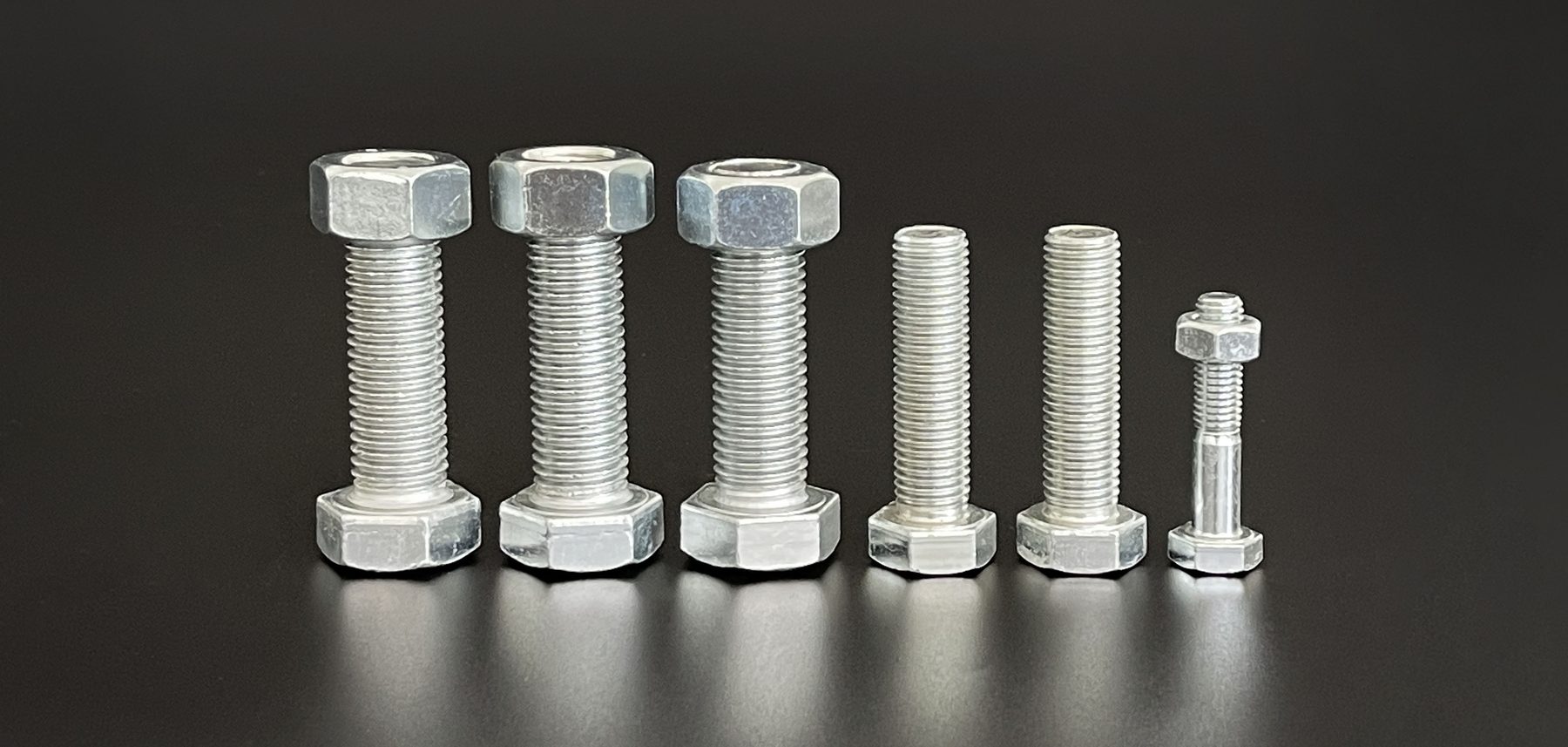
Products plated and supplied by KEMP. Photographs show the silver-white ceramic zinc finish. Colored or blue chromate post-treatments are handled as product-specific specifications.
| Product | Exposure Environment | Recommended Specification | Technical Basis |
|---|---|---|---|
| Hex bolts and nuts | Indoor · General atmosphere | Innozinc | Post-damage corrosion protection · Thread-tolerance control |
| Small screws and machine screws | Indoor · General atmosphere | Innozinc (adjusted thickness) | Deposit thickness adjusted to the thread specification |
| Threaded rods · All-thread | Indoor equipment and ceiling supports | Innozinc 8 μm | Sacrificial cut-edge protection · Full-length threads |
| Threaded rods · Anchors | Outdoor · Coastal · De-icing salts | Innozinc-h | SST 1,500–2,000 hr · Galvanic corrosion rated Very Good |
| Expansion and wedge anchors | Indoor embedded installations | Innozinc 8 μm | Residual corrosion protection after impact and expansion |
| Embedded foundation anchors (J/L type) | Embedded in concrete | Project-specific finish | Embedded and exposed portions specified according to concrete and atmospheric exposure |
| U-bolts · Hook bolts · Square U-bolts | Outdoor · Pipe supports | Innozinc-h | Adhesion retained in the cited 140° bend test |
| Washers · Small screws | Indoor · General service | Innozinc (barrel plating) | High-mix, small-batch production · Barrel capacity 7 t/day |
| Bolts contacting stainless steel | Dissimilar-metal interface | Innozinc-h | Galvanic corrosion rated Very Good |
| Fasteners for grounding / electrical continuity | Electrical assemblies | Innozinc | Assembly contact-resistance assessment reflecting contact surfaces and fastening conditions |
| High-strength bolts, property class 10.9 and above | — | Process qualification required | Hydrogen-embrittlement controls and process qualification against customer specifications |
| F10T / S10T slip-resistant bolting assemblies | — | Process qualification required | Approved slip-factor and torque-coefficient requirements for the complete bolt assembly |
Innozinc's representative SST specification is 720–1,000 hr. Its composite coating provides an opportunity to streamline additional sealer operations, with process and test conditions established on the actual component.
Ambient-temperature electrodeposition reduces thermal-distortion exposure in long threaded rods and bars while maintaining dimensional precision. Eliminating the hot zinc bath reduces deposition-stage heating and operating requirements.
Chromium-free Innozinc specifications combine corrosion protection with substance-control requirements. The cited analysis reports 26 tested substances not detected; product-specific documentation identifies the methods and detection limits.
For formed and bent special fasteners, the cited test retained the coating without cracking through a 140° bend. This supports alternative plating and fabrication sequences.
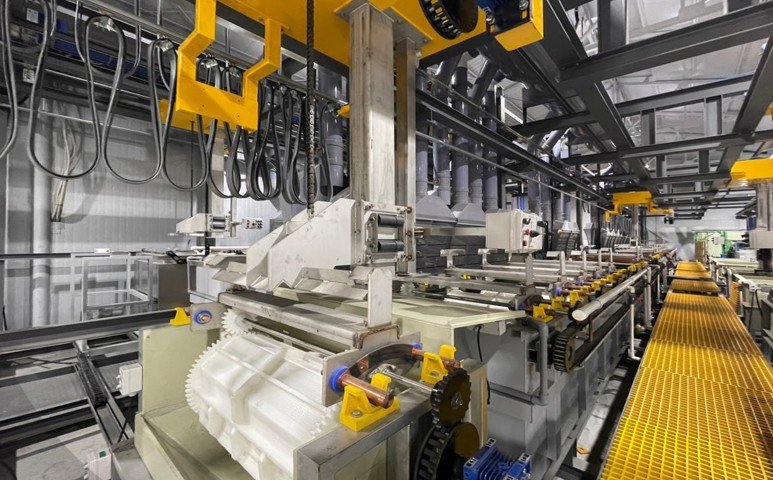
KEMP operates three Ulsan lines: rack plating at 35 t/day, acid-zinc plating at 10 t/day and barrel plating at 7 t/day. Small fasteners use barrel processing; long rods and bars use rack processing.
Container locking rods provide experience under salt exposure and repeated fastening friction, including a one-year marine demonstration and DEKRA testing.
Product specifications link corrosion protection in the assembled or damaged state with thread tolerances and assembly quality.
KEMP R&D report KPRD-20191209-02 compares mechanically damaged coatings under 5% NaCl salt spray at 35 °C.
In-house testing assessed an assembled specimen after 2,664 hr salt spray exposure. Assembly conditions and surface observations are available in the relevant test documentation.
Target deposit thickness and gauge requirements are established using the thread-tolerance framework of ISO 4042 and ISO 965-1, then paired with the required corrosion grade.
Core applications include general bolts and nuts up to property class 8.8, threaded rods, anchors, studs and nonstandard fasteners.
Process selection reflects material and heat-treatment condition. High-strength fasteners such as classes 10.9 and 12.9 require hydrogen-embrittlement controls and process qualification before production.
Target thickness is matched to thread tolerances, mating nuts and tightening conditions, with gauges verifying assembly fit.
Sample assessment reflects damage from tightening and fabrication to establish corrosion performance under customer conditions.
KEMP develops plating specifications and sample programs for your components. Corrosion resistance, thread tolerances and assembly quality are assessed against customer inspection criteria before production conditions are finalized.
Product-specific test documentation and the technical catalog are supplied by email. Tell us the application and required specifications so we can provide relevant data.
Provide material, strength grade, dimensions and quantity for the bolts and nuts. Our team will confirm the plating specification and sample arrangements.
Thread gauges, post-tightening coating integrity and corrosion resistance are assessed against customer inspection specifications. Results establish production plating and quality-control requirements.
Select salt spray, cyclic corrosion, post-damage corrosion and coating-thickness assessments, with results documented in the agreed report format.
Pilot products are selected against corrosion, thread-tolerance and assembly-quality objectives. Sample results guide progressive approval of production specifications and supply conditions.
Marine steel outfitting has been supplied for more than 60 vessels at two major shipbuilders. KEMP's cited supply record covers over 80% of the Korean grooved fire-protection fitting market, with customers in power generation, heavy industry, construction and process plants.























Company-wide supply record across KEMP's business areas. Request product-specific fastener application examples from our team.
Technical guidance on fastener processing, assembly quality and production implementation.
Discover KEMP surface-treatment solutions for industry-specific exposure conditions and product requirements.
