Substrate assessment
Measure residual zinc thickness and assess substrate corrosion to define work zones, preparation and coating coverage.
G·SAVE is an on-site repair process that forms a zinc-flake inorganic composite coating on existing galvanized steel. It replenishes zinc at exposed surfaces and strengthens surface protection without dismantling the structure. The process has been used in 9 road-guardrail projects covering approximately 9.8 km and was selected as an outstanding technology by the Iksan Regional Construction Management Administration.
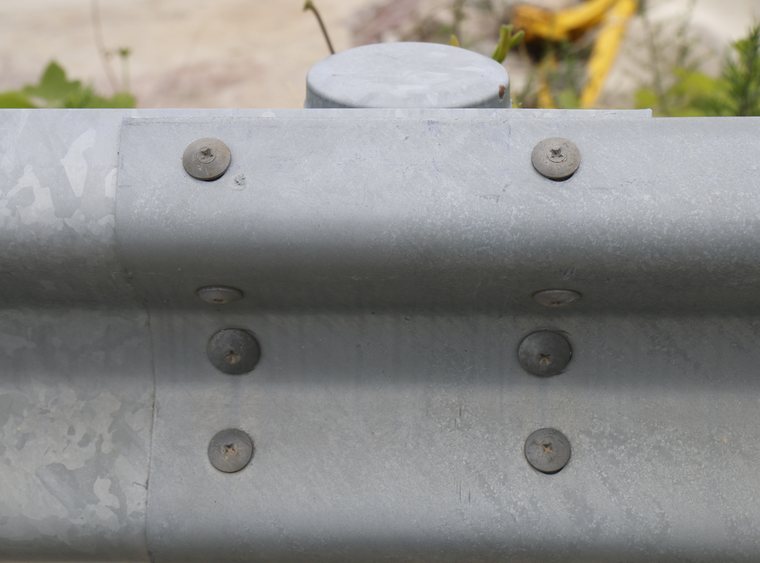
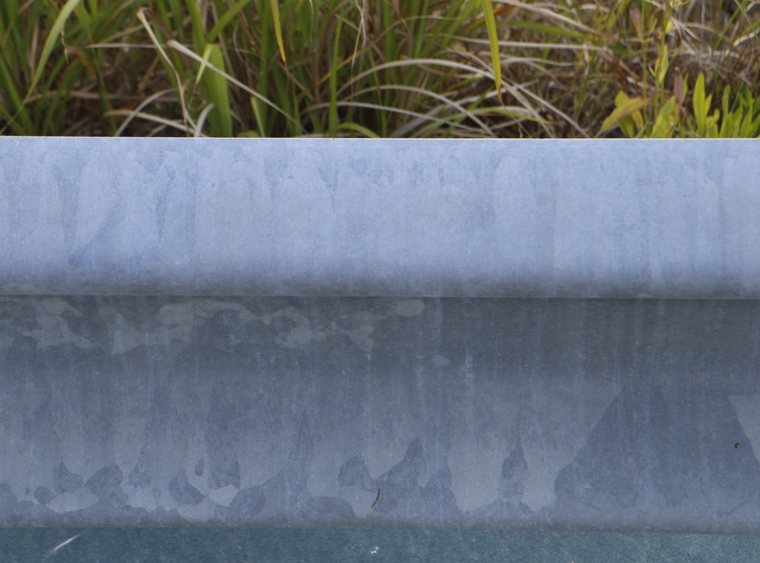
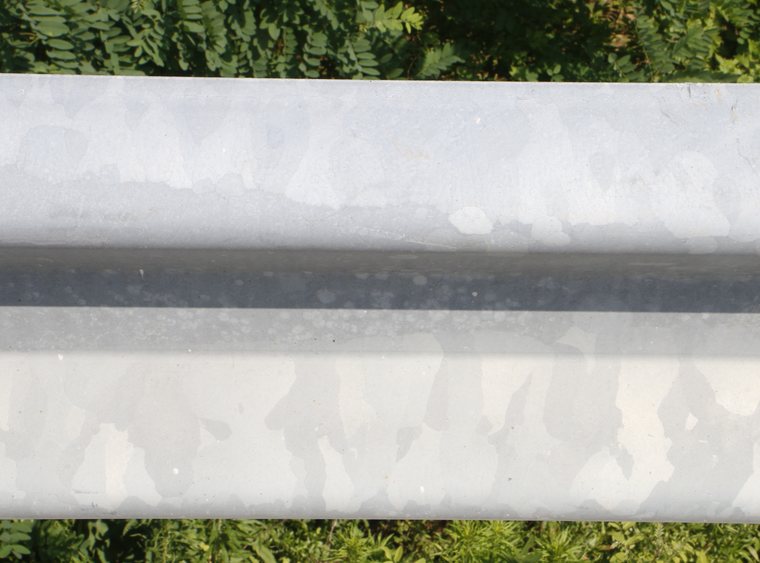
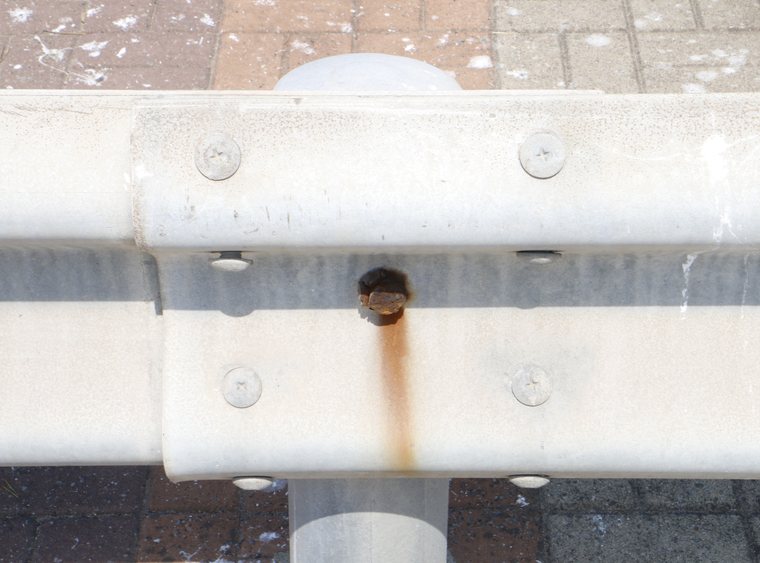
2019 nationwide guardrail survey · Field photographs of different surface conditions
Zinc oxidizes preferentially to protect the underlying steel. G·SAVE replenishes zinc on the existing galvanized surface and forms an inorganic composite coating to sustain corrosion protection.
The galvanized layer protects steel by sacrificial action and is progressively consumed in corrosive environments. Planning repairs from residual zinc thickness and localized corrosion condition helps limit substrate deterioration and maintain protection. The table below presents environmental corrosion rates and calculated residual thickness.
Zinc consumption rateG·SAVE combines sacrificial protection from zinc flakes with the barrier effect of an inorganic composite film. The zinc-based coating restricts ingress of corrosive agents and reinforces protection on exposed structural surfaces.
Sacrificial protection + barrier performanceCorrosion products and loose existing coatings affect repair quality. Surface preparation followed by the zinc-flake coating addresses deteriorated areas and improves maintenance efficiency.
Controlling recurrent coating failureA paint film acts as a barrier to the ingress of corrosive agents.
Binder degradation from ultraviolet radiation, salts and moisture affects the film's barrier performance.
Moisture and salts entering coating defects can initiate corrosion at the interface between zinc and paint.
Accumulated corrosion products can cause blistering and delamination, requiring surface preparation and repair coating.
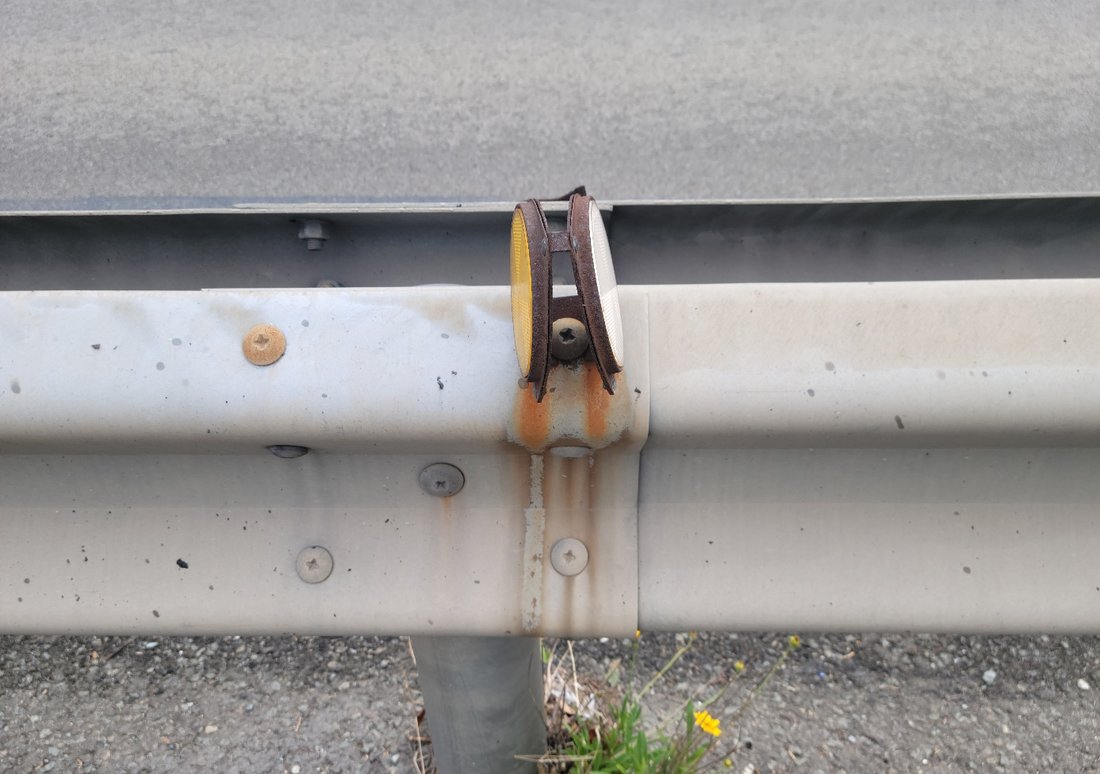
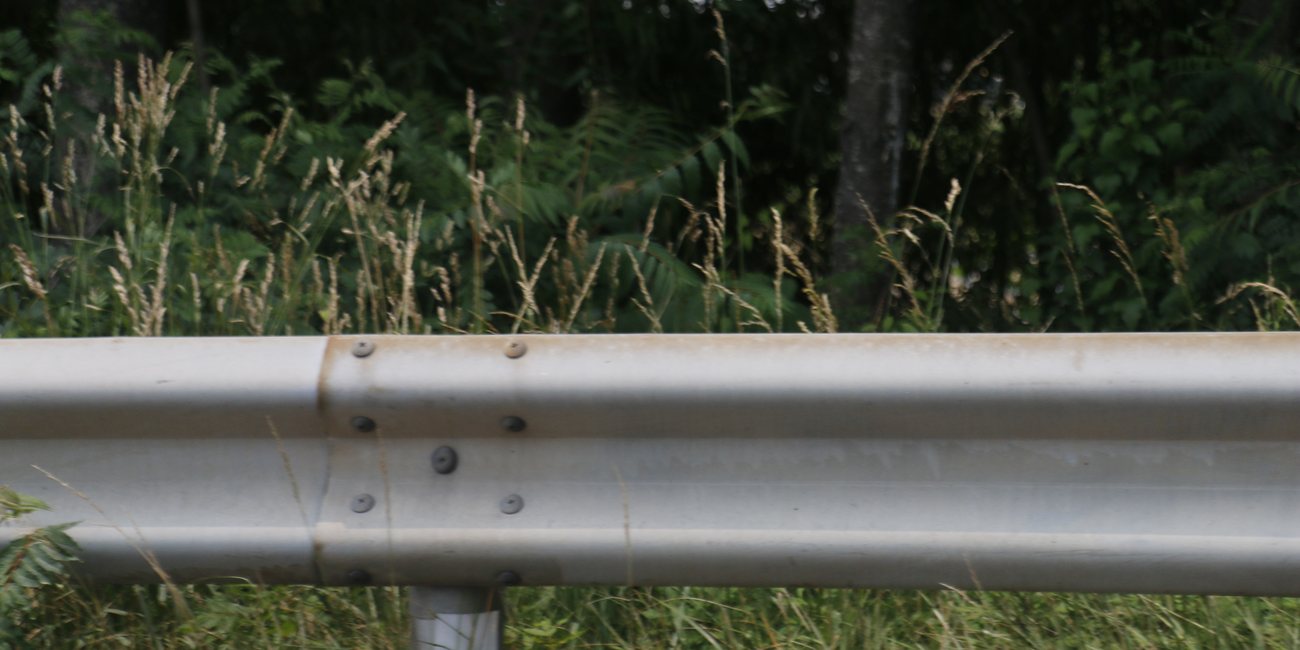
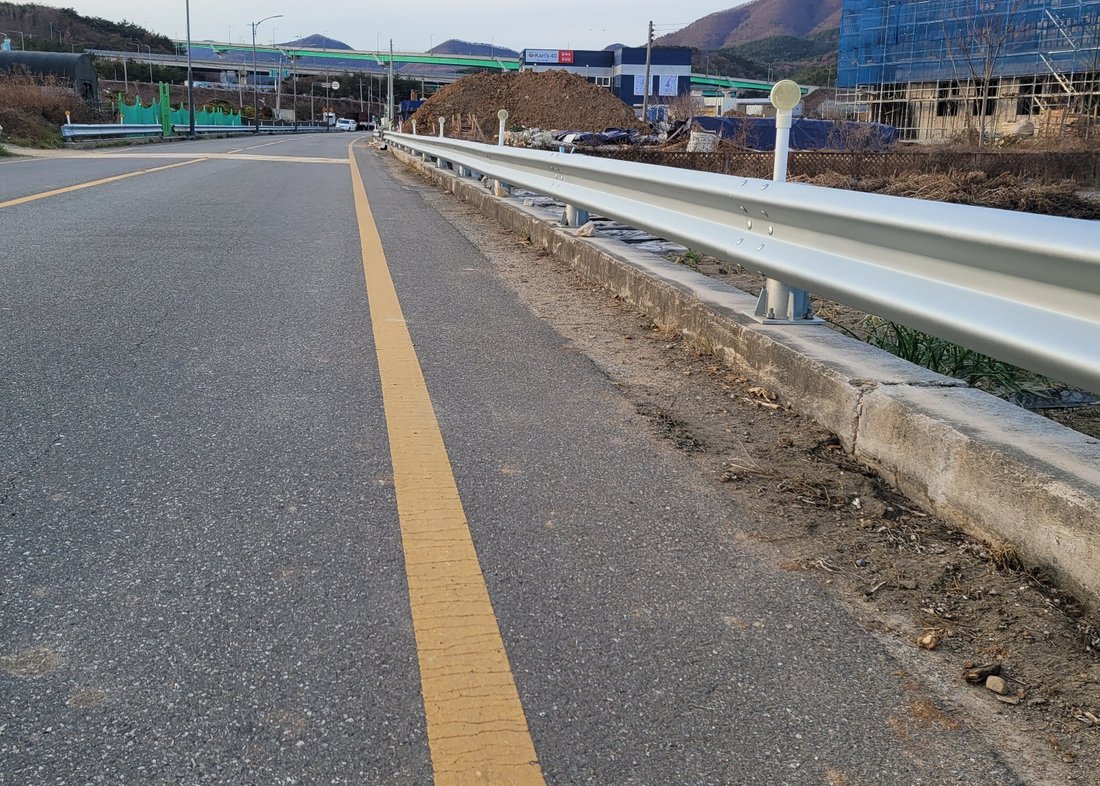
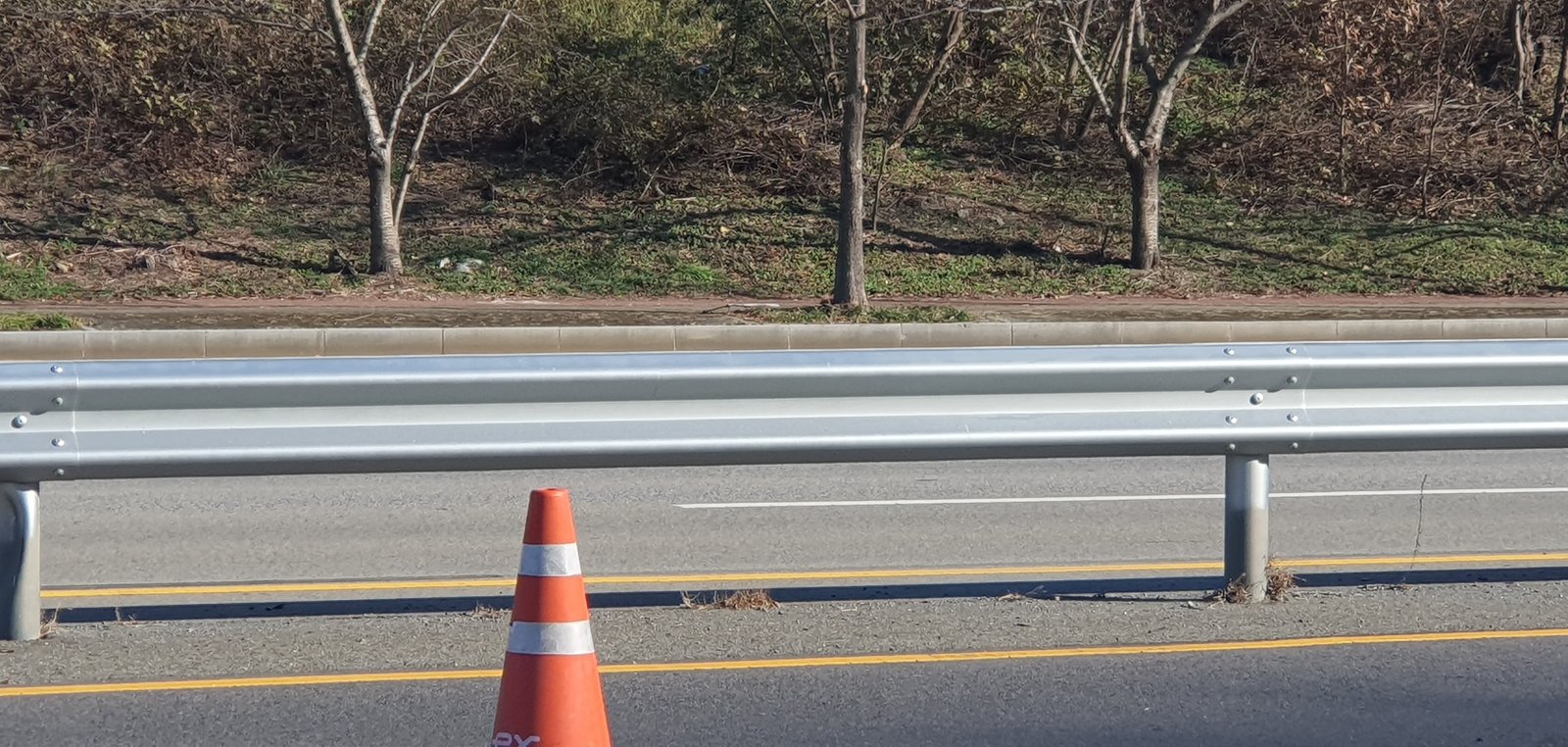
G·SAVE is a preventive repair process designed around the remaining zinc layer and substrate integrity. Early management of surface degradation and localized corrosion improves maintenance of existing steelwork. Photographs show different surface conditions from the 2019 nationwide guardrail survey.
Metallic luster and zinc spangle remain visible. Coating thickness and localized damage are inspected to establish the maintenance plan.
Zinc corrosion products reduce metallic luster and form white deposits. Residual coating thickness and corrosion extent determine surface preparation and repair scope.
Reduced luster and uneven surface discoloration indicate a need to measure the remaining coating. G·SAVE repair is planned for sections with sound substrate.
Red-rusted areas require corrosion-product removal and assessment of the remaining steel cross-section. Repair scope and preparation are established for structurally sound members.
| Corrosivity Category KS M ISO 12944-2 | Typical Exposure | Annual Zinc Loss | Calculated Residual Zinc Exposure period shown in each row Initial thickness: 77 μm | Inspection / Repair Planning |
|---|---|---|---|---|
| C5 · Industrial and marine | Coastal industrial areas: Ulsan, Gwangyang, Pohang and Busan | Highest consumption rate | Approx. 40% after 10 years Fasteners: approx. 20% after 10 years | Inspect within 7 years |
| C4 · High corrosivity | Urban, coastal and coastal-industrial areas | 2.1–4.2 μm/year | Approx. 59% after 10 years | Approx. 7 years after installation |
| C3 · Medium corrosivity | Motorways, expressways and mountain areas | 0.7–2.1 μm/year | Approx. 63%(after 20 years) | Approx. 15 years after installation |
The spray-applied system combines zinc flakes, aluminum flakes and an inorganic silicate binder. Ambient drying and curing enable repairs while the existing structure remains in place.
A citric-/phosphoric-acid-based pretreatment removes white rust and contamination. Scrub with a plastic brush, rinse with high-pressure water within 1 minute, then dry with compressed air. Application coverage: 8–10 m²/L.
Zinc flakes: 21±2%; aluminum flakes: 3±1%; modified ethyl-silicate inorganic binder: approximately 75%. Practical coverage is 3–4 m²/kg. Two coats build the target 20 μm coating thickness.
No curing oven is required. The coating forms through solvent evaporation and moisture reaction. Touch-dry time is 5–10 minutes in summer and 10–20 minutes in winter.
Verify a thickness of approximately 20 μm by the magnetic method in ASTM B499. Apply an additional coat where needed to achieve the target thickness.
| Method | Rebuilds a Zinc-Based Protective Layer | On-site Application | Dismantling Required | Process Considerations |
|---|---|---|---|---|
| No treatment | No | — | — | Progressive red rust can cause section loss and require structural replacement. |
| Conventional organic paint recoating | No — barrier only | Available | Not required | Zinc may continue to be consumed beneath coating defects; interfacial corrosion can cause blistering and delamination, requiring recoating. |
| Dismantle and re-galvanize or replace with new components | Yes | Off-site process | Required | Dismantling, transport and reinstallation · 450 °C zinc bath · Longer traffic-control periods · Waste generation |
| G·SAVE on-site repair | Yes — zinc-flake coating | Available | Not required | Residual coating and substrate assessment · Application planned for access and weather conditions |
| Characteristic | Baked zinc-flake system GEOMET-type reference | Organic zinc-rich system ROVAL-type reference | G·SAVE |
|---|---|---|---|
| Coating thickness | 8 ~ 12 μm | Approx. 80 μm | Approx. 20 μm |
| Curing conditions | 350 °C, 30 min × 2 Off-site thermal cure | Ambient temperature | Ambient temperature |
| Localized surface repair | Not applicable | Available | Available |
| Pot life after mixing | Approx. 10 hours | Approx. 10 minutes | Approx. 10 minutes |
| Water resistance developed | — | Approx. 1 hour | Approx. 15 minutes |
| Pencil hardness | 2H | B ~ HB | 6H(project specification control criterion) |
| Listed chemical constituents | Contains trivalent chromium | Xylene · Toluene · Ethylbenzene | None of the listed constituents Approved under Korea's safety-confirmation scheme for consumer chemical products |
Technology selection, road-guardrail applications and public-sector contracts demonstrate G·SAVE's field implementation experience.
| Characteristic | Status | Details |
|---|---|---|
| Outstanding technology selection | Documented | Iksan Regional Construction Management Administration, Construction Management Division-3657 (29 Dec 2021): G-SAVE repair method selected as an outstanding technology for 2021. Notice distributed to regional administrations and road management offices nationwide. |
| Follow-up inspection | Documented | Iksan administration, Construction Management Division-3230 (12 Dec 2022): inspection record covering visual examination and field testing one year after demonstration, before the defect-warranty period expired. |
| Completed applications | Documented | 9 projects · approximately 9.8 km (Jul 2020 – Sep 2023). Ulsan: 3 projects; four road management offices under the Iksan administration: 4; Gijang, Busan: 2. |
| Public procurement contracts | Contracted | Two KONEPS contracts: Gijang construction contract (guardrail improvement in Jwacheon-ri, Jangan-eup, Feb 2023); Ulsan goods contract (metallic coating for 2,224 m of guardrail surface restoration, Aug 2023, 2-year defect liability). |
| Supported-development product contract | Contracted | One Ulsan negotiated contract for a supported-development product under Korea's SME technology innovation framework. |
| Registered patents | Registered | Korean patents No. 10-2166760, No. 10-2074326 and No. 10-2530160 (guardrail coating system). Separate application No. 10-2023-0090993. |
| Environmental and safety documentation | Approved | Both pretreatment and coating products are approved under Korea's safety-confirmation scheme for consumer chemical products. The Iksan evaluation committee's summary also records non-detection of 26 heavy metals and 35 hazardous substances. |
| Test Characteristic | Reference Standard | Report Series |
|---|---|---|
| Neutral salt spray | KS D 9502 (ASTM B117) | TAK-2020 · TAK-2022 series |
| Cyclic corrosion | JIS H 8502 | TAK-2020 series |
| Adhesion (cross-cut) | ASTM D3359 | TAK-2020 series |
| Pencil hardness | ASTM D3363 · KS M ISO 15184 | TAK-2020-039656 |
| Impact resistance | ASTM D2794 | TAK-2020 series |
| VOCs · Pot life | — | TAK-2020 series |
| Analysis of RoHS-restricted substances | IEC 62321 | TAK series |
| Direct comparative testing against new hot-dip galvanizing | KS D 9502 · JIS H 8502 | TAK-2020-083109 · 083376 |
G·SAVE specifications combine substrate condition, remaining zinc thickness and site access to define an effective preventive repair process.
· Hot-dip galvanized steel structures, typically with 550 g/m² zinc coating mass (approximately 77 μm)
· In highly corrosive coastal or coastal-industrial environments, planning from 7 years after installation
· In general road, expressway or mountain environments, planning from 15 years after installation
· White rust or surface discoloration with no red rust or only localized red rust
· Structures whose principal corrosion zones are exposed surfaces accessible to spraying
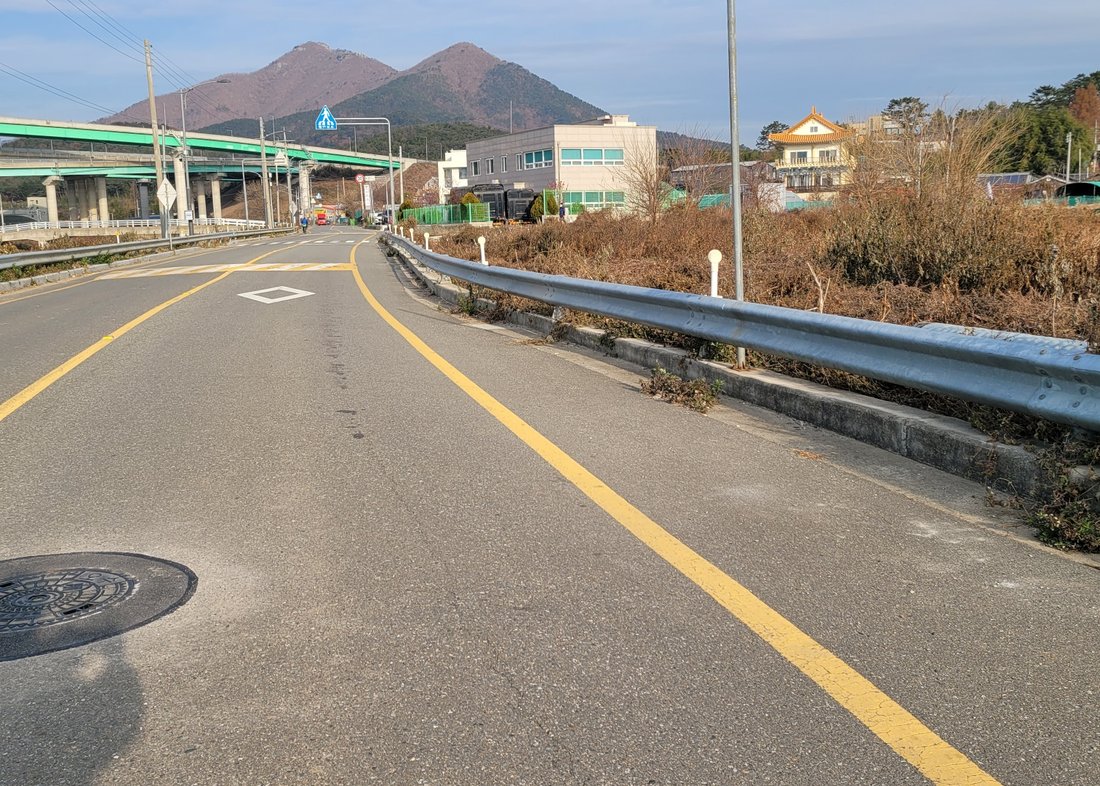
· 2W and 3W guardrails on sections accessible to vehicle-mounted coating equipment
Site-specific design criteria
· Inspect residual zinc, red-rust distribution and steel cross-section to establish substrate integrity
· Assess impact damage, deformation and section loss to define any structural replacement scope
· Specify appropriate preparation and repair for previously painted or ungalvanized surfaces
· Select equipment and work zones for structural geometry and access
· Control surface dryness, temperature, wind, rainfall and overspray
| Condition | Criterion | Technical Basis |
|---|---|---|
| Rainfall | No rain within 4 hours before or 18 hours after application | Initial moisture conditions govern film formation in the moisture-curing inorganic binder. |
| Ambient temperature | ≥5 °C and <40 °C | Low temperature delays curing; excessive temperature accelerates solvent evaporation and can cause film defects. |
| Wind speed | Consult the supervisor at ≥5.5 m/s · No application at ≥8 m/s | Windborne overspray reduces coating deposition and can contaminate surrounding surfaces. |
| Overspray-screen clearance | Maintain adequate separation | Adequate screen clearance and equipment adjustment prevent accumulated overspray from dripping onto and marking the coated surface. |
| Daily application rate | Average 1,000 m (approximately 250 spans) | Based on partial lane closure; the work plan reflects section-specific access and conditions. |
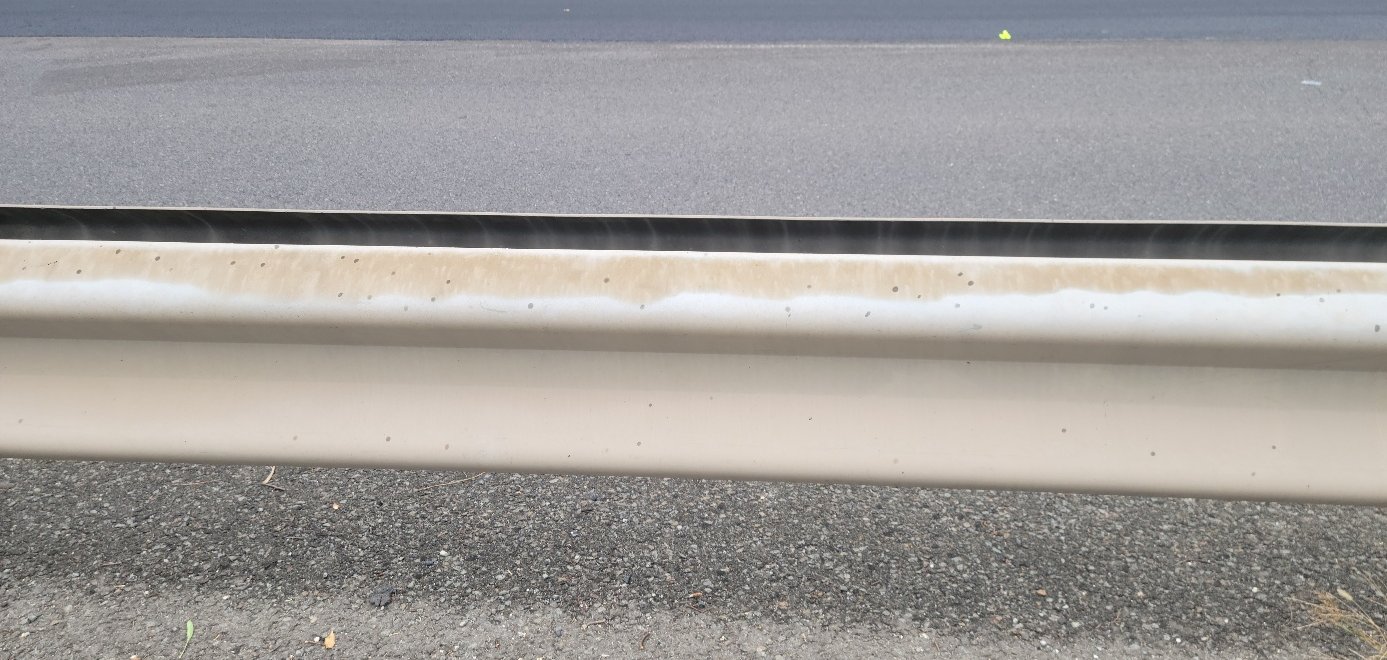
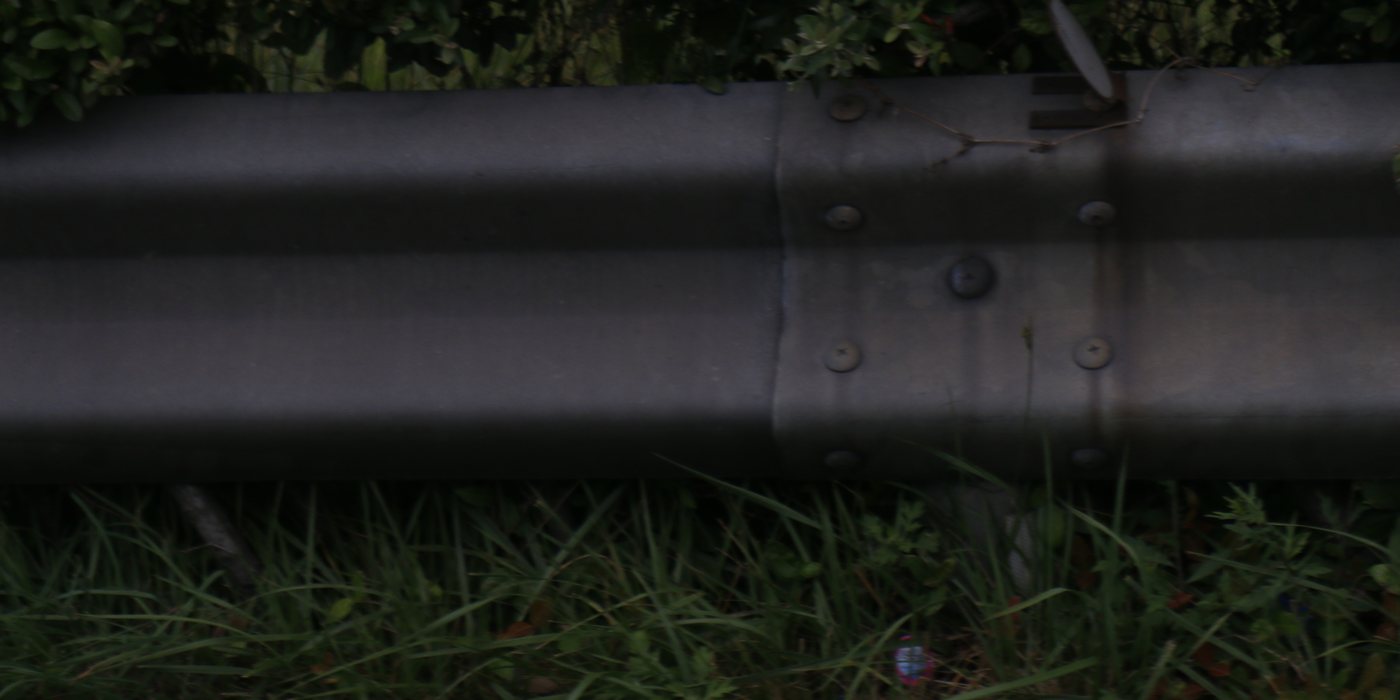
Integrated surface preparation, coating application and inspection maintain the quality of corrosion-protection repairs.
Measure residual zinc thickness and assess substrate corrosion to define work zones, preparation and coating coverage.
Apply at ≥5 °C and below 40 °C, with no rain during the 4 hours before and 18 hours after application. Maintain wind speed below 8 m/s and implement overspray and work-safety controls.
Inspect thickness, appearance and application uniformity on accessible exposed surfaces, and retain application records.
The following carbon comparison is reported in the Iksan regional administration's technology-demonstration evaluation summary.
Standard 2W guardrail: 134 kg CO₂ per panel
Includes maintenance of a 450 °C zinc bath, pretreatment and transport
Same panel basis: 0.9 kg CO₂ — approximately 99.4% lower
Ambient air drying · No dismantling or transport
G·SAVE process details, project examples, product specifications and quality controls are provided for your project requirements.
Explore the zinc-flake inorganic coating structure and its preparation, application and drying process.
Review 9 guardrail projects covering approximately 9.8 km to understand application areas and site operations.
Send structural photographs and the repair area for guidance on site assessment, application specifications and quotations.
The composite coating disperses 21±2% zinc flakes and 3±1% aluminum flakes in an inorganic silicate binder. Sacrificial zinc protection and the barrier effect of the flake structure protect existing galvanized steel surfaces.
G·SAVE repairs exposed surfaces of existing outdoor galvanized steel structures, including road guardrails. Application coverage and specifications are designed around geometry, residual zinc and access.
KEMP provides information on 9 guardrail projects covering approximately 9.8 km, Iksan's outstanding-technology selection and public-sector contract examples. Request the product and process documentation needed for your project.
Average application under partial lane closure is approximately 1,000 m/day. The process reduces dismantling, transport and reinstallation. Scheduling reflects the traffic-management plan, repair area and weather conditions.
After surface preparation, application is specified from the residual coating and target film thickness. Screens, overspray prevention and drying conditions are controlled, followed by appearance and thickness inspection. Product SDS and application instructions govern site work.
Send overall, surface and connection photographs with the proposed repair area. Our team will propose a trial section, process, cost and schedule suited to site conditions.
Discover KEMP surface-treatment solutions for industry-specific exposure conditions and product requirements.