
Corrosion protection for container locking rods and door gear: Innozinc recorded no white or red rust at intentional scratches in a customer's 1,000-hour salt spray comparison. HDG reference specimens were rated white rust ++++ and red rust +++. KEMP develops component specifications for container hardware and related ESS and generator enclosure applications.
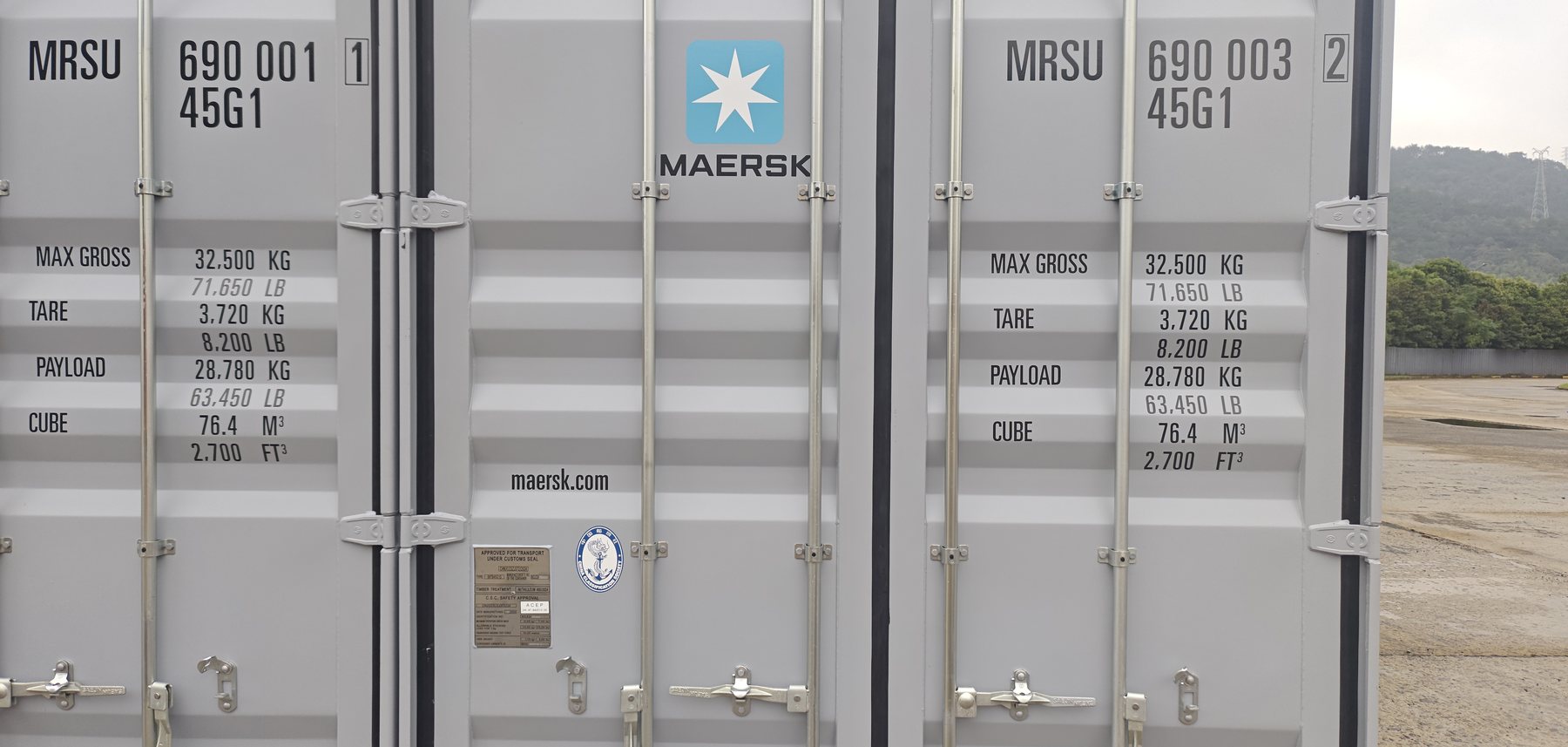
The shipping customer's container manufacturing subsidiary tested both coating systems under the same salt spray conditions for 1,000 hours in June 2025.
| Area | Corrosion type | HDG locking rod | Innozinc locking rod |
|---|---|---|---|
| Main surface | White rust | ++++ | + |
| Main surface | Red rust | +++ | None observed (Nil) |
| Scratch | White rust | ++++ | None observed (Nil) |
| Scratch | Red rust | +++ | None observed (Nil) |
| Coating thickness in this test | Measured | 66.2 ~ 88.5µm | 32.4 ~ 51.3µm |
Compare both the main surface and scratches. At the intentional scratches, neither white nor red rust was observed on the Innozinc specimens. These results apply to the reported damage preparation and test duration.
The Innozinc deposits were thinner than the HDG deposits in this comparison; thickness alone does not predict field durability.
| Elapsed time | HDG locking rod | Innozinc locking rod |
|---|---|---|
| 100 hr | White rust + | No visible change |
| 200 hr | White rust ++ | No visible change |
| 400 hr | White rust +++ | No visible change |
| 600 hr | White rust ++++ · Red rust + | No visible change |
| 800 hr | White rust ++++ · Red rust ++ | White rust + |
| 1,000 hr | White rust ++++ · Red rust +++ | White rust + · No red rust observed |
HDG first showed red rust at 600 hr. Innozinc showed white rust at 800 hr but no red rust through 1,000 hr. White rust is a zinc corrosion product; red rust indicates corrosion of exposed steel. Acceptance must address both appearance and function.
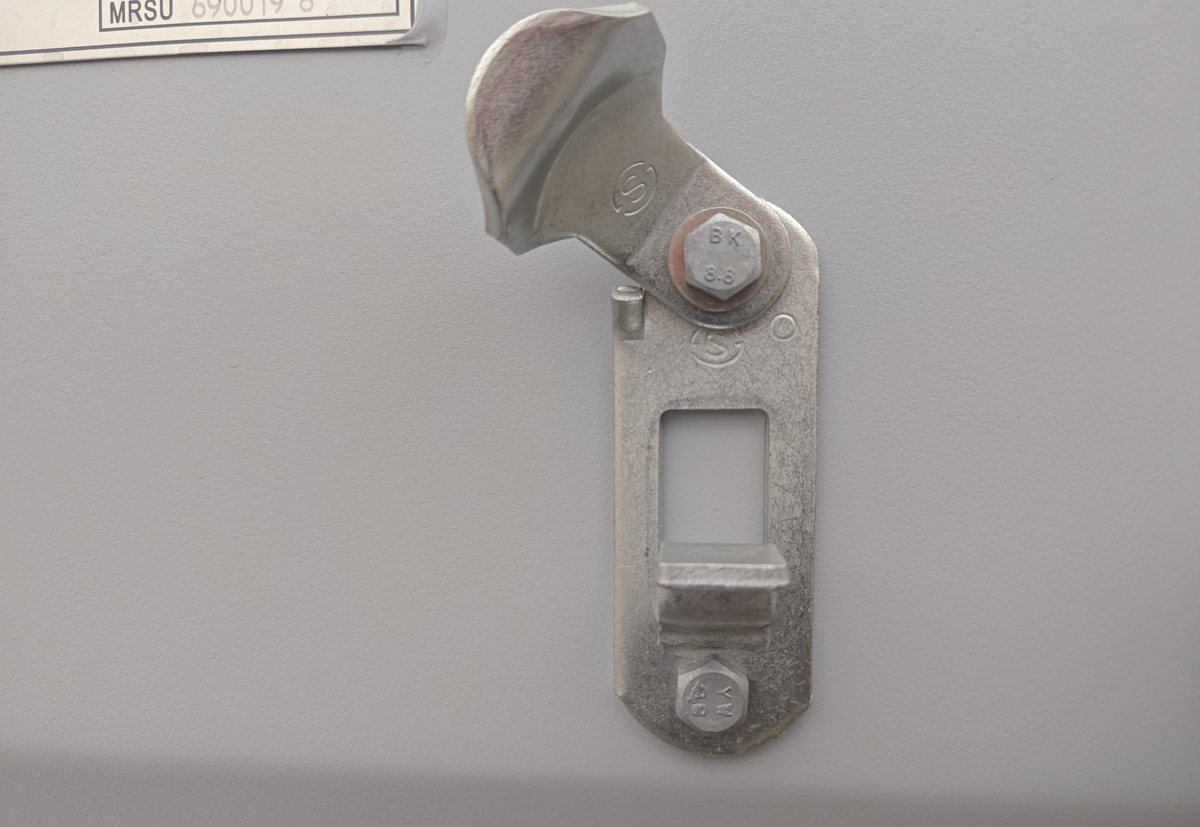
Containers built in November 2024 used Innozinc-coated door gear for a service evaluation. Unlike chamber testing, field exposure was not controlled.
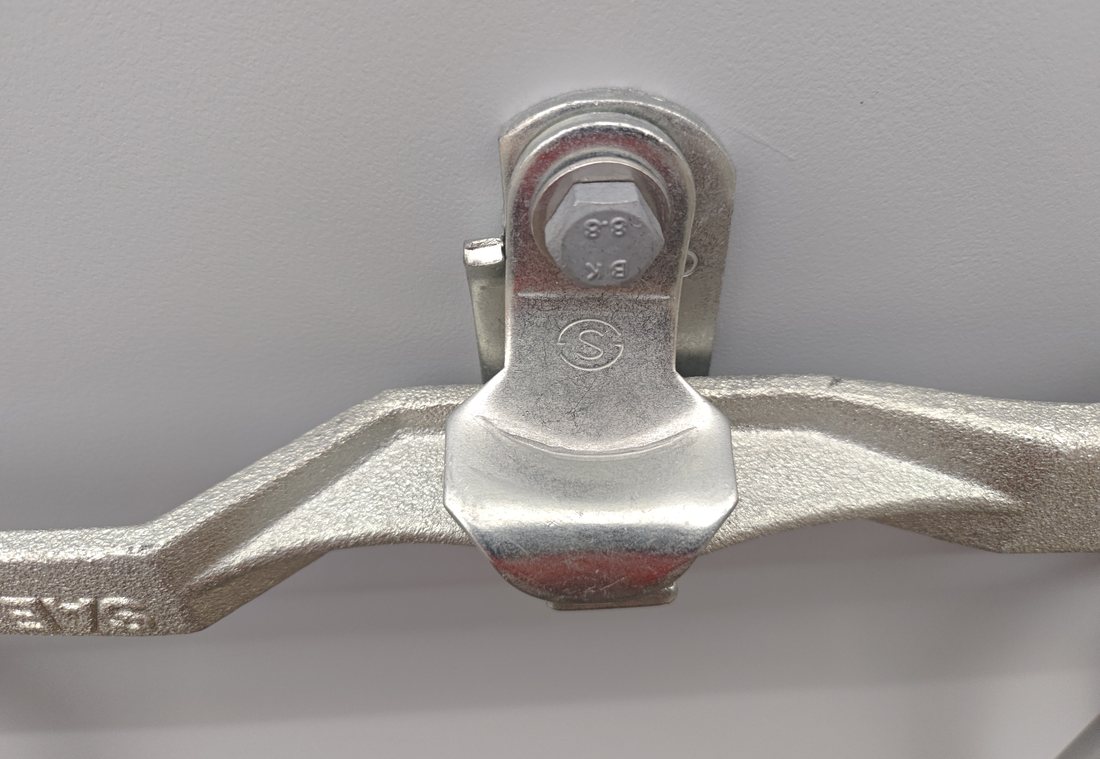
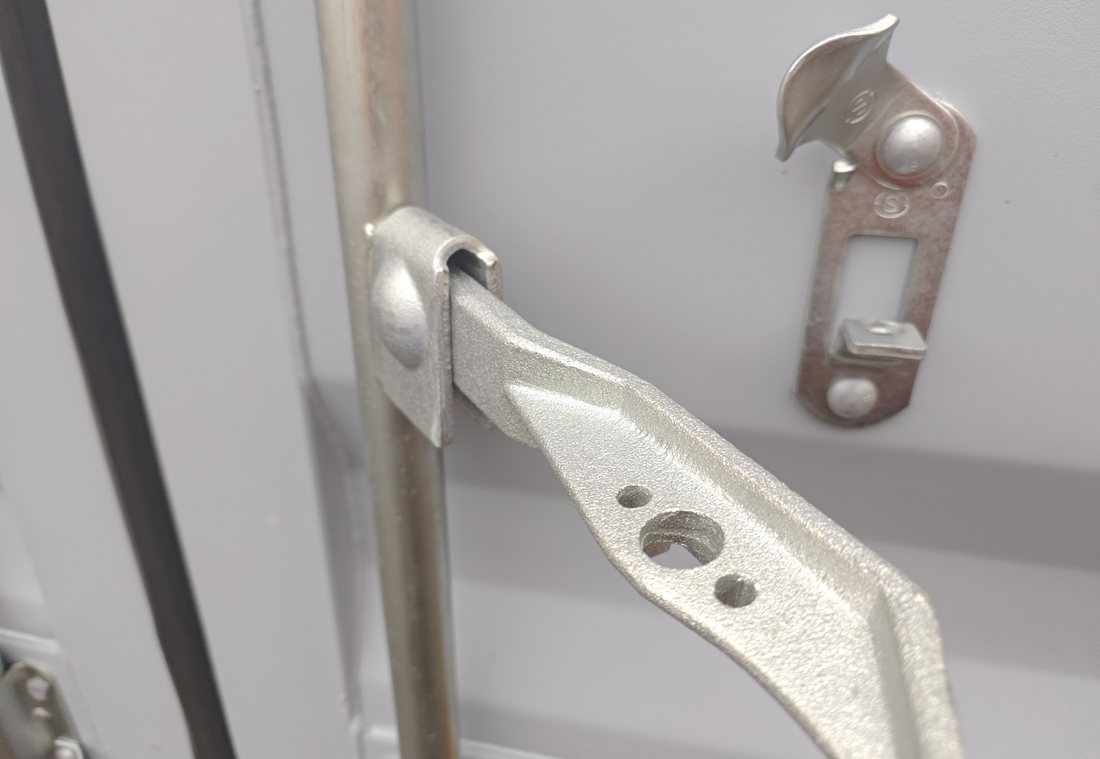
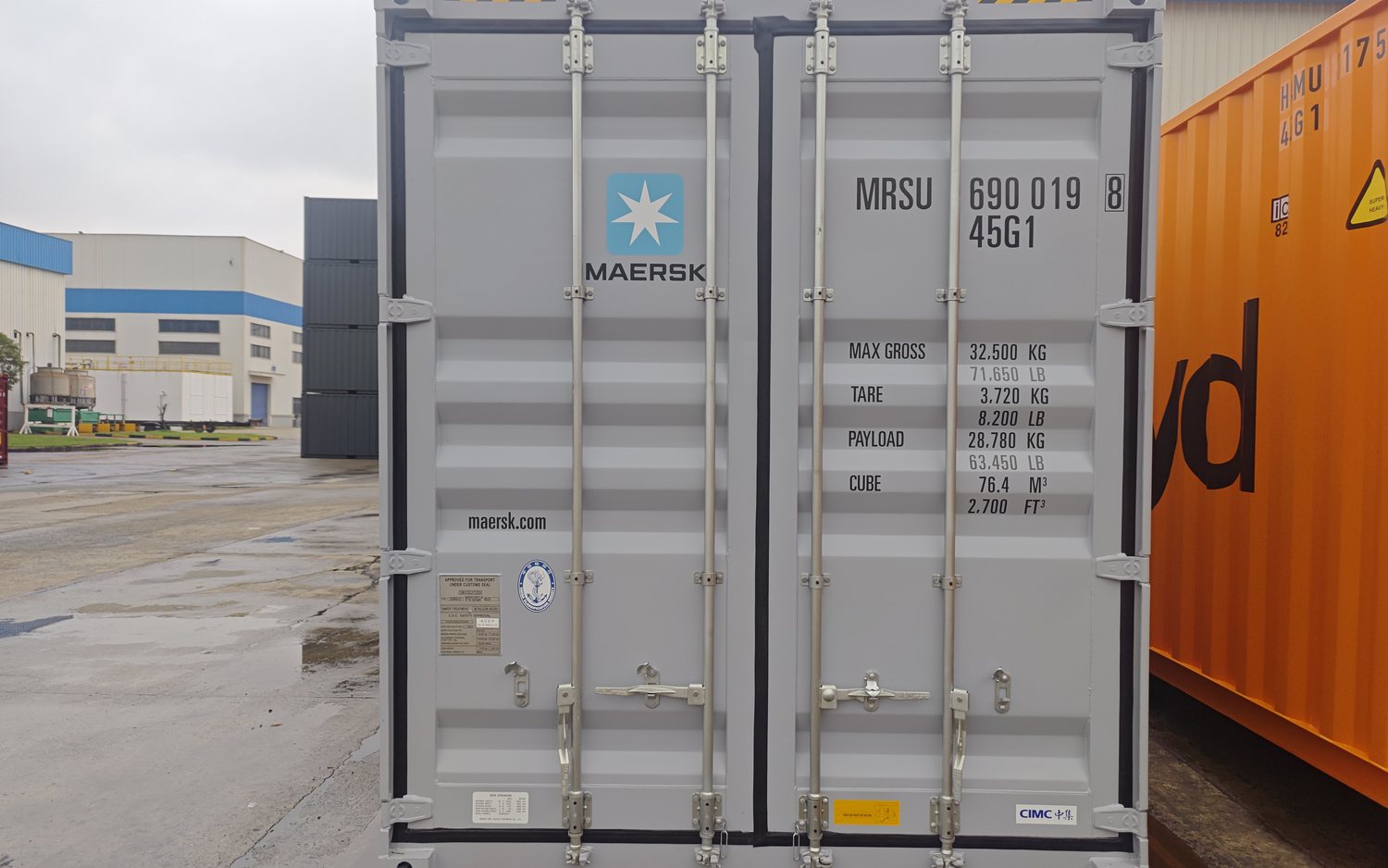
These are photographs and visual observations at the reported five-month checkpoint, not quantified lifetime data. The observation does not demonstrate long-term design life. Request the dated records and exposure history for review.
Handling impacts, bending, contact wear and welding can damage door gear. Separate evaluations examined these conditions rather than only intact coatings.
Following deliberate hammer damage, no rust was observed at the impacted area during the reported salt spray evaluation. Review the full test conditions.
no rust at hammer impact damaged areasNo rust was observed at the evaluated bend. Bend geometry and processing sequence must be confirmed for production parts.
no rust at bendingThe evaluation left welding residue in place. Rust developed at the weld line but was not observed to spread into the adjacent Innozinc coating during the test. Production welds still require cleaning and repair as specified.
No observed spread into the adjacent Innozinc coatingRust was localized where the coating was abraded; no spread was observed during the reported evaluation. This is not a guarantee against propagation in service.
rust at sand paper area only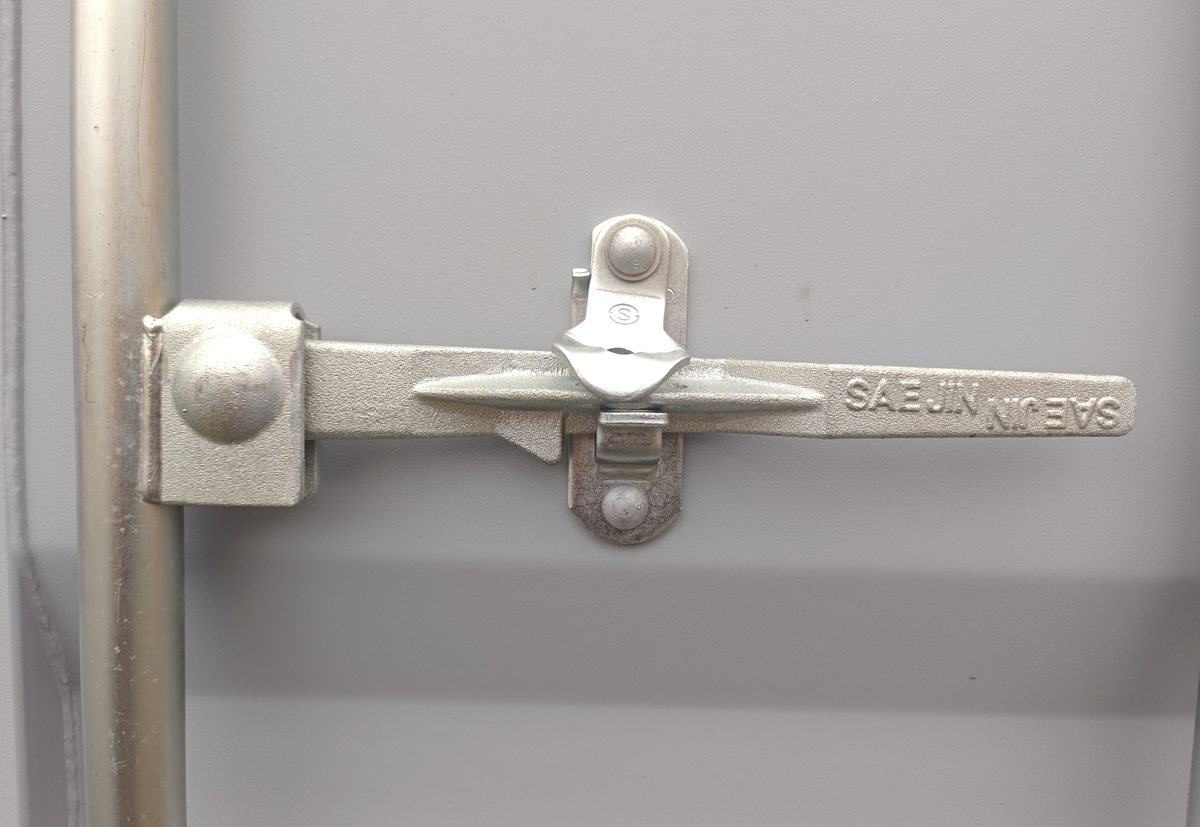
These damage evaluations were KEMP in-house tests; rust occurred at the weld line. The reported observation was localized corrosion without visible spread during the evaluation, not permanent protection after damage. Request the complete photographs and conditions.
ESS, generator and substation enclosures may use similar door gear, hinges and keepers. Their exposure, electrical safety and design-life requirements differ. Container test results are supporting references, not ESS qualification.
| Item | Marine container | Containerized ESS | Use of this page's evidence |
|---|---|---|---|
| Door gear, hinges and locks | Comparable hardware | Comparable hardware | Component-specific review required |
| Salt exposure | During marine service | Depends on siteCoastal and offshore sites require salt-exposure review | Confirm site conditions |
| Operating conditions | Transport, handling impacts and repeated opening | Fixed installation; opening frequency varies | Assess actual loads and wear |
| Design life | Defined by operating specification | Project targets may be 15–20 years | Long-term evidence required |
| Earthing and bonding continuity | Confirm applicable requirements | Required where specified for equipotential bonding | Verify resistance on the assembled joint |
| Nearby electronics | Cargo-dependent | Battery racks, PCS and BMS | Review contamination risks below |
| Internal rack and frame fasteners | Lashing and securing | Battery racks, cable trays and threaded rods | See fastener guidance |
ESS enclosures require earthing and equipotential bonding continuity. Electrical resistance depends on the complete coating and joint design, not simply the generic coating family.
Innozinc combines electrodeposited zinc with an inorganic coating; this does not automatically prove a low-resistance connection. Test door-to-enclosure bonding paths under specified assembly, environmental and ageing conditions.
Zinc whiskers can be relevant to zinc-coated surfaces near electronics because detached conductive particles may create faults.
Innozinc is not claimed here to suppress whisker growth; supporting validation has not been provided. Consult the whisker review guidance and your equipment requirements before using coated parts inside ESS enclosures.
The available references are a five-month field observation and a 1,000-hour SST. Neither demonstrates 15–20 years of maintenance-free ESS service.
SST hours cannot be directly converted to years of service. Agree site-specific testing and long-term field observation with the project team.
External door gear, hinges, locks and keepers are candidates for component-specific evaluation using the container data as a reference. Consider Innozinc-h for demanding salt exposure, subject to qualification.
Internal battery racks, trays and threaded rods also require electrical safety, contamination and whisker-risk review.
ESS-specific validation is not established by the container tests. Review component geometry, exposure and acceptance requirements. Please share the intended installation conditions so an appropriate qualification plan can be agreed.
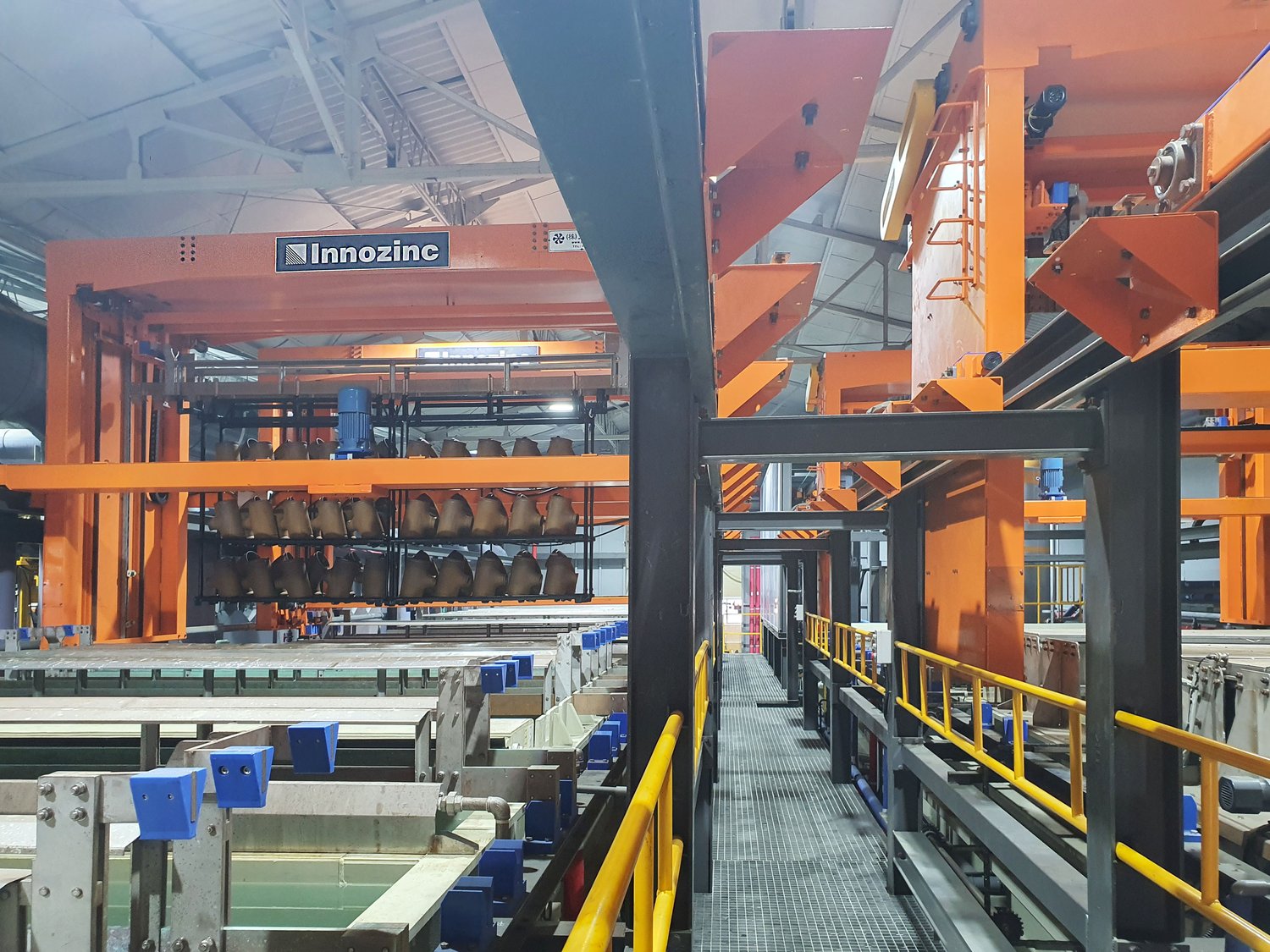
Reference capacities: rack line, 35 tonnes/day; barrel line, 7 tonnes/day. Actual throughput depends on component geometry, loading and specification.
| Component | Exposure conditions | Candidate specification | Review basis |
|---|---|---|---|
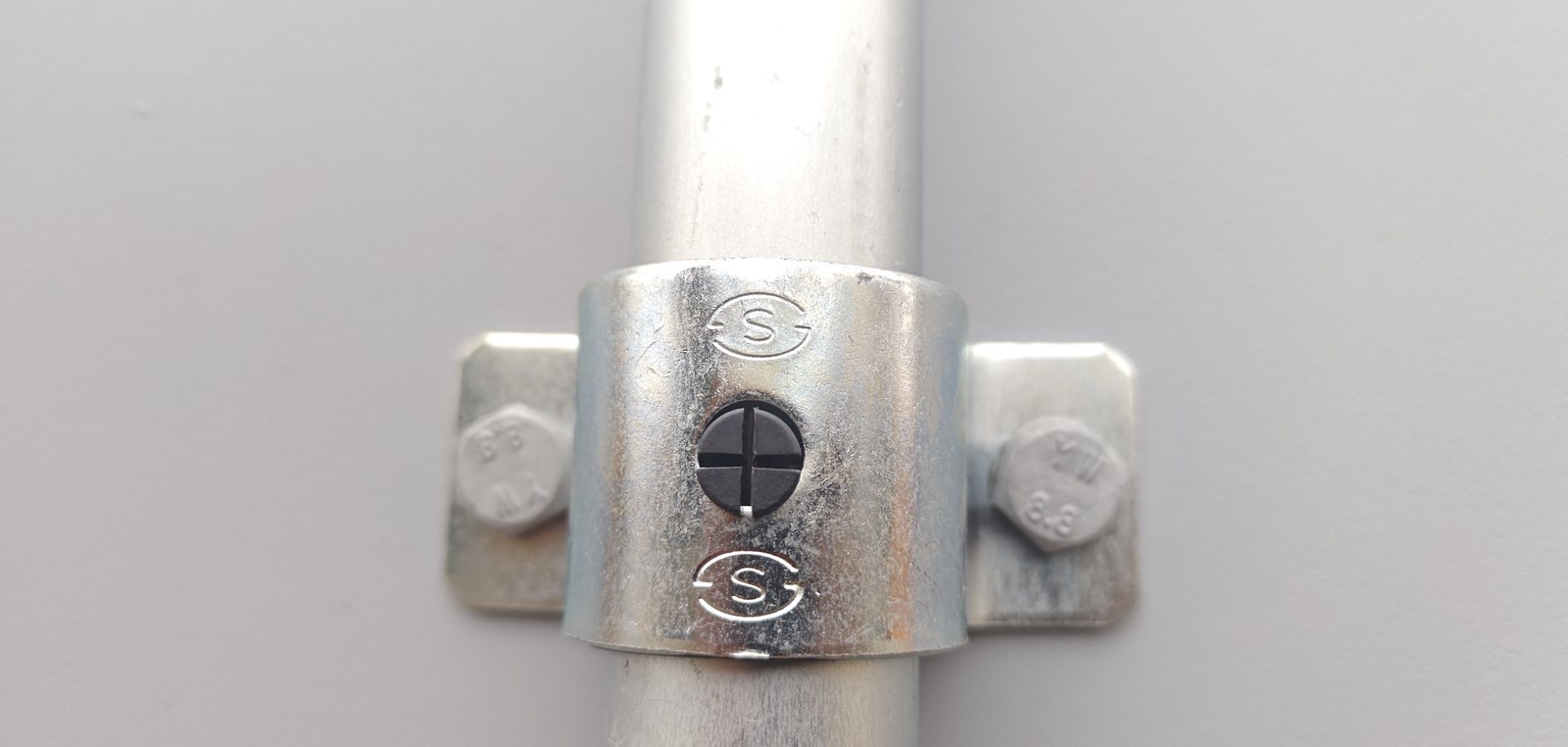
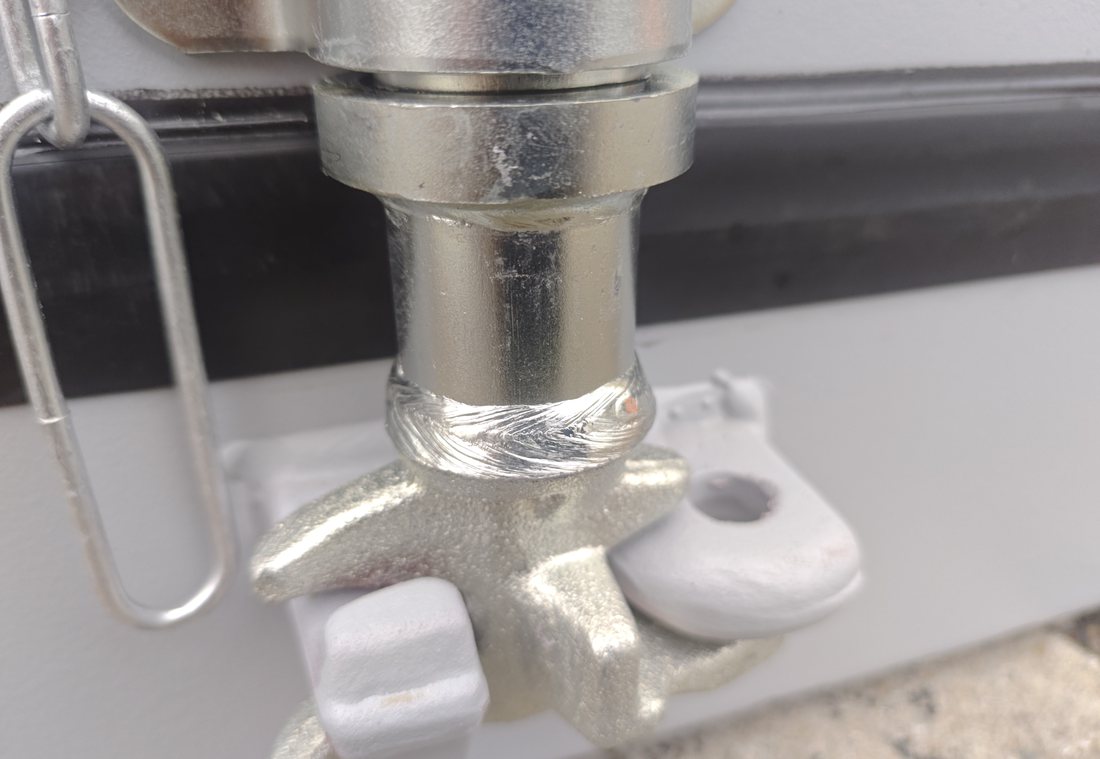
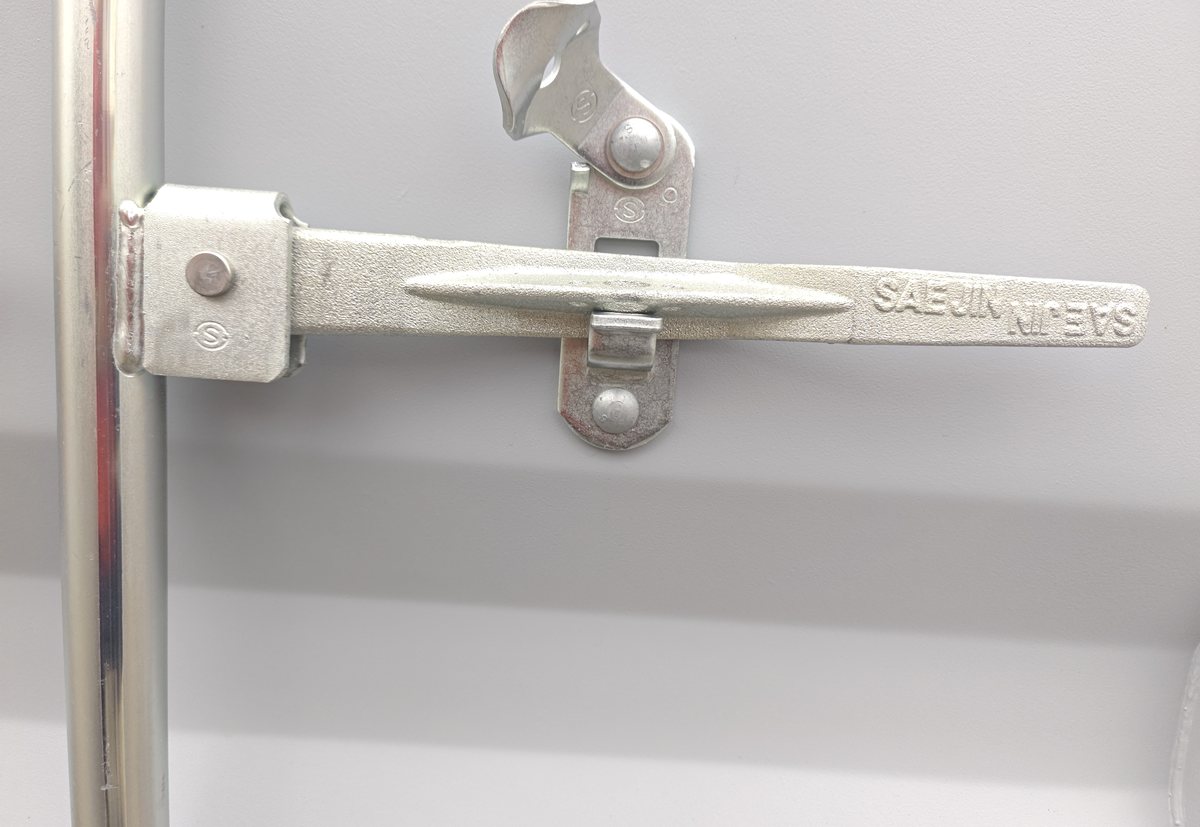
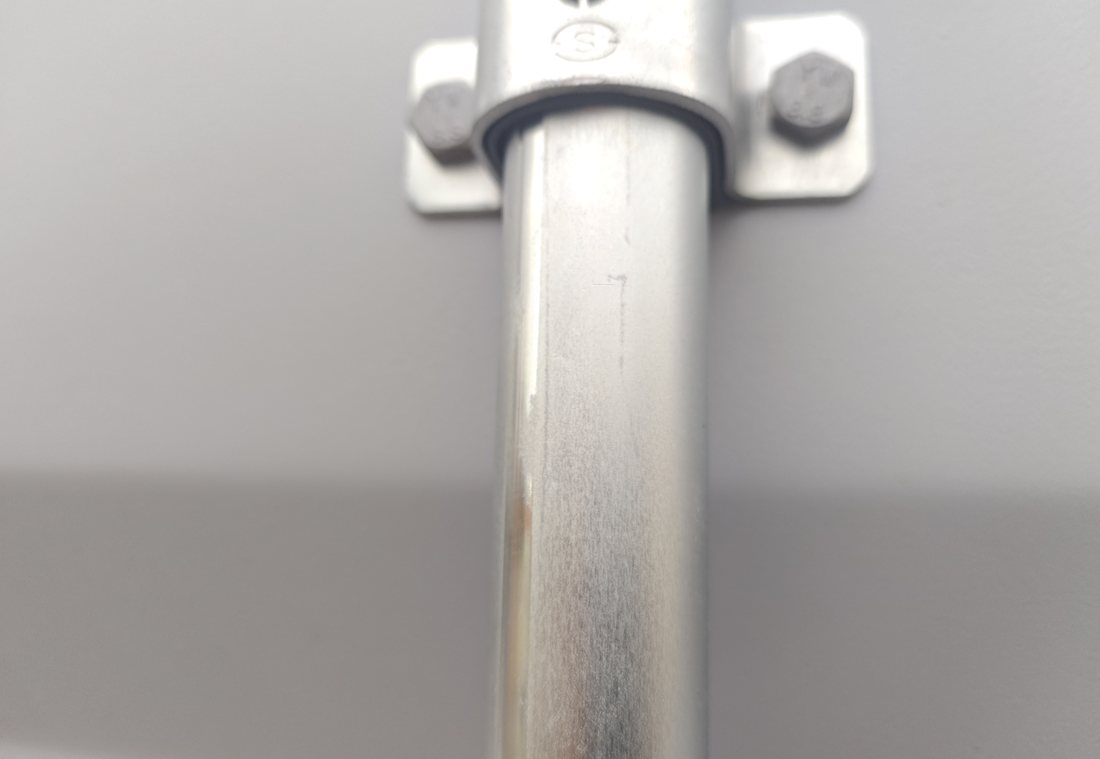
| Locking rods and door gear | Marine salt exposure and repeated contact | Innozinc | No scratch red rust observed at 1,000 hr in the reported test |
| Cams, keepers and locking hardware | Repeated operation and friction | Innozinc | No spread observed in the reported damage evaluation |
| Lashing gear and turnbuckles | Exposed deck service | Innozinc-h | Review salt exposure and galvanic interfaces |
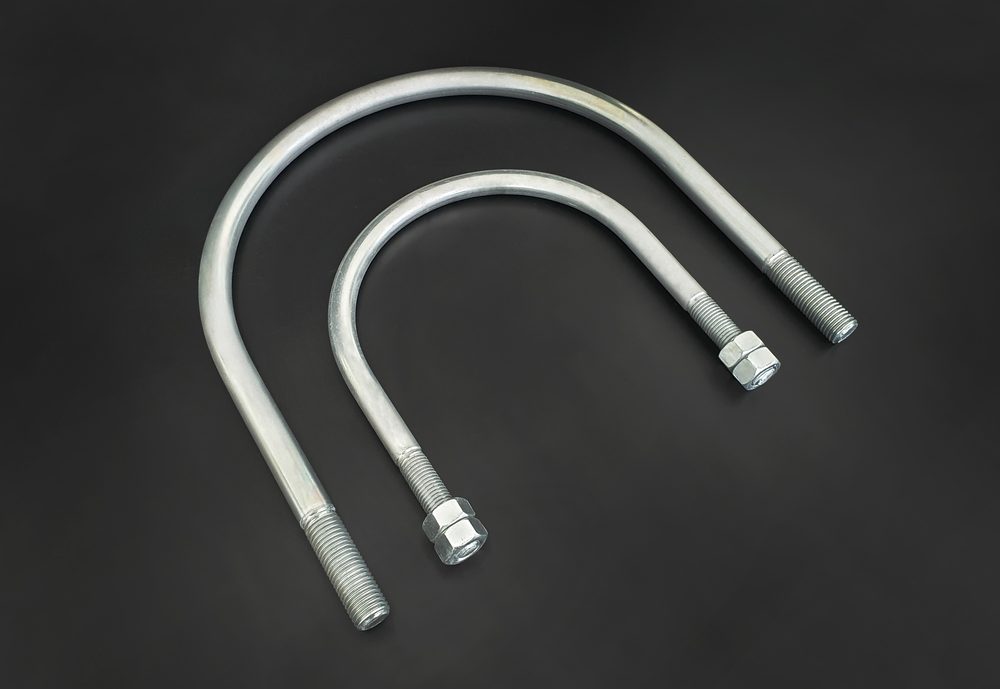
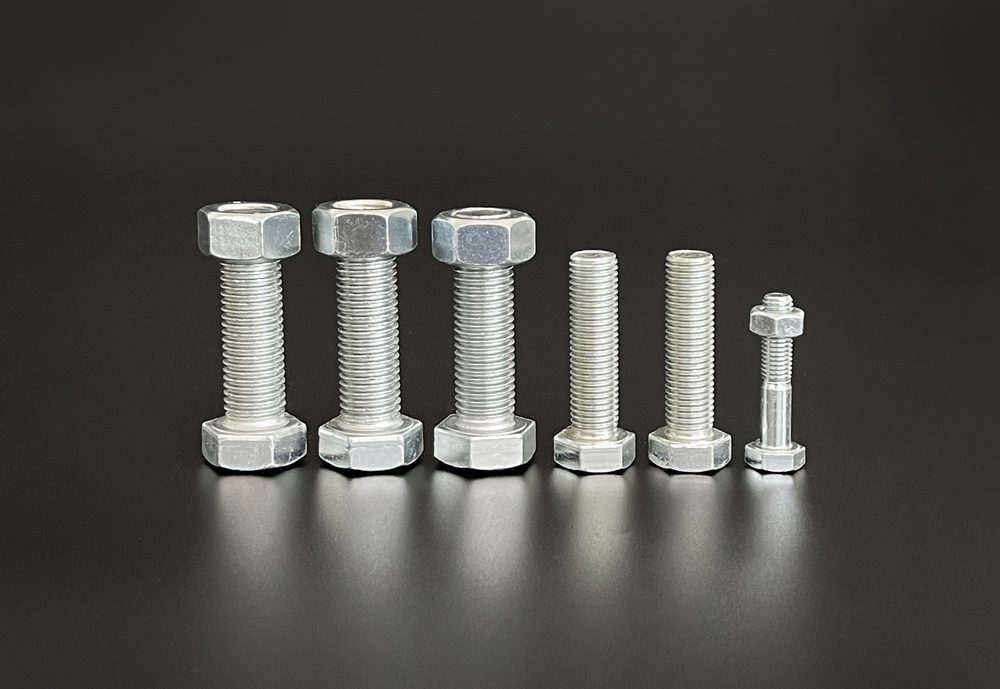
| Container bolts and nuts | Marine exposure and handling impacts | Innozinc | Review corrosion resistance after fabrication |
| Bent rods | Marine service | Innozinc | No rust observed at the tested bend |
| Components requiring welding | Marine service | Innozinc | No visible spread from weld to adjacent coating in the reported test |
| ESS / generator enclosure door gear and hinges | Fixed outdoor service; bonding requirements | Innozinc | Component testing and electrical continuity verification required |
| ESS enclosures: coastal, island and offshore sites | Salt exposure and long-term outdoor service | Innozinc-h | Review salt exposure and galvanic interfaces |
| ESS enclosure internal components | Enclosed space near electronics | Prior technical review required | Review whisker and contamination requirements |
| High-strength fasteners, class 10.9 and above | — | Not recommended without qualification | No supporting hydrogen embrittlement validation provided |
| Sliding surfaces under repeated metal-to-metal wear | — | Wear assessment required | Thinner deposit than HDG in the cited specimens |
Review loading, corrosion, wear and approval requirements before changing hardware specifications.
Innozinc uses an electroplating process. This page does not establish protection against hydrogen embrittlement, and supporting validation for high-strength fasteners has not been provided. Do not specify it for safety-critical delayed-fracture applications without an agreed engineering qualification and process-control program.
The comparison measured approximately 66–88 µm for HDG and 32–51 µm for Innozinc. This corrosion result does not establish equal wear life. Repeated metal-to-metal sliding contact needs separate tribological and durability evaluation.
The cited record describes observations after five months, not the current age of every installation. For longer-term evidence, agree a dated observation program on representative components.
Candidates include salt-exposed locking rods and door gear, bent components and general-purpose fasteners up to class 8.8. Strength class alone does not establish suitability: review hydrogen embrittlement, loads, weld procedures and wear before approval.
Review the relevant reports together with specimen details, test methods and acceptance criteria before approving a specification.
| Evaluation topic | Supporting document | Evidence type | Availability |
|---|---|---|---|
| No scratch red rust observed at 1,000 hr | Customer container manufacturing subsidiary test (June 2025)Side-by-side specimens at the customer's facility | Customer in-house evaluation | Report available |
| Observations from 100 to 1,000 hr | Same test record | Customer in-house evaluation | Photographs and records available |
| No visible corrosion at five-month inspection | Field evaluation of containers built in November 2024 | Field observation | Visual record, not quantitative lifetime data |
| No rust observed at tested impact and bend areas | KEMP damage-condition evaluation | In-house testing | In-house photographs available |
| No visible spread from weld to adjacent coating in the test | Same evaluation | In-house testing | In-house photographs available |
| Six restricted substances not detected within report scope | Third-party analysis | Third-party report | Test report available |
| 500-hour neutral salt spray comparison | Third-party testing organization | Third-party report | Report available; disclosure restrictions apply |
| Hydrogen embrittlement qualification | — | — | Validation not provided; qualification required |
| Multi-year field validation | — | — | Not established by the five-month record |
| ESS-specific qualification | — | — | Separate application validation required |
| Whisker mitigation review | — | — | No suppression claim; see review guidance |
Some reports have restrictions on promotional use. Access is subject to the issuer's terms and disclosure permissions.
Customer identities are also subject to prior consent and confidentiality agreements. Contact KEMP to arrange an appropriate technical review.
Agree a sample plan and assess coated parts against your inspection and acceptance criteria.
Request the customer test summary, dated field observations and technical catalogue. Tell us your component and exposure requirements.
Agree sample material, dimensions, quantities, fees, shipping and turnaround before dispatching rods or hardware.
Evaluate against your own salt spray, assembly and field requirements before approving production.
Questions from quality and procurement teams.
Find the service environment and technical review points closest to your project.
