CORROSION RESISTANCE
Improved Corrosion Resistance
An inorganic film system limits corrosive-agent penetration on zinc-electroplated surfaces. White- and red-rust SST performance at each plating thickness guides grade selection.

KEMP · ELECTROGALVANIZING UPGRADE
 Features
Calculators for Upgrade 300 and 500
SURFACE CHEMISTRY
ELPANG is an upgrade solution that uses your existing
zinc electroplating line to improve corrosion resistance.
CORE PROPERTIES
We select the Upgrade grade for the target corrosion resistance, plating thickness and existing post-treatment process.
CORROSION RESISTANCE
An inorganic film system limits corrosive-agent penetration on zinc-electroplated surfaces. White- and red-rust SST performance at each plating thickness guides grade selection.
EXISTING LINE
ELPANG works with existing zinc electroplating lines. We optimize treatment chemistry and operating parameters for the acid or alkaline plating bath and post-treatment configuration.
PROCESS & COST
Compare chemical unit prices, throughput, operating hours and consumption rates. The calculator immediately shows estimated consumables costs before and after adoption, including the cost difference and percentage change.
See the table below for thickness-specific application references. Test actual parts under the intended process conditions before use.
ELPANG UPGRADE SERIES
Choose from Upgrade 100, 300 and 500 to match the plating thickness and required corrosion performance.

Enhances corrosion resistance on components with thin zinc-electroplated deposits.
White-rust SST: 15 hr

Balances zinc-deposit thickness and corrosion performance across a range of component requirements.
See white-rust SST by thickness in the table below

Upgrades corrosion performance for demanding components and existing surface-treatment applications.
See white-rust SST by thickness in the table below
The table shows white- and red-rust SST results at each plating thickness. Cost-calculation models are available for Upgrade 300 and 500.
PERFORMANCE BY THICKNESS
Seven thickness and process conditions from the ELPANG Upgrade System performance data, with separate white- and red-rust SST results.
On smaller screens, scroll horizontally within the table to view all columns.
| Grade | Existing zinc electroplating | After ELPANG application | ||||
|---|---|---|---|---|---|---|
| Thickness (µm) | White-rust SST (hr) | Red-rust SST (hr) | Thickness (µm) | White-rust SST (hr) | Red-rust SST (hr) | |
| Upgrade 100 | ≈1 | 5 | 24 | ≈1 | 15 | 96 |
| Upgrade 300 | 3–5 | 24 | 72 | 2–3 | 48 | 120 |
| Upgrade 300 | 5–6 | 48 | 120 | 3–4 | 72 | 240 |
| Upgrade 300 | 8–10 | 72 | 240 | 5–6 | 72–96 | 300 |
| Upgrade 500 | 6–8 | 72 | 240 | 3–5 | 72–96 | 300 |
| Upgrade 500 | 8–10 | 72 | 240 | 6–8 | 72–120 | 400 |
| Upgrade 500 | 10–12 | 72 | 240 | 8–10 | 72–120 | 500 |
Source documents supplied on 2026-10-01. Each row is an application reference for a different thickness condition, not a maximum-hour guarantee at every thickness. The baseline is unsealed for 100 and sealer-treated for 300/500. Control zinc plating, trivalent passivation and post-treatment, and test actual parts before application. SST hours do not represent service life.
Upgrade 300 · PDF (KO) ↗ Upgrade 500 · PDF (KO) ↗
SALT SPRAY TEST · OBSERVATION
Select a product and exposure time to update both the hot-dip galvanized and ELPANG specimen photographs together. Each product has 23 observation time points.
Select the salt spray exposure time
UPGRADE 300 evaluation report, page 3 · same exposure time
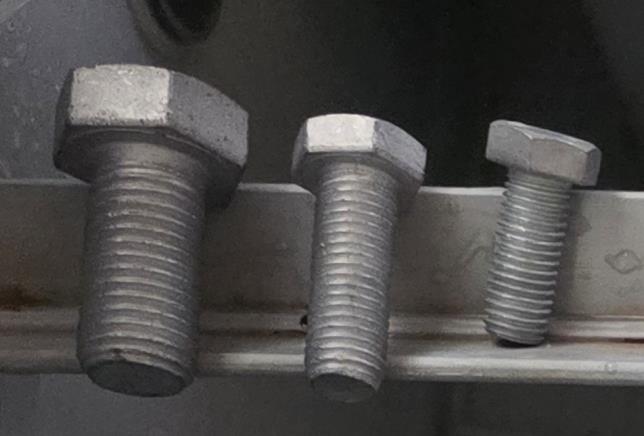
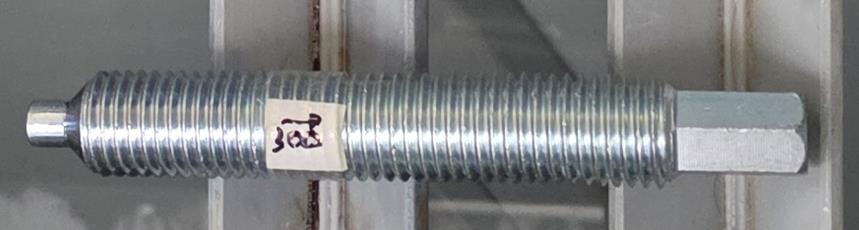
The report records no notable features in the pre-exposure appearance.
The specimen is shown before exposure. The report records no notable features.
Coating thicknesses are estimates; 300 h is the observation endpoint. The photographs are reference records of observations during testing. Use the coating-thickness performance table above for the official application guide.
The dashed line is positioned for each photograph using the separator on report page 3 and specimen-label registration. Coating thicknesses are estimates. The 300 h value marks the end of observation, not a corrosion-free guarantee. Differences in coating process, thickness and specimen geometry preclude a quantitative performance ratio. These photographs have different sources and conditions from the product reference values by thickness above. The reports do not specify a test standard, chamber conditions, replicate count or quantitative acceptance criteria.
HOW TO APPLY
We assess the current process and target performance, then develop sample-treatment conditions and process economics together.
Identify the acid or alkaline plating bath, rack or barrel process, plating thickness, post-treatment and sealer configuration. Existing white- and red-rust test results are assessed against customer specifications.
Set treatment chemistry and process parameters for the target grade, then evaluate corrosion resistance, appearance and dimensions on actual components. Dosage and dilution ratios follow the applicable TDS and line-specific technical specifications.
View estimated consumables costs before and after adoption, the cost difference and percentage change immediately after calculation. Detailed breakdowns and consultation are optional. Total manufacturing-cost analysis also includes labor, energy, equipment adjustments and production conditions.
We support dedicated treatment-chemical supply, line-specific operating parameters and quality control. Technical consultation defines the scope of support and supply terms.
APPLICATION REVIEW
Evaluate ELPANG Upgrade 100, 300 and 500 against target thickness and white- and red-rust resistance. Start with the bath type, handling method and post-treatment sequence of your electrogalvanizing line.
Provide the acid or alkaline bath type, rack or barrel processing, passivation and sealer use, current plating thickness and test results.
Use the thickness-specific table to review the required white- and red-rust performance. Evaluate corrosion resistance, appearance and dimensions on actual components before finalizing process conditions.
Prepare chemical purchase prices, throughput, operating hours and consumption data. Add labor, energy and equipment adjustment costs to the Upgrade 300 or 500 consumption-cost estimate when assessing adoption.
Use the latest technical data sheet (TDS) and line-specific conditions for chemical dosing, concentration and dilution. Cost-simulator consumption inputs are not operating instructions for the plating line.
The system is designed for application to existing electrogalvanizing lines. Chemical and operating conditions depend on bath type, rack or barrel processing, and post-treatment, so assess the current process before defining the changes required.
A grade name alone does not define the test duration for every component. White- and red-rust SST results vary by thickness within a grade; review the thickness-specific table and required acceptance criteria together.
The calculator compares estimated consumption costs for the entered conditions and price scenario. Assess supply and transport terms, labor, energy, equipment costs, utilization and yield separately when calculating actual total manufacturing cost.
ECONOMIC SIMULATOR
Enter your operating conditions to immediately compare
estimated consumables costs before and after adoption.
Key results shown immediately
Detailed breakdowns and consultation are optional.
No contact details are required to view the results.
Estimated consumables costs use a China-reference pricing scenario. Adjustments reflect exchange rates, supply prices, freight, contract terms, process configuration, capacity utilization and yield. Labor, energy and equipment costs are calculated separately.