
KEMP's Surface-Treatment Technologies Featured in Engineering Journal
The June 2024 issue of Engineering Journal featured
KEMP's surface-treatment technology capabilities

Engineering Journal is a Korean engineering magazine with specialist reporting across multiple disciplines. Its June 2024 issue featured KEMP's plating and restoration technologies.
Surface-treatment technology for lower emissions and shorter project schedules
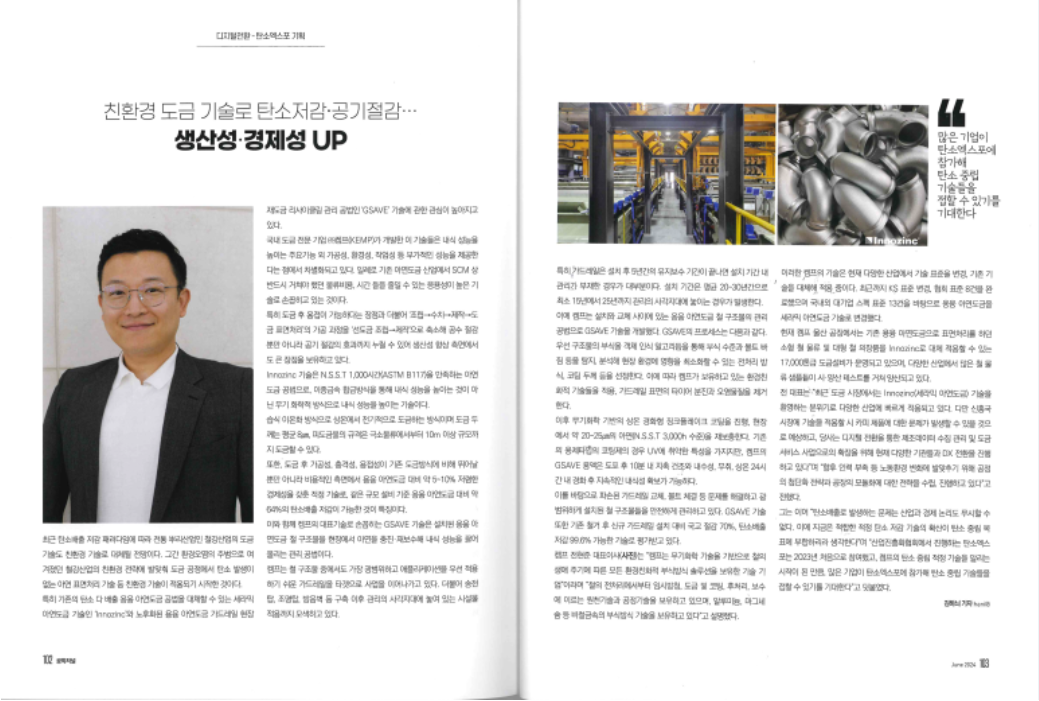
The June 2024 article discussed growing interest in lower-emission surface treatment as steel-related industries pursued environmental improvements. It highlighted zinc-treatment processes intended to reduce the carbon impact of conventional production.
The technologies covered included Innozinc Ceramic Galvanizing as an alternative for selected hot-dip galvanizing applications, and G·SAVE for on-site restoration of aging galvanized guardrails.
The article described KEMP's technologies as combining corrosion protection with fabrication, environmental and workflow benefits. It also discussed opportunities to reduce logistics costs and lead times in zinc-treatment supply chains.
The article also discussed welding after plating and using pre-plated components to shorten fabrication and surface-treatment workflows. Any revised sequence must be reviewed against the part design, welding procedure and repair requirements.
The article reported an Innozinc neutral salt spray test result of 1,000 hours under ASTM B117. It described the technology as improving corrosion resistance through inorganic chemistry rather than alloying with another metal. Current product guidance distinguishes Innozinc at 720–1,000 hr from Innozinc-h at 1,500–2,000 hr; test conditions and acceptance criteria must be checked for the intended part.
The article described a room-temperature, wet-ionization electroplating process with an average coating thickness of 8 µm and treatment capability ranging from very small components to items over 10 m, subject to equipment and part suitability.
The 2024 article reported fabrication, impact and welding benefits, together with estimated costs approximately 5–10% below hot-dip galvanizing and a carbon-emission reduction of approximately 64% for the equipment-scale comparison described. These figures relate to that comparison, not a universal cost or emissions guarantee.
G·SAVE, another KEMP technology covered in the article, restores the protective zinc layer on installed galvanized steel structures through on-site treatment.
KEMP initially focused on guardrails as a widely installed and accessible application. The article also described plans to explore transmission towers, lighting towers and noise barriers where post-installation maintenance could be improved.
The article raised a maintenance gap for guardrails, describing a five-year maintenance period against an installation life of approximately 20–30 years, potentially leaving 15–25 years without systematic upkeep in the cases discussed.
KEMP developed G·SAVE to support maintenance between installation and replacement of galvanized steel structures. The article outlined the following process.
An object-recognition approach was described for assessing corrosion and missing bolts, helping determine pretreatment and coating requirements. KEMP's surface-cleaning processes then remove tire dust and other contaminants from the guardrail.
The article described an inorganic, room-temperature-curing zinc-flake coating applied at approximately 20–25 µm, with a reported neutral salt spray performance level of 3,000 hours. It cited touch-dry performance within 10 minutes, water resistance, low-odor handling and curing within 24 hours at room temperature. Drying and performance depend on application conditions. The maintenance approach also includes addressing damaged rails and loose bolts. For the restoration-versus-replacement case described, the article reported potential public expenditure savings of 70% and an emission reduction of 99.6%; these are case-specific comparisons, not guaranteed outcomes.
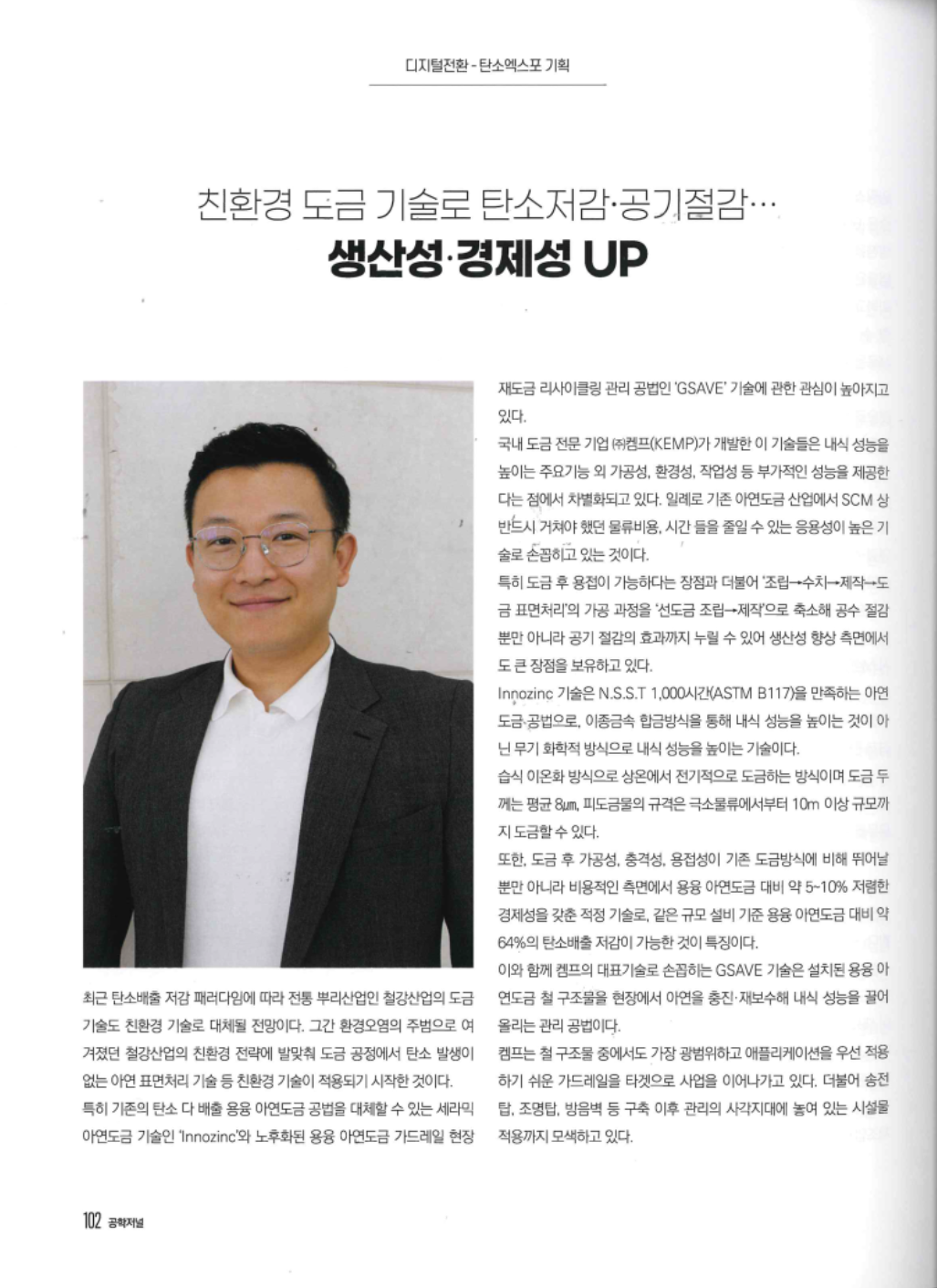
CEO Hyun-jun Jeon described KEMP as an inorganic-chemistry-based technology company addressing corrosion throughout the life cycle of steel. He outlined its capabilities in pretreatment, temporary corrosion protection, plating and coating, post-treatment and repair, as well as protection of non-ferrous metals such as aluminum and magnesium.
The article described adoption of KEMP technologies in several industries, including changes to specifications previously based on conventional treatments.
KEMP reported work on KS standard revisions and eight association standards, as well as 13 major-company specifications in Korea and overseas involving a change from hot-dip galvanizing to Ceramic Galvanizing. These figures reflect the June 2024 article.
At the time of the report, KEMP's Ulsan factory operated a plating facility described as 17,000-tonne class, treating small steel components and larger outfitting items. Samples from multiple industries progressed through pilot and production trials before commercial production.
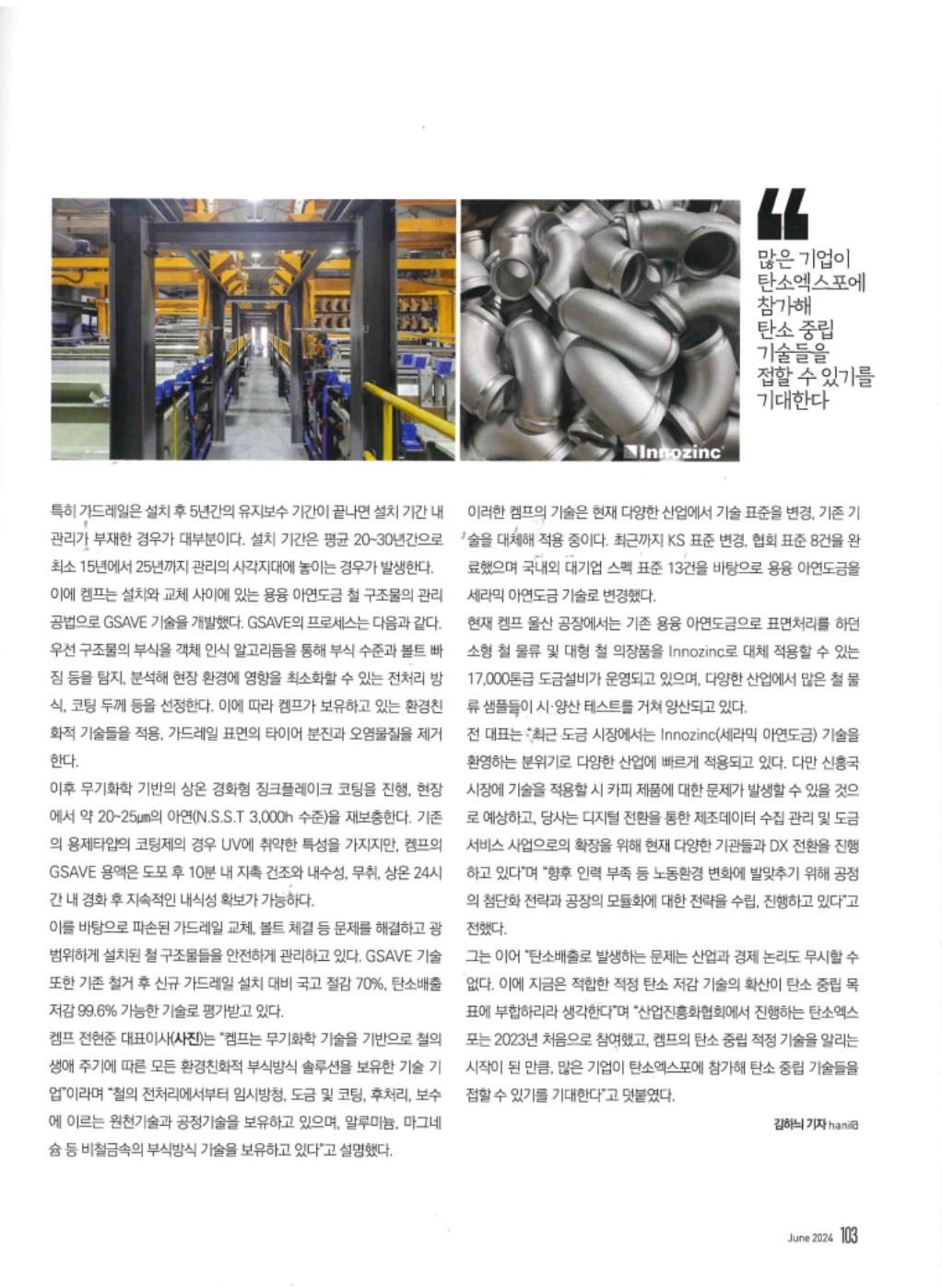
Jeon said Innozinc was attracting interest and being adopted across a range of industries.
He also discussed protecting proprietary technology when entering emerging markets, using digital transformation to manage manufacturing data and expand plating services. Process modernization and modular factory strategies were being developed in response to labor shortages and changing operating conditions.
Jeon emphasized the need for practical carbon-reduction technologies that also make industrial and economic sense. He noted KEMP's first participation in the Carbon Expo in 2023 and encouraged more companies to explore carbon-neutrality technologies through such events.