Thread precision and corrosion resistance
Plating specifications are developed for the geometry and dimensional tolerances of bolts, nuts and other threaded fasteners.
Bolts & Fasteners
KEMP · CERAMIC GALVANIZING
 Standard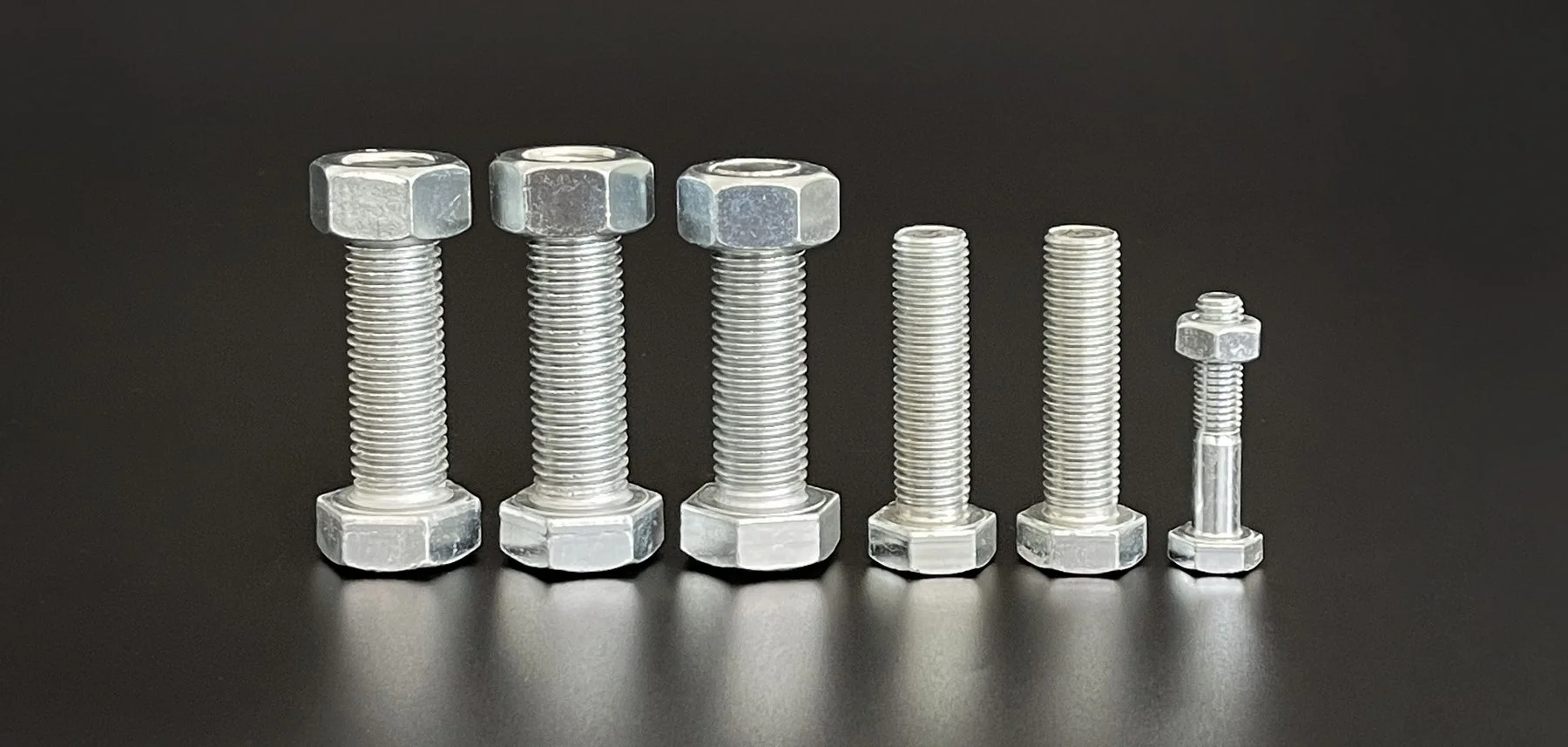
A composite structure of zinc and an inorganic ceramic film.
Surface treatment combining corrosion resistance, adhesion and formability.
Thin-film surface treatment combining precision fastening with corrosion resistance
INNOZINC · STANDARD
Innozinc is KEMP's standard Ceramic Galvanizing grade.
Zinc and an inorganic ceramic film form a composite structure that enhances corrosion resistance
while supporting post-plating welding, fabrication and topcoating.
INNOZINC CORROSION RESISTANCE
Salt Spray Test · SST
720–1,000 hr
Standard-grade Ceramic Galvanizing
Specifications tailored to component materials and geometry
APPLICATION ENGINEERING
Thin-film adhesion and formability support
threaded assembly, bending and roll grooving.
Plating specifications are developed for the geometry and dimensional tolerances of bolts, nuts and other threaded fasteners.
Bolts & FastenersWe configure coating and post-treatment parameters for the bending, roll-grooving and welding operations used on pipe fittings and brackets.
Piping & FittingsTEST EVIDENCE
Specimen photographs document the progression of surface changes
during salt spray exposure.
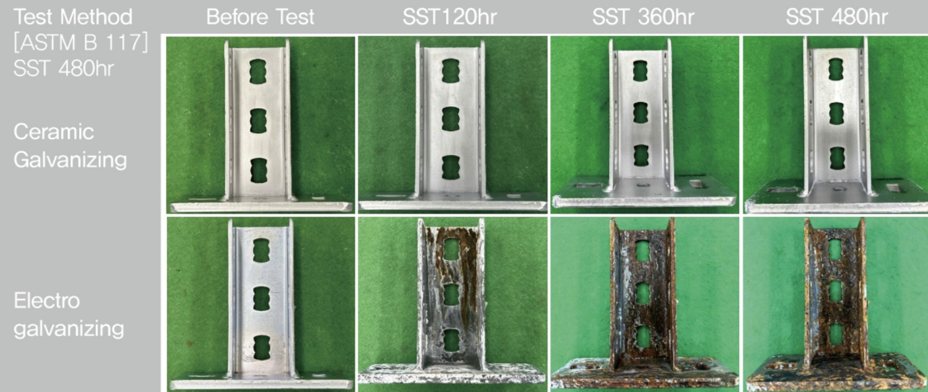
KEMP specimen photographs record the surfaces before testing and at 120, 360 and 480 hr. The standard Innozinc product specification is SST 720–1,000 hr; the photographs retain the actual observation times for these specimens.
Request Test DocumentationINNOZINC ANSWERS
Product selection:
specifications, fabrication and samples
Standard Innozinc has a representative SST specification of 720–1,000 hr; high-corrosion-resistance Innozinc-h has a representative specification of 1,500–2,000 hr. Grade selection reflects the service environment and manufacturing and assembly requirements.
Innozinc supports post-plating welding, bending and roll grooving. Sample evaluation reflects the welding method, forming radius and dimensional tolerances, and establishes post-treatment conditions for the fabricated areas.
The stated average thickness for standard Innozinc is approximately 8 µm. Actual thickness can vary with substrate geometry, pretreatment and process conditions.
SST measures corrosion resistance under controlled salt spray conditions. Product specifications include the specimen substrate, pretreatment, thickness and white- and red-rust acceptance criteria. SST is a laboratory performance indicator, distinct from years of service.
Provide the substrate, dimensions, quantity, drawings or photos, and service environment. Our team will confirm the plating specification, sample quantity, cost and schedule.
NEXT STEP
Explore the catalogs for technical detail,
or start a discussion based on your actual parts.