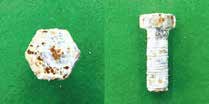
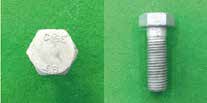
Match the repair system to substrate and coating condition
Combine corrosion-protection layers, repair coatings and clear topcoats to suit substrate condition and finish requirements.
G·SAVE · Protection for exposed steel
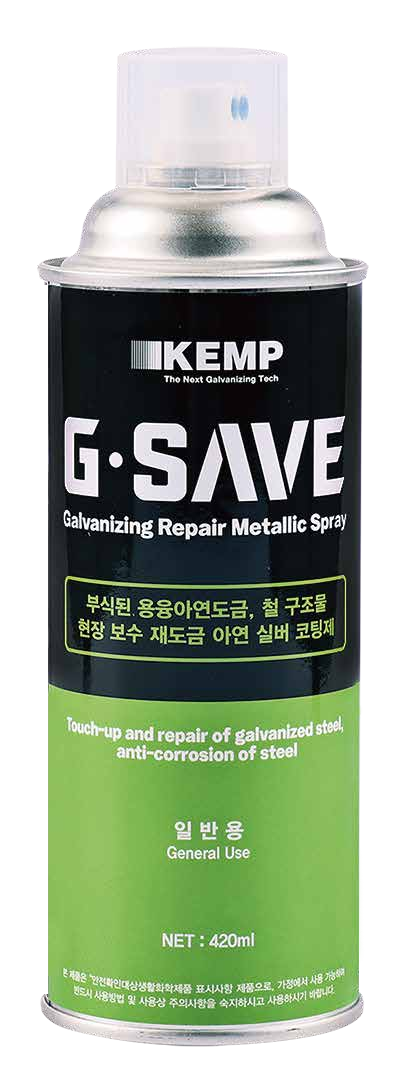
After removing corrosion products and contaminants, apply a zinc-flake repair coating to exposed steel, cut edges and welds. Select subsequent coatings for the required finish and exposure environment.
Restore the zinc protective layer on exposed steel substrates
A local corrosion-protection coating based on zinc flakes and an inorganic binder. Protects exposed steel at damaged zinc coatings, cut edges and welds.
Reinforce corrosion resistance and restore a metallic silver finish
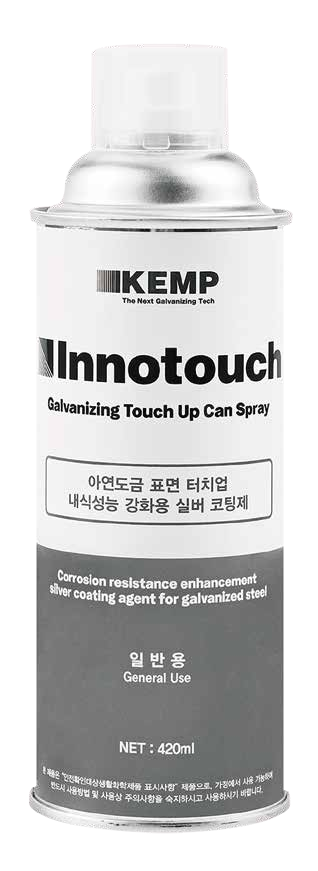
A touch-up coating based on zinc/aluminum powders and an inorganic binder. Repairs scratches and dark discoloration in zinc coatings and combines with G·SAVE for a multilayer weld-repair system.
Form a clear inorganic protective film on zinc coatings
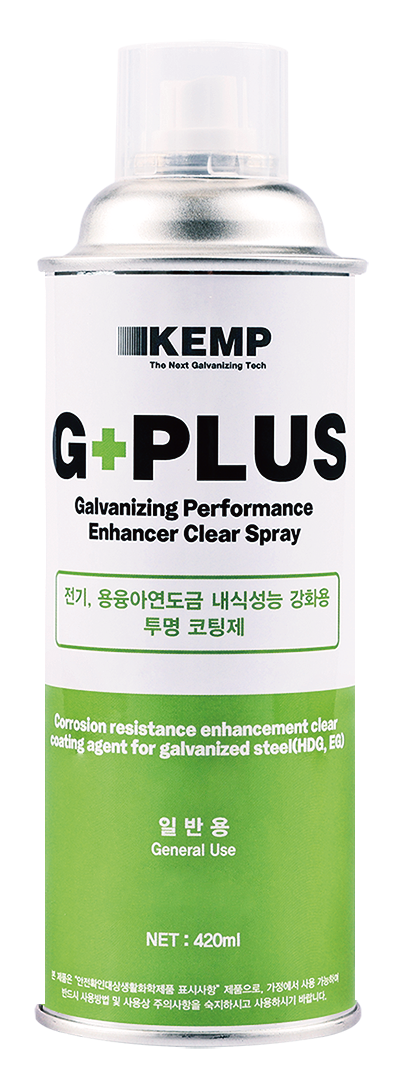
A clear inorganic coating for reinforcing the corrosion resistance of zinc-coated components. Applied as a protective film on new components or as a topcoat over touch-up coatings.
Application areas
Zinc-coated components, fasteners and repair topcoats
Combine zinc-flake protection with inorganic protective films
The barrier and sacrificial-anode action of metal particles works with inorganic-binder film formation to meet repair requirements.
Conceptual zinc-flake structure of G·SAVE
Schematic of overlapping zinc flakes and the penetration path of corrosive agents.
01
Zinc-flake barrier effect and sacrificial-anode action
Overlapping zinc flakes extend the path of moisture and salts through the coating. Zinc in electrical contact with steel oxidizes preferentially, providing sacrificial protection to the substrate.
02
Metal-powder/inorganic-binder repair coating
Innotouch reinforces corrosion resistance and appearance with an inorganic coating containing zinc and aluminum powders. Component trials assess color matching and compatibility with subsequent coatings.
03
Surface protection with a clear inorganic topcoat
G+PLUS forms a clear protective film over zinc coatings or repair layers. Required appearance and recoating conditions are assessed when combined with pigmented touch-up coatings.
WELD REPAIR · FIELD VALIDATION
Welds in pre-coated components: 720-hour corrosion test passed.
Production-performance R&D for marine fitting pipes, with a global shipbuilder participating as end-user.
Integrating ceramic zinc plating and multilayer touch-up
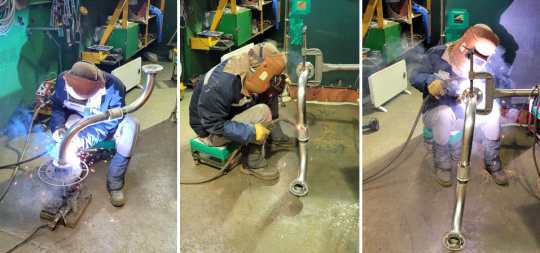
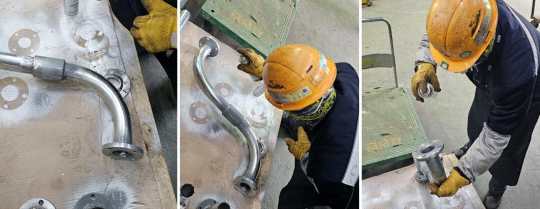
Pipes and flanges pre-coated with Innozinc ceramic zinc plating are formed and welded on site. Aerosol repair coatings restore damaged plating at welds and heat-affected zones. KEMP evaluated bending, welding and touch-up operations for ship-block connection pipes up to 50A at a global shipbuilder's yard.
Internal and external welds treated with the combined touch-up system achieved no red rust after 720 hours of neutral salt spray testing. The repaired welds reached the same 720-hour assessment level as the ceramic zinc-plated individual components evaluated in this project.
Combines a zinc-flake corrosion-protection layer on exposed steel with a metallic silver repair coating.
Sample designation: KEMP (GS+INT) Test areas: internal and external weldsBENT SECTION
Innotouch + G+PLUS
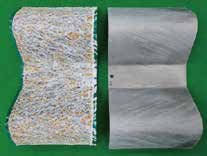
Combines the repair coating on bent sections with a clear inorganic topcoat to reinforce surface protection.
Sample designation: KEMP (INT+GP) Test areas: tensile and compressive sides of bends
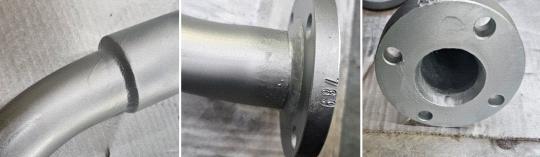
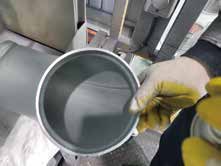
01 · On-site weldingFabrication using pre-coated pipes and flanges02 · Weld touch-upLocal repair-coating application after surface preparation03 · Repaired surfaceCoating appearance after touch-up
On-site welding, touch-up application and completed repairs at a global shipbuilder.
Test results for combined repairs and plated components
Neutral salt spray, 720 hours · Red-rust assessment
Test specimen
Coating system / Test area
Result
Test reference
Pipe assembly with combined touch-up
GS + INT Internal and external welds
No abnormality
KS D 9502:2024 TAK-2024-149239, page 2/3
Pipe assembly with combined touch-up
INT + GP Tensile and compressive sides of bends
No abnormality
KS D 9502:2024 TAK-2024-149239, page 3/3
Individual ceramic zinc-plated component
Flange
No abnormality
KS D 9502:2020 TAK-2025-008170
Individual ceramic zinc-plated component
Pipe
No abnormality
KS D 9502:2020 TAK-2025-008171
The combined touch-up systems on welds and bent sections demonstrated corrosion protection without red rust after 720 hours of neutral salt spray testing. GS: G·SAVE / INT: Innotouch / GP: G+PLUS. The table specifies coating combinations, test areas and test standards.
SEE THE APPLICATION
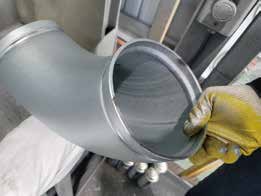
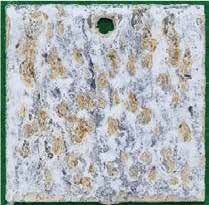
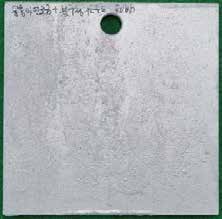
Damaged zinc-coated surfaces: before and after touch-up
Innotouch forms a metallic silver repair coating over scratched zinc-coated surfaces.
Trials on actual components confirm color matching and the required finish quality.
From surface preparation to topcoat: configure the repair sequence
An integrated sequence for corrosion protection, appearance restoration and clear topcoating. Select a two- or three-product system to meet the site specification.
Preparation
Substrate assessment and surface preparation
Remove corrosion products, oil and welding residues; assess exposed steel and the extent of coating damage.
01
G·SAVE
Form a zinc-flake protective layer on exposed steel and weld-damaged areas.
02
Innotouch
Reinforce corrosion resistance and appearance with a metallic silver repair coating.
03
G+PLUS
Protect plated components or repair coatings with a clear inorganic topcoat.
Two- and three-product systems for the required specification
Use G·SAVE → G+PLUS for corrosion-protection repair and a clear finish, or G·SAVE → Innotouch → G+PLUS where a metallic silver finish is also required. GS+INT at welds and INT+GP at bends each passed the R&D 720-hour corrosion assessment. Set dry film thickness (DFT), recoating intervals and drying/curing conditions from product technical data and the site specification.
Specimen-specific salt spray results from product catalogs. Substrate, preparation, coating conditions and assessment criteria provide the basis for selecting a repair specification for the exposure environment.
TECHNICAL RESOURCES
Product specifications and technical resources
Review application areas, coating properties and test conditions.
How are products combined for each application area?
The three-product sequence is G·SAVE → Innotouch → G+PLUS for corrosion protection, metallic finish and clear protection. R&D evaluated G·SAVE + Innotouch on welds and Innotouch + G+PLUS on bends. Both combinations protected the assessed areas without red rust after 720 hours of neutral salt spray testing.
How do repair specifications differ for exposed steel and coating-surface damage?
Consider G·SAVE-based protection for exposed steel, welds and cut edges, and Innotouch for scratches and dark discoloration of zinc coatings. Damage depth, remaining plating, substrate condition and required corrosion resistance determine the coating combination.
How can I obtain coating conditions, SDS and test information?
Provide the product name, substrate and plating specification, service environment and required test standard. We support repair-specification reviews with SDS, surface preparation, DFT and recoating guidance, together with R&D test information for the relevant application area.
APPLICATION REVIEW
Assess the damaged area. Define the repair specification.
Substrate and plating specifications, welding/forming conditions and damage extent guide coating selection and application conditions for the required corrosion resistance.