Where is G·SAVE used?
Used for localized repairs to cut edges, welds and transport damage on hot-dip galvanized, electrogalvanized and POSMAC structures.

G·SAVE is a zinc-flake-based corrosion-protection repair coating. It combines the barrier effect of lamellar particles with the sacrificial-anode action of zinc to restore corrosion protection at damaged galvanized areas, cut edges and welds. Applied locally after rust removal and surface preparation, its ambient-curing process supports on-site maintenance of installed steel structures.
Based on the product catalog and results from KTR, an accredited testing institute. Original test reports are available on request.
Overlapping zinc flakes form a barrier against corrosive agents. At exposed areas, zinc oxidizes preferentially to help protect the steel substrate.
Overlapping zinc flakes provide a physical barrier against moisture, salt and other corrosive agents.
At coating defects where steel is exposed, zinc corrodes preferentially to provide electrochemical protection.
A thin protective film can reduce material use and application time.
Room-temperature-drying spray for installed structures, with a stated drying time of up to 15 minutes under the specified application conditions.
In the referenced salt spray comparisons, G·SAVE-treated specimens outperformed the corresponding galvanized-only specimens. KTR test results are available for adhesion, pencil hardness and neutral salt spray performance.
| Specimen System | Test Method | Result |
|---|---|---|
| Hot-dip galvanizing 80 µm, without repair coating | KS D 9502 (5% NaCl·35℃) | White rust across the surface at 120 hr; red rust at 480 hr |
| Hot-dip galvanizing + G·SAVE 20 µm | KS D 9502 (5% NaCl·35℃) | No abnormalities at 480 hr |
| Hot-dip galvanizing 80 µm after welding (flange/pipe weld area) | KS D 9502 | White and black corrosion products from 120 hr; red rust at 400 hr |
| Ceramic Galvanizing 15 µm + G·SAVE/Innotouch touch-up 12 µm after welding | KS D 9502 | No abnormalities through 500 hr; minor red rust at 650 hr |
| Welded specimen + G·SAVE | ASTM B117 | No red rust at 240 hr |
Grade 0 in a 1 mm cross-cut test to KS M ISO 2409:2013; specimen from the guardrail-restoration development program.
KS M ISO 15184:2012; specimen from the guardrail-restoration development program.
Comparative test results against conventional hot-dip galvanizing are available under KS D 9502:2020.
Comparison data is reproduced from the product catalog; KTR results are from accredited laboratory testing. Weld-area applications include hot-dip galvanized, electrogalvanized and POSMAC substrates.
KEMP sets its own restoration quality targets above the referenced guardrail criteria in the Korea Expressway Corporation's 2021 construction-material quality requirements (20th edition): 480 hr salt spray and 20 cyclic-corrosion cycles for new installations.
Target: at least 720 hr to KS D 9502, compared with the referenced 480 hr criterion for new installations.
Target: at least 30 cycles to KS ISO 14993 / JIS H 8502, compared with the referenced 20-cycle criterion for new installations.
Coating thickness target: 20 µm, measured to ASTM B499.
These are KEMP's own restoration quality targets, not a statement that every application has achieved them.
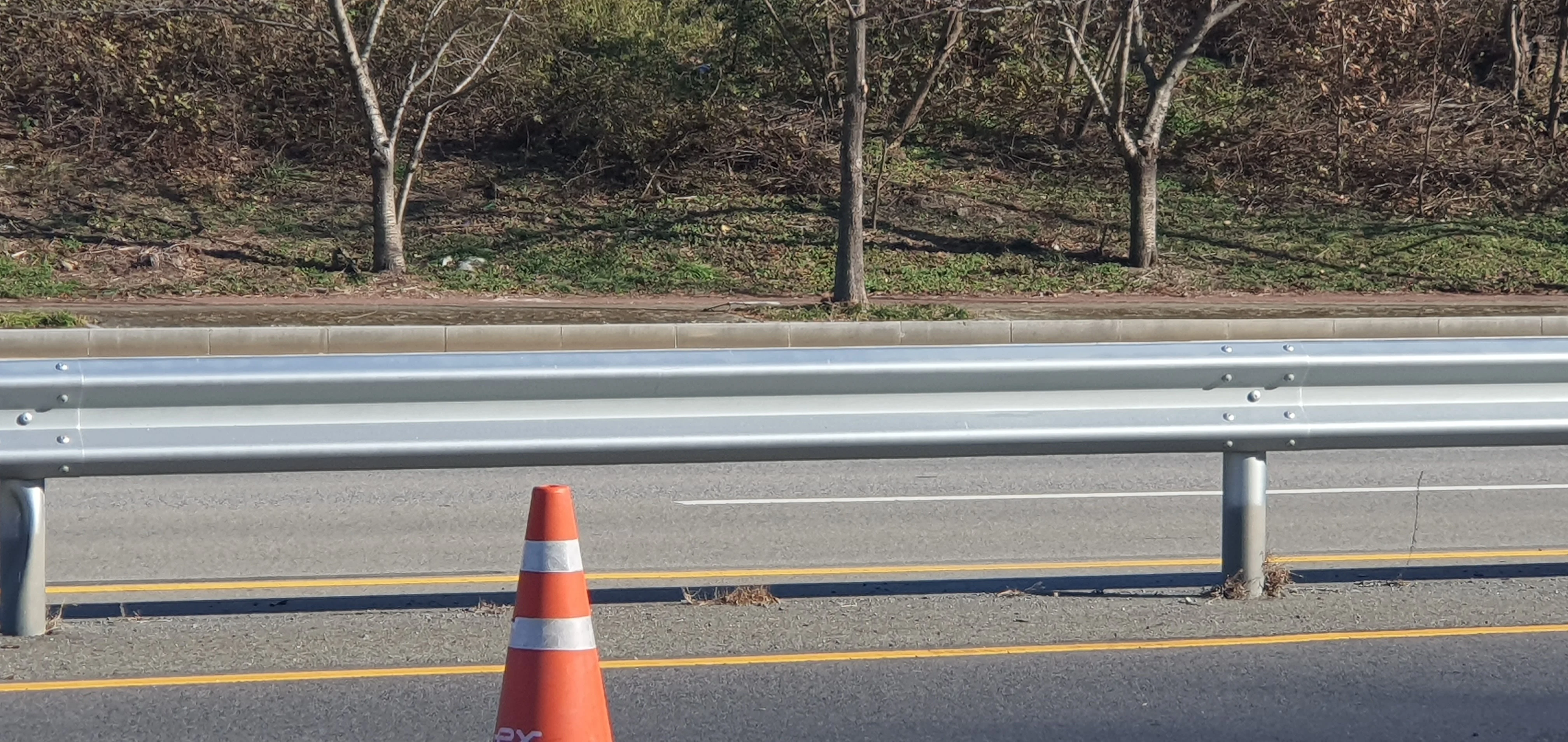
The G·SAVE on-site restoration process comprises corrosion assessment, repair-area definition, surface preparation, protective repair coating and maintenance. Sound areas of existing guardrails are retained while damaged areas receive localized repair, supporting continued service.
Assess the structure's corrosion condition and define the repair area.
After rust removal and ROC.3 pretreatment, apply G·SAVE to the corroded or damaged areas.
Restore suitable existing structures instead of replacing them, reducing material waste.
Inspect and maintain the structure against the agreed restoration quality criteria.
Restores suitable corroded guardrails on site without replacement.
Repairs damaged areas of galvanized and steel structures to help restore corrosion protection.
Forms a zinc-containing protective coating on suitable uncoated steel through on-site application.
Helps control corrosion progression and maintain existing steel structures.
The formulation does not use xylene, toluene or ethylbenzene. Available documentation includes Korean consumer chemical product safety results covering 7 non-detected substances, including formaldehyde, acetaldehyde and benzene, and a separate report covering 26 non-detected substance test items.
A citric- and phosphoric-acid-based rust and oil remover prepares the surface before repair.
Adds a bright metallic-silver touch-up after G·SAVE repair to restore appearance and supplement protection.
Adds a clear inorganic-binder finish for final protection of the repaired area.
Three-product spray sequence: G·SAVE → Innotouch → G+PLUS.
Key considerations when selecting a repair system for damaged galvanized surfaces and weld areas.
Used for localized repairs to cut edges, welds and transport damage on hot-dip galvanized, electrogalvanized and POSMAC structures.
It combines zinc flakes with an inorganic binder to support restoration of corrosion protection, rather than appearance correction alone.
Check rust and contamination removal, damage extent, required coating thickness, drying time and the exposure environment.
Tell us about the structure and its corrosion condition to discuss an application specification. Technical documents, including KTR test reports, can also be requested.